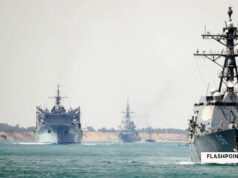
Iran said the world should be ready for oil at the cost of $200 a barrel as its military hit merchant ships on Wednesday, and the International Energy Agency recommended a massive release of strategic reserves to dampen one of the worst oil shocks since the 1970s.
The U.S.-Israeli conflict with Iran has been ongoing for two weeks and so far, has cost 2,000 lives, and thrown global energy markets and transport into chaos.
On Wednesday, three vessels were reported to have been hit in Gulf waters as Iran’s Revolutionary Guard (IRGC) said their forces had fired on ships in the Gulf that had disobeyed their orders.
Iranian officials made it clear on Wednesday that they intend to impose a prolonged economic shock.
“Get ready for oil to be $200 a barrel, because the oil price depends on regional security, which you have destabilised,” Ebrahim Zolfaqari, spokesperson for Iran’s military command, said in comments.
Strait Of Hormuz Safe?
U.S. President Donald Trump has not announced a timeline for military operations, but suggested on Wednesday that he was not ready to call an end to the war.
Trump stated that U.S. forces had struck 58 Iranian naval ships and that oil prices would come down, and told reporters in Washington that Iran was “pretty much at the end of the line.”
Trump said the U.S. would now “look very strongly” at the Strait of Hormuz, adding: “The straits are in great shape. We’ve knocked out all of their boats. They have some missiles, but not very many.”
Despite Trump’s reassurance, there has been no sign that ships can safely sail through the Strait, a now blockaded channel along the Iranian coast through which one-fifth of the world’s oil is transported. An Iranian military spokesperson claimed the strait was “undoubtedly” under Iran’s control.
While Trump said ships should transit through the strait, sources claim that Iran has deployed about a dozen mines in the channel.
On Wednesday, the G7 nations agreed to examine the option of providing escort ships so they can navigate freely in the Gulf.
The U.S. State Department also warned that Iran and aligned militias may be planning to target U.S.-owned oil and energy infrastructure in Iraq.
Iran’s Threats
The cost for oil, which shot up to nearly $120 a barrel before settling back to $90 earlier this week, rose nearly 5% on Wednesday amid renewed concerns about supply disruption. Meanwhile, Wall Street’s main share indexes fell.
The U.S. military told Iranians to steer clear of ports with naval facilities, drawing a warning from Iran’s military that if the ports were threatened, economic and trade centres in the region would become “legitimate targets.”
After offices of a bank in Tehran were hit overnight, Zolfaqari said Iran would respond with an attack on banks that do business with the U.S. or Israel and that people across West Asia should stay 1,000m from banks.
The International Energy Agency recommended releasing 400 million barrels from global strategic reserves to stabilise prices, the biggest such intervention in history.
U.S. Energy Secretary Chris Wright said Trump authorised the release of 172 million barrels from the U.S. Strategic Petroleum Reserve from next week.
(With inputs from Reuters)