The United States’ decision to impose an additional 25 per cent tariff on a broad range of Brazilian imports is about more than Brazil.
It demonstrates how Washington is increasingly using trade law to challenge domestic policies ranging from digital payments to environmental regulation, a shift that could carry important lessons for India as it negotiates a bilateral trade agreement with the US.
The tariffs, which take effect on July 22, follow a year-long investigation by the Office of the US Trade Representative (USTR) under Section 301 of the Trade Act of 1974. Brazil is the first country to face a country-specific action under Washington’s revamped Section 301 strategy.
While products including coffee, beef, orange juice and certain aircraft parts have been exempted to avoid disrupting US supply chains, the investigation itself marks a notable expansion in the scope of American trade enforcement.
Alongside traditional concerns over intellectual property protection and market access, the USTR examined Brazil’s Pix instant payment system, digital trade policies, anti-corruption enforcement, environmental regulation, ethanol imports and preferential tariff treatment for imports from India and Mexico.
For New Delhi, the significance lies less in the tariff itself than in the issues Washington chose to investigate. The Brazil case illustrates that US trade disputes are no longer confined to tariffs and market access. Domestic regulations, digital infrastructure and governance practices are increasingly being treated as trade issues.
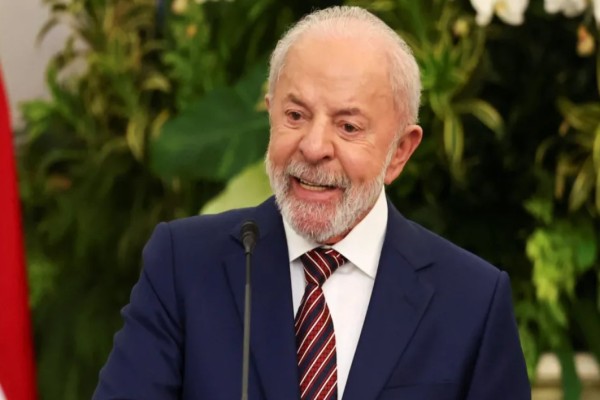
Brazil has strongly rejected the findings, calling the tariffs unjustified and outside the framework of global trade rules. President Luiz Inácio Lula da Silva’s government described July 15 as “a lamentable milestone” in bilateral relations and said there was “no justification” for the measures.
Brasília argued that US government data showed Washington had accumulated a US$424.5 billion surplus in goods and services trade with Brazil over the past 15 years. It also said 76 per cent of US exports entered Brazil duty-free in 2025 and that the average effective tariff on American products was just 3.1 per cent.
The government said it had responded to every allegation raised during the USTR investigation. It defended Pix as “a heritage of our people” and “an international reference for public digital infrastructure”, while rejecting allegations that illegal deforestation gave Brazilian exports an unfair commercial advantage. Brazil has said it will invoke its Reciprocity Law, challenge the tariffs through the World Trade Organization and continue diversifying exports through agreements with the European Union, the European Free Trade Association and Singapore.
The broader significance, however, extends beyond Brazil.
India is already facing separate US Section 301 investigations relating to forced labour and structural excess capacity. At the same time, the annual US National Trade Estimate (NTE) Report continues to raise concerns over India’s tariff structure, digital trade policies, data localisation requirements, intellectual property protection, agricultural measures, standards and government procurement.
The Brazil case suggests Washington is prepared to use existing trade laws to scrutinise a much wider range of domestic policies that it believes affect American commercial interests.
https://www.youtube.com/watch?v=bNRiVzdR4CE
Ajay Srivastava, founder of the Global Trade Research Initiative (GTRI), said the case offers an important lesson for India.
“The lesson for India is clear. Washington can use trade action not only over tariffs and market access but also against policies it considers unfair to US businesses,” he said.
At the same time, Srivastava cautioned against making broad policy concessions simply to reduce the risk of future investigations.
“India cannot meet every US demand. These now range from Russian oil purchases and digital rules to hundreds of trade complaints listed each year in the National Trade Estimate Report,” he said.
Instead, he argued, India should continue addressing specific trade concerns as they arise rather than making sweeping policy commitments through trade negotiations or domestic reforms.
The tariffs on Brazil do not create a new legal mechanism. They do, however, demonstrate how Washington is applying existing trade laws to an increasingly broad set of domestic policy issues.
For India, which remains engaged in trade negotiations with the United States, the episode is a reminder that future trade disputes may extend well beyond tariffs into areas once regarded as matters of sovereign domestic policy.