Fresh Israeli strikes on Iran and Tehran’s retaliation on Saturday have raised fears of a wider West Asian conflict, with an Indian strategic analyst warning of potential spillover and risks to India’s energy security and diaspora.
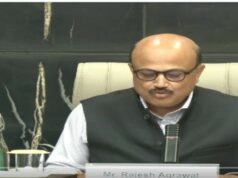
Speaking on the latest escalation, Col Rajeev Agarwal (Retd), Senior Research Consultant at the Chintan Research Foundation, said the strikes mirror the pattern seen during the June 2025 “12 Day War,” when Israel acted days before a potential breakthrough in US–Iran nuclear talks.
According to Agarwal, negotiations had been progressing, with Iran reportedly agreeing not to stockpile 60% enriched uranium, to dilute existing reserves, and to permit unrestricted monitoring by the International Atomic Energy Agency (IAEA). “Without stockpiles and high-level enrichment, there was no possibility of weaponisation,” he said, arguing that the nuclear issue appeared close to resolution.
He contended that Israel’s core concerns extend beyond Iran’s nuclear programme to its ballistic missile capability and the nature of the Iranian regime itself. Israel has publicly described Iran’s missile arsenal as an existential threat, while also signalling that regime change would serve its long-term security interests.
Unlike last year’s conflict, which remained largely confined to Iranian and Israeli territory, Agarwal warned that this round could spread across the region. Iran has previously indicated that any attack would justify targeting US military bases and assets across the Gulf.
For India, the risks are immediate. Agarwal highlighted two primary concerns: energy supplies and the safety of nearly nine million Indian nationals in the Gulf. Iran has demonstrated the capacity to disrupt traffic through the Strait of Hormuz, a chokepoint critical to global oil flows. India’s strategic and floating oil reserves, he noted, could cushion disruption for roughly three to four weeks.
On the diaspora front, he cautioned that evacuation on a large scale would be “impossible” if the entire region were engulfed.
Agarwal said the next five to seven days could see intense air operations. If Iran’s leadership survives, the conflict may devolve into a prolonged war of attrition. Domestic political pressures on Israeli Prime Minister Benjamin Netanyahu, including upcoming elections and legal challenges, may also shape the trajectory of the conflict, he added.
Watch the full interview to get an expert view of the conflict from an Indian perpsective.