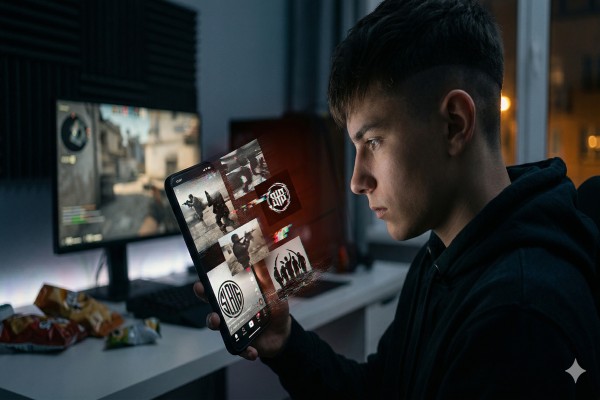
Extremist propaganda is no longer shouting from the fringes. It is scrolling beside you.
What once appeared as rigid, sermon-heavy ideology has been refashioned into something far more subtle—and far more dangerous. Today’s extremist messaging does not demand obedience. It offers identity. It does not lecture; it resonates. And crucially, it no longer looks alien to the digital-native generation it seeks to recruit.
A recent study by the Sawab Center, Changing the Script: How Contemporary Extremist Propaganda Appeals to Gen Z Audiences, lays bare this transformation. What emerges is not just an evolution in messaging, but a strategic overhaul—one that mirrors the emotional, cultural, and psychological grammar of Gen Z itself.
Language Matters
At the heart of this shift lies a simple insight: if you want to radicalise a generation raised on TikTok, you must first speak its language.
Traditional extremist propaganda relied on dense ideological texts and hierarchical authority. That model no longer works. Groups such as Daesh and Al Qaeda—along with regional affiliates like Daesh-Khorasan Province (ISKP)—have recalibrated their messaging to fit the rhythms of a generation raised on algorithms, short-form video, and participatory media. Gen Z does not engage with doctrinal treatises; it engages with stories, visuals, and emotion.
Accordingly, propaganda produced by Daesh in outlets like An Naba and by ISKP in Voice of Khorasan has become fast-paced, visually dynamic, and platform-native. Battlefield footage is edited like first-person shooters. Narratives unfold like influencer diaries. Even nashids are repurposed into trending audio formats.
Al Qaeda, traditionally more rigid in tone, has also adapted. Its newer publication Sada Al Thughur elevates the idea of the “digital mujahid”, framing online supporters as frontline actors whose keyboards are as potent as weapons. The effect across these organisations is the same: to collapse the distance between extremist content and everyday digital life.
The most striking innovation identified in the study is what it terms “Gen Z extremist agency”. Across Daesh, ISKP, and Al Qaeda ecosystems, propaganda no longer demands submission—it promises empowerment.
Messaging now frames participation as a path to self-realisation. Daesh publications, for instance, increasingly invoke themes of psychological resilience and personal transformation, while Al Qaeda narratives emphasise purpose and moral clarity through digital activism.
Catch ’em Young
Themes such as trauma, healing, authenticity, and identity—borrowed from contemporary youth culture—are repurposed into ideological tools. Violence is reframed as meaning. Radicalisation becomes self-discovery.
For a generation grappling with uncertainty, economic precarity, and institutional distrust, this is potent. The message is seductive: you are not powerless—you are a protagonist in a larger moral struggle.
Gen Z is not primarily persuaded by argument. It is moved by emotion. Extremist groups have internalised this shift. Daesh messaging, particularly in An Naba, leverages outrage and grievance, while Al Qaeda in the Arabian Peninsula (AQAP) has experimented with aligning itself rhetorically with broader causes—such as Gaza-related activism—to tap into widely shared emotional currents.
This convergence is particularly dangerous. By overlapping with humanitarian or political narratives, organisations like AQAP blur the line between legitimate activism and extremist mobilisation, making their messaging more palatable and shareable.
Perhaps the most insidious shift is the lowering of the barrier to entry.
Both Daesh and Al Qaeda now promote what might be called “low-cost participation”. You do not need to travel or fight. Posting, sharing, translating—these are framed as meaningful contributions. Al Qaeda’s concept of the “digital fighter” and Daesh’s emphasis on online engagement transform everyday digital behaviour into ideological participation.
Participation becomes frictionless. Radicalisation becomes incremental.
Equally significant is the shift in how women are portrayed.
Women At The Centre
Publications linked to Al Qaeda, such as Ibnat Al Islam, increasingly address women as autonomous actors, encouraging decision-making, emotional resilience, and even engagement with concepts like trauma and mental health. Meanwhile, ISKP’s Voice of Khorasan has gone further—highlighting women’s roles in leadership, knowledge acquisition, and even military preparedness.
Daesh itself has led some of the most radical shifts, at times encouraging women not only to support fighters but to participate directly in intelligence-gathering or combat roles when operational needs demand it.
This is not a superficial change. It reflects a strategic recalibration aimed at tapping into evolving expectations around gender, autonomy, and empowerment.
Weaponising Belonging
At its core, this transformation is about belonging.
Across Daesh, Al Qaeda, and ISKP ecosystems, propaganda offers community, identity, and moral clarity to a generation shaped by both hyper-connectivity and isolation. The boundaries between mainstream and extremist content are deliberately blurred. The same platforms, aesthetics, and emotional cues are used. What changes is the underlying message.
This is why the threat is more complex than before. Radicalisation no longer requires entry into closed extremist spaces. It can begin within the familiar terrain of everyday digital life—through content that looks, feels, and behaves like everything else online.
The implications are clear—and unsettling.
Counter-extremism strategies built on older models are increasingly inadequate. Rational rebuttals are unlikely to resonate with an audience driven by emotion, identity, and belonging. What is required instead is a recognition that organisations like Daesh, Al Qaeda, and ISKP are no longer just ideological actors—they are cultural ones, fluent in the language of Gen Z.
Extremism has not weakened. It has adapted.
It no longer appears as an external threat shouting from the margins. It appears as something familiar, relatable—even empowering. It speaks in the voices of An Naba, Voice of Khorasan, Sada Al Thughur, and Ibnat Al Islam, but it echoes across platforms far beyond them.
This is the real danger.
Because when extremism stops looking extreme, it becomes far harder to recognise—and far easier to accept.