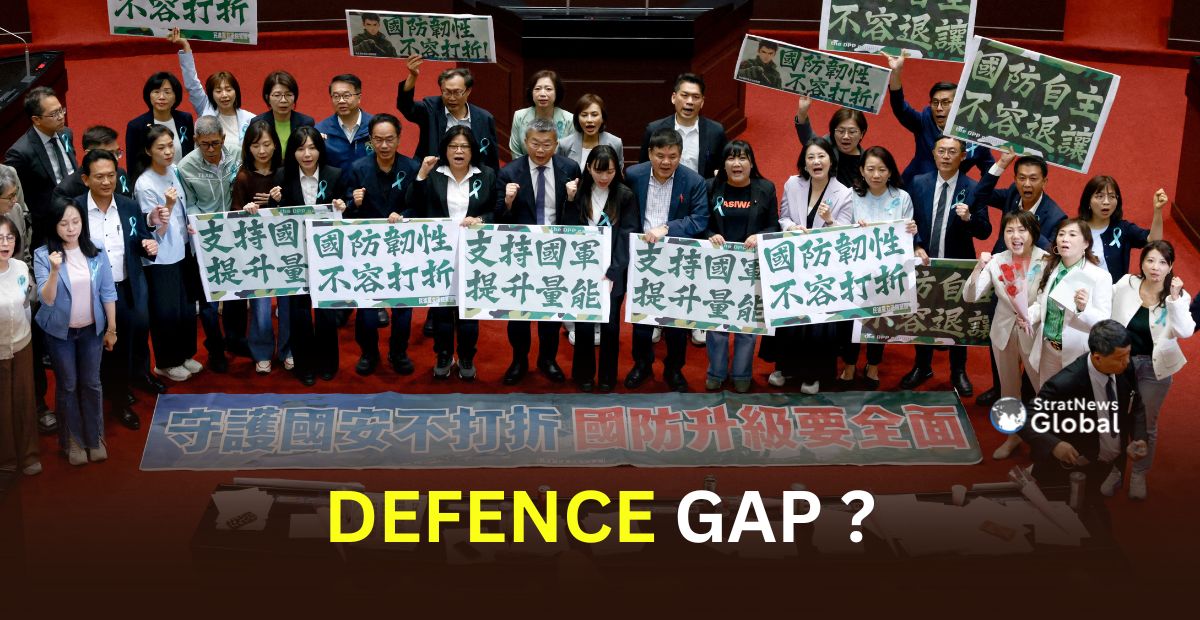
On Friday, Taiwan’s opposition-controlled parliament approved an additional $25 billion in defence spending, about two-thirds of what the government had requested to strengthen the military against China’s rapidly modernizing forces.
President Lai Ching-te had proposed a supplementary defence package worth T$1.25 trillion ($39.81 billion), which included funding for U.S.-supplied weapons as well as domestically produced systems like drones, aimed at boosting deterrence against China, which claims Taiwan as its territory.
But the opposition, which has the most seats in parliament, passed its own version of the spending package worth T$780 billion ($24.86 billion), saying the government proposals were unclear and could lead to corruption.
The ruling Democratic Progressive Party expressed regret that the opposition had ignored repeated explanations by the defence ministry, not only limiting Taiwan’s defence capabilities but potentially creating security gaps.
U.S. Support For Defence Spending
United States has strongly backed Taiwan, whose government rejects Beijing’s sovereignty claims, to spend more on its defences.
Its top diplomat in Taiwan pressed parliament last week to pass a “comprehensive” defence budget, saying integrated air and missile defence systems and drones were critically important and in high demand globally.
In December, Washington announced an $11 billion arms sales package for Taiwan, the largest ever.
A second package worth around $14 billion could be announced once U.S. President Donald Trump gets back from next week’s trip to China, Reuters has previously reported.
Speaking at a forum in Taipei on Friday organised by Taiwan think tank CAPRI, Matt Pottinger, the deputy national security adviser in Trump’s first administration, said deterrence means having a capability to defend oneself.
“As people in Taiwan politics are talking about negotiations with China, I don’t have any problem with that. But you want to do that from a position of strength,” he said.
(With inputs from Reuters)