

Support us by contributing to StratNewsGlobal on the following UPI ID
ultramodern@hdfcbank

Strategic affairs is our game, South Asia and beyond our playground. Put together by an experienced team led by Nitin A. Gokhale. Our focus is on strategic affairs, foreign policy and international relations, with higher quality reportage, analysis and commentary with new tie-ups across the South Asian region.
You can support our endeavours. Visit us at www.stratnewsglobal.com and follow us on YouTube, Twitter, Facebook and Instagram.
र 500 per month
र 1000 per month
र 5000 per year
र 10000 per year
Donate an amount of your choice
र 500 per month
Donate र 500 per month

र 1000 per month
Donate र 1000 per month
र 5000 per year
Donate र 5,000 per year
र 10000 per year
Donate र 10,000 per year
Donate an amount of your choice
Donate an amount of your choice
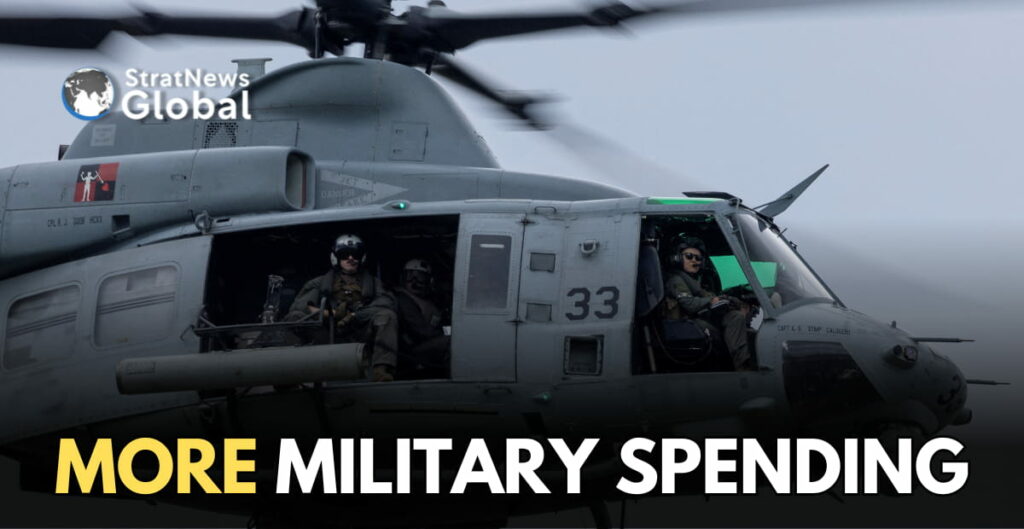
Trump Hikes US Military Spending From $901Bln To $1.5 Trillion In 2027
President Donald Trump said on Wednesday that the 2027 military budget should be $1.5 trillion, significantly higher than the $901 billion approved by Congress for 2026, boosting defence stocks, but sparking scepticism among budget experts.
Any such increase in the military budget would require congressional authorisation, which could pose a challenge, although Trump’s Republicans, who hold slim majorities in both the Senate and House of Representatives, have shown little appetite for objecting to Trump’s spending plans.
Trump said in a Truth Social post that he made the decision on 2027 military spending “after long and difficult negotiations with Senators, Congressmen, Secretaries, and other Political Representatives… especially in these very troubled and dangerous times.”
In just the last few days, U.S. forces seized Venezuela’s Nicolas Maduro from his country, toppling him from power. The White House has also said that Trump is discussing options for acquiring Greenland, including potential use of the U.S. military. Trump has also deployed U.S. troops to police a number of cities across the country.
The news followed a separate Truth Social post from Trump blasting defence companies for producing weapons too slowly. In it, he pledged to block defence contractors from paying dividends or buying back shares until they accelerated production.
Extra Spending
Trump said the extra spending would be covered by revenues generated by tariffs he has imposed on nearly every country and many industrial sectors, and the U.S. would still be able to reduce its debt and send dividend checks to “moderate income” Americans.
The Committee for a Responsible Federal Budget, a nonpartisan think tank, estimated the proposal would cost $5 trillion through 2035, while adding $5.8 trillion to the U.S. debt with interest. It said only half the cost could be covered by tariffs in place now, noting that the Supreme Court could rule that a large set of tariffs was illegal.
The Bipartisan Policy Centre estimates that combined tariffs raised $288 billion in 2025, well below Trump’s own estimates, which have fluctuated around $600 billion in recent days.
Byron Callan, a defence analyst with Capital Alpha Partners, said Trump’s post raised questions about where the funds would be directed and whether they could even be absorbed by the defence sector.
He said the last time the U.S. Defence Department saw an increase higher than 50% was in 1951 during the Korean War, with even huge surges in military spending under former President Ronald Reagan in 1981 and 1982, amounting to 25% and 20%.
In trading after the market closed, shares in the biggest defence firms rose on the news as investors bet a surge in spending would bolster profits.
Lockheed Martin was up 6.2%, General Dynamics GD.N rose 4.4% and RTX added 3.5%.
(with inputs from Reuters)
China Hacks Emails Of U.S. Congressional Committee Staffers
A hacking group from China has compromised emails used by staff members of powerful committees in the U.S. House of Representatives, the Financial Times reported on Wednesday, citing people familiar with the matter.
The group, nicknamed Salt Typhoon, accessed email systems used by some staffers on the House China committee as well as aides on panels covering foreign affairs, intelligence and the armed services, the report said. It did not identify which specific staffers were targeted.
Reuters could not immediately verify the report. Chinese Embassy spokesman Liu Pengyu condemned what he called “unfounded speculation and accusations,” while the Federal Bureau of Investigation declined to comment. The White House and the offices of the four committees reportedly targeted in the surveillance sweep did not immediately respond to requests for comment.
The FT cited a person familiar with the campaign as saying it was unclear whether the attackers had accessed lawmakers’ emails in the intrusions, which were detected in December.
U.S. lawmakers and their aides, especially those who oversee America’s sprawling military and intelligence agencies, have long been top targets for cyberespionage and reports of hacks or attempted hacks have surfaced periodically.
In November, the Senate Sergeant at Arms notified multiple congressional offices of a “cyber incident,” where hackers may have accessed communications between the nonpartisan Congressional Budget Office, which provides key financial research data to lawmakers, and some Senate offices. In 2023, the Washington Post reported that two senior U.S. lawmakers were among the targets of a Vietnam-linked hacking operation.
The Salt Typhoon of China, a company known to hack in particular, has long rattled the US intelligence community, as it did with the emails this time. The spies – alleged to be working for Chinese intelligence – stand accused of gathering data on wide swathes of Americans’ telephone and email communications and intercepted conversations, including those between prominent U.S. politicians and government officials.
Beijing has repeatedly denied being behind the spying.
Early last year, the U.S. imposed sanctions on alleged hacker Yin Kecheng and cybersecurity company Sichuan Juxinhe Network Technology, accusing both of being involved in Salt Typhoon.
(with inputs from Reuters)
ICE Kills Woman In Minneapolis, Mother Of Victim Says ‘She Was Compassionate’
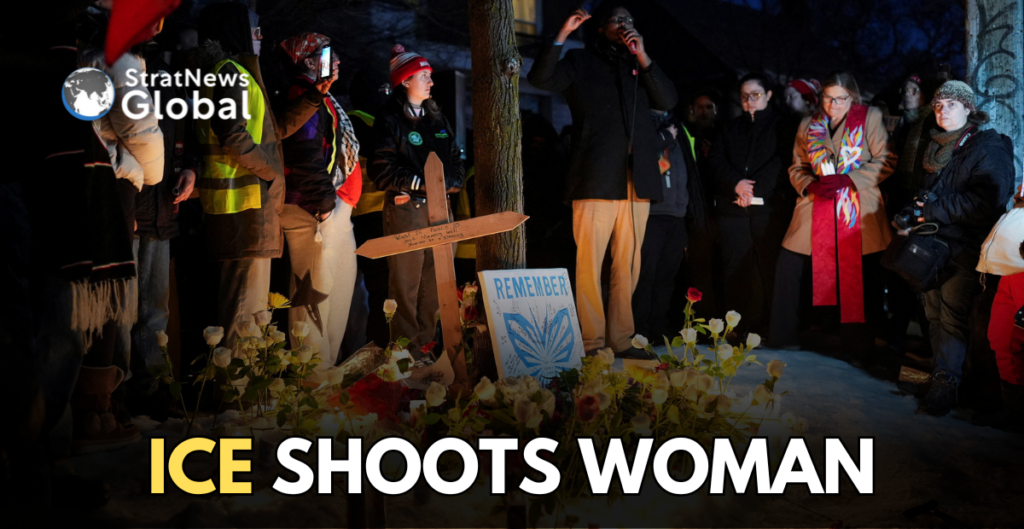
A U.S. immigration agent shot and killed a 37-year-old woman in her car in Minneapolis on Wednesday during an immigration enforcement surge, according to local and federal officials, the latest violence in President Donald Trump’s nationwide crackdown on migrants.
Minneapolis Mayor Jacob Frey adamantly rejected the Trump administration’s assertion that the agent fired in self-defence, saying video of the shooting directly contradicted what he called the government’s “garbage narrative.”
“They’re already trying to spin this as an act of self-defence,” a visibly angry Frey said at a press conference. “Having seen the video myself, I want to tell everybody directly – that is bullshit.”
Frey blamed federal immigration agents for sowing chaos in the city, telling ICE: “Get the fuck out of Minneapolis.” But he also urged residents to remain calm, as Democratic leaders in Minnesota, Washington and elsewhere called the ICE operation an unnecessary provocation that resulted in tragedy.
The Minnesota City Council identified the dead woman as Renee Nicole Good and said she was “out caring for her neighbours this morning and her life was taken today at the hands of the federal government.” The council statement also demanded that the immigration enforcement agency leave Minneapolis immediately.
As night fell, a crowd that appeared thousands strong gathered at the site of the shooting in a residential area of the city’s Central neighbourhood, aerial TV images showed. Candles placed at the site lighted up the winter night. Earlier, some protesters were met by heavily armed federal agents wearing gas masks who fired chemical irritants.
Opponents of Trump called for protests in several American cities, raising the risk that the killing could become a national flashpoint over his deployment of federal officers to Democratic-led cities and states.
What Happened?
Kristi Noem, secretary of the Department of Homeland Security, told a press conference that Immigration and Customs Enforcement officers were responding to a vehicle stuck in the snow in Minneapolis when they were harassed by a “mob of agitators.”
One of the protesters, later identified as Good, followed agents all day, Noem said. Good blocked their vehicle and refused orders to move out of the way, she said.
“She then proceeded to weaponise her vehicle, and she attempted to run a law enforcement officer over,” Noem told a news conference, saying the car struck the officer.
She characterised that as domestic terrorism and said the act was under investigation by the FBI. State officials said they would launch their own investigation.
Videos of the shooting posted on social media and verified by Reuters raised doubts about the government’s account. One widely shared video showed a maroon Honda SUV partially blocking the road. As the clip begins, the driver inches forward before stopping to let another car pass.
The driver, with the window down, then appears to gesture to an approaching pickup truck to go ahead as well. Instead, the truck stops, and two officers exit and approach the car on foot.
As one of the officers orders the driver out of the SUV and grabs the door handle, the vehicle reverses briefly, and a third agent moves to the front of the car from the passenger side.
The driver then advances, steering to the right in what appears to be an effort to drive away from the officers. The agent in front of the car pulls his weapon, steps back and fires as the moving car’s left front bumper comes close to his legs.
He fires three shots, with at least one shot after the car’s front bumper had passed him. It was not clear from the video whether the car made contact with the officer, who stayed on his feet throughout the encounter.
After the shots, the car accelerates and crashes into parked cars and a utility pole.
Noem said the officer was experienced and “followed his training.” He was treated by a doctor at a hospital and released.
Victim ‘Compassionate’
Good’s mother told the Minnesota Star Tribune that her daughter was “extremely compassionate,” and she said Good was not the type of person to confront ICE agents.
“She’s taken care of people all her life,” her mother, Donna Ganger, told the newspaper. “She was loving, forgiving and affectionate.”
The police chief said Good, who was married, was not a target of immigration operations. A witness whose home is nearby told CNN that Good lived in the neighbourhood.
The Department of Homeland Security has said it is conducting the “largest DHS operation ever” in Minnesota with 2,000 officers deployed to arrest “fraudsters, murderers, rapists, and gang members.” The surge follows allegations of wide-scale welfare fraud involving Somali immigrants, whom Trump has called “garbage.” Noem said authorities had arrested 1,500 people in recent weeks.
Trump’s Statement
Democratic Governor Tim Walz, who ran for U.S. vice president in the 2024 election won by Trump, also rejected the federal government’s account and placed the blame for the shooting on the Trump administration. He told a press conference that he had put the National Guard on alert for possible deployment.
“What we are seeing is the consequences of governance designed to generate fear, headlines and conflict,” Walz said. “…Today, that recklessness costs someone their life.”
In a social media post, Trump said the video showed the woman “violently, willfully, and viciously ran over the ICE Officer, who seems to have shot her in self-defence.”
The competing narratives highlighted U.S. political polarisation, in which Trump’s supporters enthusiastically endorse his version of events while opponents contend his assertions are often provably false.
(with inputs from Reuters)
Why Managing The Tough India-China Relationship Is Tougher
Did you know that Arunachal Pradesh is a “Core Interest” of China’s? According to the US War Department’s annual report to Congress at the close of 2025, China’s conceptualisation of “Core Interest” now includes Arunachal Pradesh.
This brings to four the number of China’s “Core Interests”: they include Taiwan since 2003, and broadened in 2008 to cover Tibet after then French President Sarkozy met the Dalai Lama. The third was Japan’s Senkaku islands that China refers to as Diaoyu.
Arunachal has been steadily rising on China’s radar since the 2000s when the then Chinese ambassador described the whole of the state as part of his country. There followed stapled visas for people from Arunachal and then a serious incident in Dec 2022 when Beijing tried to militarily change the status quo in Yang-tse, in the Tawang sector.
Along with other issues including the attacks in the Galwan Valley, it underscored the point that China views India as its “primary long-term competitor” in Asia. It explained Beijing’s refusal to settle the boundary dispute, encouraging Pakistan’s anti-India policies and seeking to “box it” into the South Asian enclosure.
It is also offering no concession on trade, no relaxing the non-tariff barriers that keep out Indian goods despite friendly noises by China’s ambassador in Delhi. No softening on the supply of critical minerals either, forcing India to look elsewhere. In other words, China is not going to help India’s rise.
Foreign Minister Wang Yi’s recent claim of mediating between India and Pakistan in the wake of Operation Sindoor, is meant to drive home the point that India is alone, has no diplomatiic support and therefore carries no weight in international circles.
He also referred to India and the US in competition with each other, which made no sense at all given America’s $30 trillion GDP against India’s $4 trillion.
Important here to understand how each side uses terminology. When China talks about peace, it may imply acceptance of a regional order that reflects its growing influence. India sees peace as mutual respect, equality, and adherence to agreements both sides have signed. This difference in interpretation makes communication har67der.
As China’s power grows, the boundary dispute recedes in importance, it is something to be managed. For India, the border is deeply tied to sovereignty and national dignity. So, even though troops have stepped back, it has only created physical distance not a real reassurance.
Today, most of the relationship is handled through military meetings and procedures, while political talks are limited and very careful. This approach keeps things stable and avoids tension, but it does not bring clarity, and it does not build trust.
Their widely divergent political systems adds complexity to the relationship. Their wider contested geopolitics is another issue: both countries seek leadership in the Global South and participate in forums like the SCO and BRICS, where cooperation exists alongside hidden competition.
India focuses on mutual respect and strategic independence, while China often calls to counter ‘Cold War mentalities.’ These messages are interpreted differently in New Delhi, which aims for a multipolar world where a no single power has too much influence.
Recent diplomatic moves like the resumption of direct flights after five years, issue of tourist visas, and renewed SCO engagements, signal a desire to reset the relationship’s tone. These steps, however, are often symbolic rather than strategic breakthroughs.
Leaders meet and agree to cooperate, but such cooperation are often shared interests rather than shared principles. And while India seeks a balanced foreign policy that hedges between great powers, China continues to press for positions that reflect its own security and status considerations.
Today, India and China remain two civilizations with overlapping vocabularies but distinct political grammars, and until that deeper difference is acknowledged and addressed, their relationship will endure, but not reconcile.
Indian Air Force’s China Challenge In Ladakh And A Slice Of Tibet
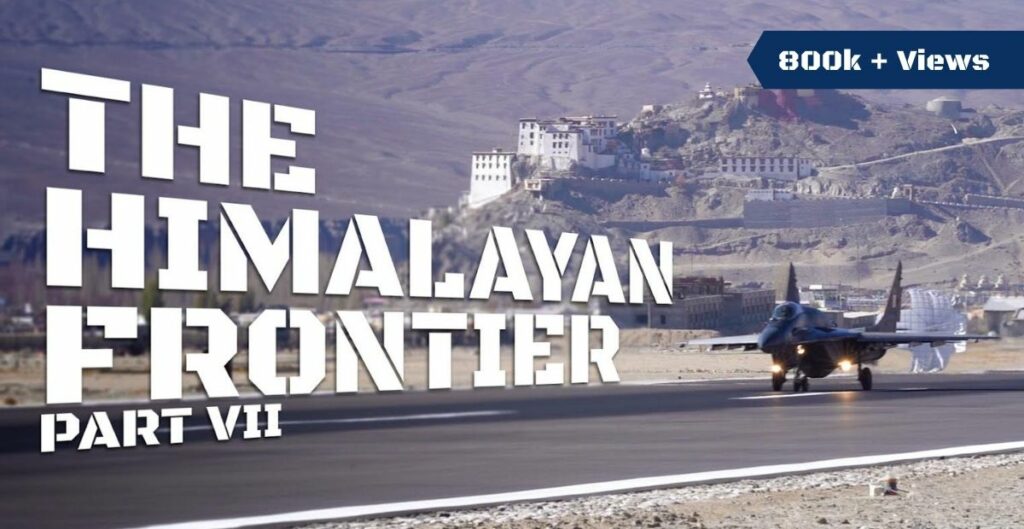
The Indian Air Force’s Leh base. The challenge from the China and Pakistan two-front threat. Protecting India’s borders from Chinese aggression. And preserving Tibet’s Buddhism from Chinese repression. These are the subjects of this documentary. In ‘The Himalayan Frontier’ Part VII here’s a look at Shakti & Shanti (Power & Peace) in Ladakh. We record a day in the life of the Indian Air Force’s Air Warriors at the Air Force Station (AFS), Leh in Ladakh. The AFS is at the frontline of dealing with the China and Pakistan two-front threat.
Air Force Station Leh
Continuing our series, a StratNews Global team of Amitabh P. Revi, Rohit Pandita and Karan Marwaha document the IAF Mig-29, Sukhoi-MKI and Rafale fighter jets. As well as the C-17 Globemaster, Il-76 and, An-32 transport aircraft. Last but not least, we film the Cheetals of the ‘Siachen Pioneers’ 114 Helicopter Unit. Watch their operations at, to and from the Indian Air Force’s AFS, Leh.
India has ramped up its military posture along the Northern borders. This came after the deadly 2020 Galwan clashes with China’s People’s Liberation Army (PLA) forces. And the Indian Air Force’s AFS Leh plays a significant role in that defence posture.
‘The Himalayan Frontier’ Part VII
Specifically, we film the Indian Air Force’s Mig-29, Su-MKI and Rafale fighter jets. The C-17, Il-76 and An-32 transport aircraft. As well as the IAF and Indian Army Advanced Light Helicopter (ALH) Dhruv & Rudra. The Cheetal helicopters also conduct critical sorties.
We speak to the Air Officer Commanding (AOC), the Commanding Officer (CO) of the 114 Helicopter Unit (HU), Mig-29 and Cheetal pilots and the Engineering Officer, 114 HU. Watch this episode as we document the Indian Air Force’s operations in the northern Himalayan frontier. Their role is crucial all along the Line of Actual Control (LAC) with China in Eastern and Southern Ladakh. As well as along China-occupied Tibet. And in the Siachen Glacier along the Line of Control (LoC) and the Actual Ground Position Line (AGPL) with Pakistan.
Finally, we also travel to the Thiksey Gompa or Monastery. It is modeled on the Potala Palace in Lhasa, Tibet. We find priceless Buddhist religious literature, documents and thangkas at the Gompa. They were secretly brought out of Tibet to preserve them from Chinese repression.
Northern Front Ground Reports
In earlier episodes of this series, in Part VI, we interview Air Commodore D.S.Handa, AOC of the Indian Air Force’s AFS, Leh on how the IAF is dealing with the two-front China and Pakistan threat in Ladakh. SNG’s team documents its journey to Leh on the strategic third, alternate axis—the Darcha-Padam-Nimu (NPD) Road, in episode III and episode IV. The route provides critical connectivity. In episode V, Lt Gen Raghu Srinivasan, the DG, BRO in an interview on the frozen Zanskar River Chadar Trail at Chiling near Leh in Ladakh notes “the impetus for connectivity and the surge in Ladakh”.
In part II of this series, the Indian Army Chief, General Manoj Pande tells StratNews Global Editor-in-Chief Nitin A. Gokhale in an exclusive interview, that talks with China are continuing at both military and diplomatic levels. But India is maintaining a robust posture along the LAC. Then Northern Army Commander, now Vice Chief of the Army Staff, Lt Gen. Upendra Dwivedi also tells Nitin Gokhale in Part I, that the “situation is stable but sensitive and not normal”.
Editor’s Note:
This episode was first published on February 16, 2024, and hit 300,000+ views on YouTube on March 3, 2024. It crossed the 400,000+ mark on April 1. 500,000+ on June 29. And crossed 600,000+ views on October 3, 2024. And hit 700,000+ views on May 22, 2025. The episode has over 8 lakh views on January 8, 2026.
Also See:
Pakistani Scholar’s Rant Against His Govt. Goes Viral But Did He Mean It?
An article critical of Pakistan’s military-political establishment that went viral after it was published in The Express Tribune, was quickly taken down within hours. But enough people had downloaded it for the article to be distributed and discussed.
The article by US-based Ph.D scholar Zorain Nizamani, was published on New Year’s Day and began thus:
“For the older men and women in power, it’s over. The young generation isn’t buying any of what you are trying to sell to them. No matter how many talks and seminars you arrange in schools and colleges trying to promote patriotism, it isn’t working.
“Patriotism comes naturally when there is equal opportunity, sound infrastructure and efficient mechanisms in place. When you provide your people with basic necessities and ensure people get their rights, you won’t have to go to schools and colleges to tell students they have to love their country.
“Thanks to the internet, to whatever little education we have left, despite your best efforts at keeping the masses as illiterate as possible, you have failed.”
Zorain is the son of celebrity actors Fazila and Qaiser Nizamani, and clearly belongs to the upper crust of Pakistani society. His mother said the piece was a general commentary on youth perceptions and not aimed at any specific institution.
The son also clarified that he had no political affiliation and whatever he wrote was based on his views and his observations. In a rambling recording posted on X, he said “I have always encouraged thinking, questioning, learning for yourself and reading … the message has always been to think critically for yourself .. question what is being fed to you what is being taught to you by parents, by government by anyone.”
The recording contained nothing critical of the Pakistani government or establishment, in fact it was far removed from what he had written. So it left the question whether he meant what he wrote or not.
In the recording he says “i was having fun when I wrote that, messing around, not thinking a lot.”
Did he mean what he wrote? That remained unclear. Was the recording meant to soothe the powers that be and protect his parents who remain in Pakistan? We may never know but Nizamani’s written piece reflected Pakistan’s painful reality:
Given the dominance of the army and its favoured political proteges, every institution has had to bend to the current order. The economy is not doing well, unemployment is rising and this year according to Dawn, there was a 31% increase in Pakistan’s unemployed.
Official data shows more than 5,000 doctors and 11,000 engineers left the country in the past two years, part of an accelerating talent exodus. The powers that be remain unmoved
Beijing Replaces Wolf Warriors With Cartoonists
China seems to have deliberately outsourced its foreign policy messaging to cartoonists.
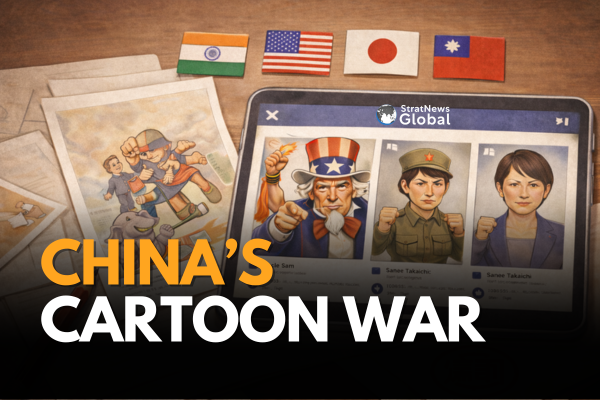
Political cartoons and poster art have quietly been elevated into tools of external propaganda, signalling a conscious shift in how Beijing seeks to shape global opinion. State-run and state-linked outlets such as Xinhua and Global Times now push fresh visuals onto international social media platforms with exuberant enthusiasm, suggesting an institutionalised campaign rather than spontaneous creativity.
Unlike independent media in liberal democracies, which must worry about defamation laws, advertisers, and judges with inconvenient questions, Chinese state media enjoy near-total immunity, granting artists and editors considerable freedom to provoke first and explain later.
The symbolism is anything but subtle. The United States is almost always Uncle Sam, complete with top hat and moral failings. Asian targets are rendered in simpler visual shorthand: India becomes an elephant, Japan is resurrected through wartime or militarist imagery, and Taiwan is reduced to a child or pawn being dragged around by Washington. The idea is clearly to mock rivals, deny them agency, and impose hierarchy without the inconvenience of naming leaders or governments who might respond.
That cartoons now occupy a formal place in China’s propaganda machinery is not coincidental. Global Times runs a dedicated section titled “Cartoon Commentary,” effectively upgrading visual mockery into editorial doctrine. Xinhua, while avoiding the label, regularly publishes and amplifies poster-style cartoons through commentary and opinion streams, especially on foreign platforms. The result is a steady drip-feed of visual provocation designed less to inform than to ridicule, pressure, and frame adversaries cartoons becoming a sanctioned instrument of information warfare rather than a marginal experiment.
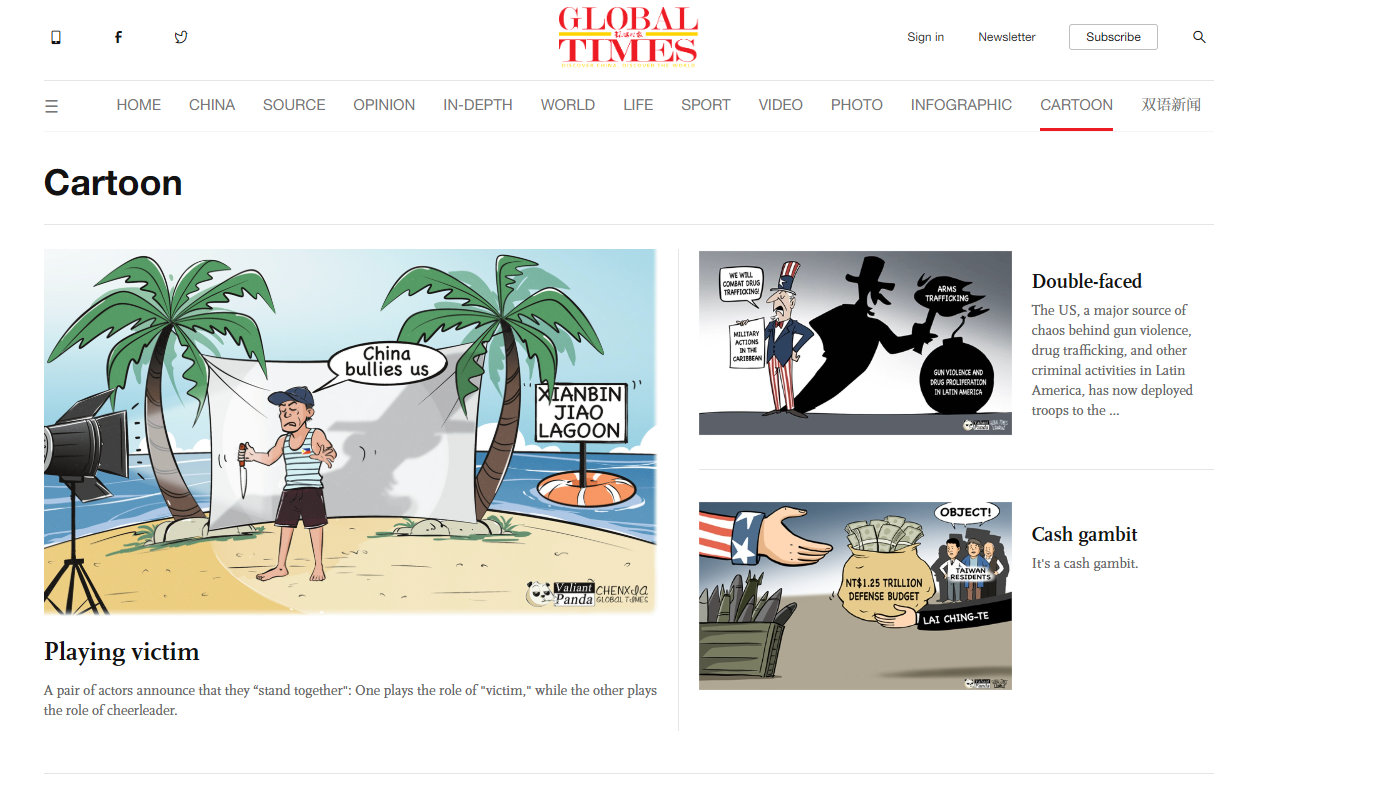
From the U.S. to Japan, and India
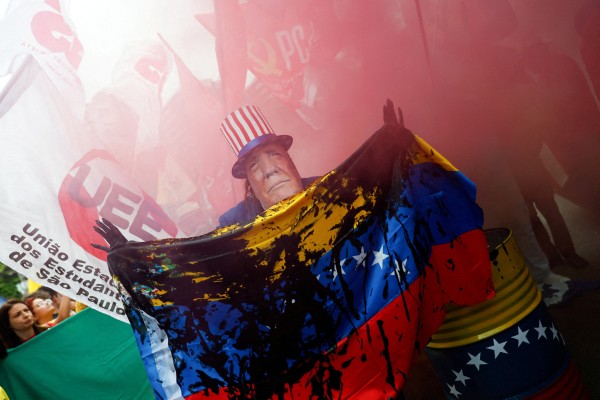
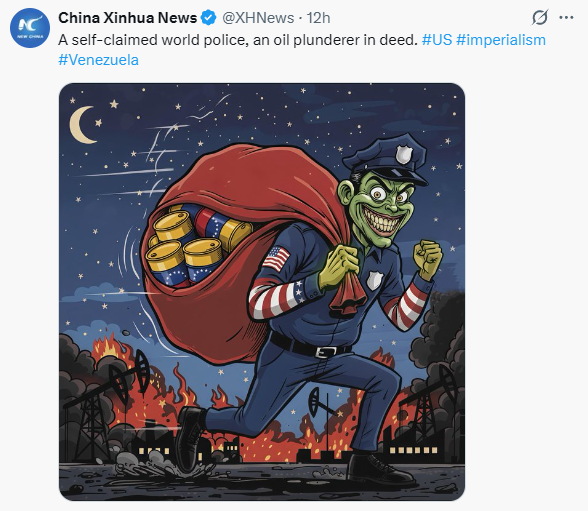 The most recent wave followed U.S. military action in Venezuela, after which Chinese state media circulated cartoons portraying Washington as a serial destabiliser of global order. Similar visuals have accompanied PLA exercises such as “Justice Mission 2025,” reinforcing Beijing’s preferred narrative about “external interference” and foreign-engineered instability.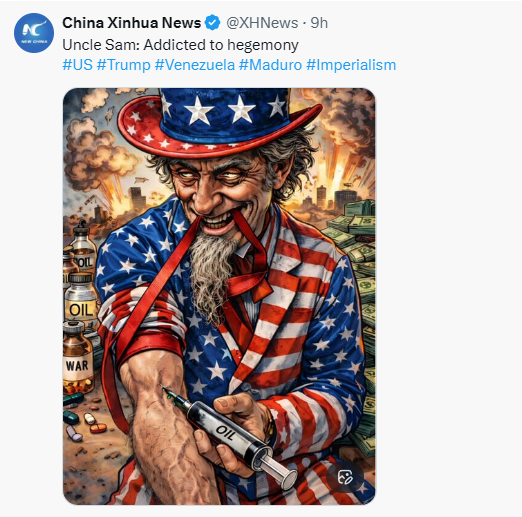
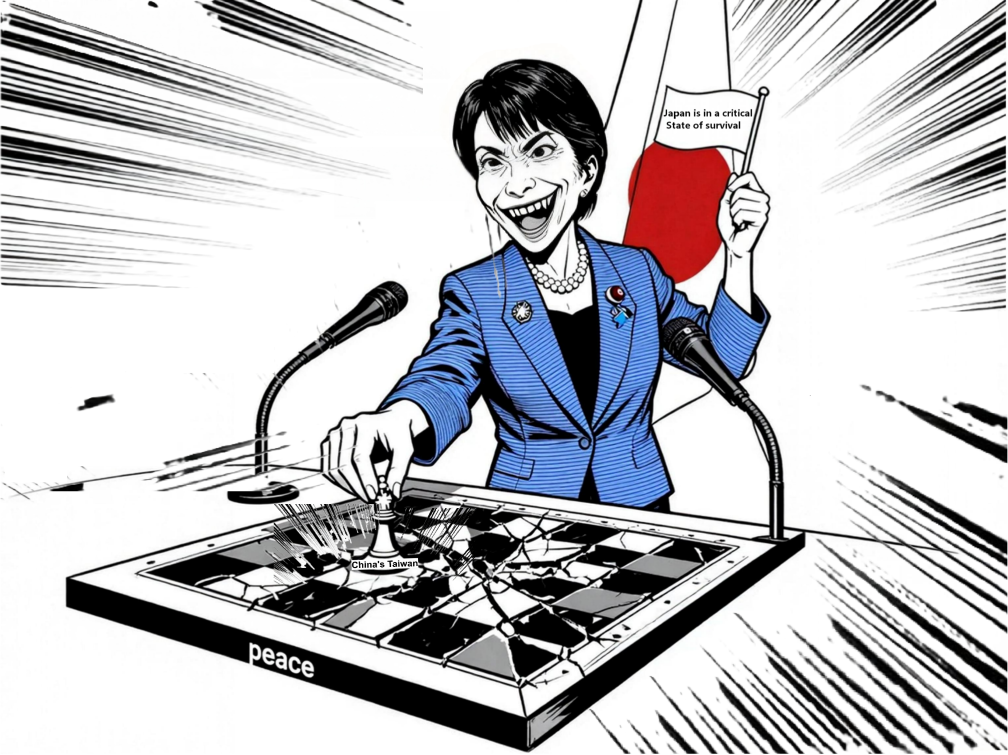
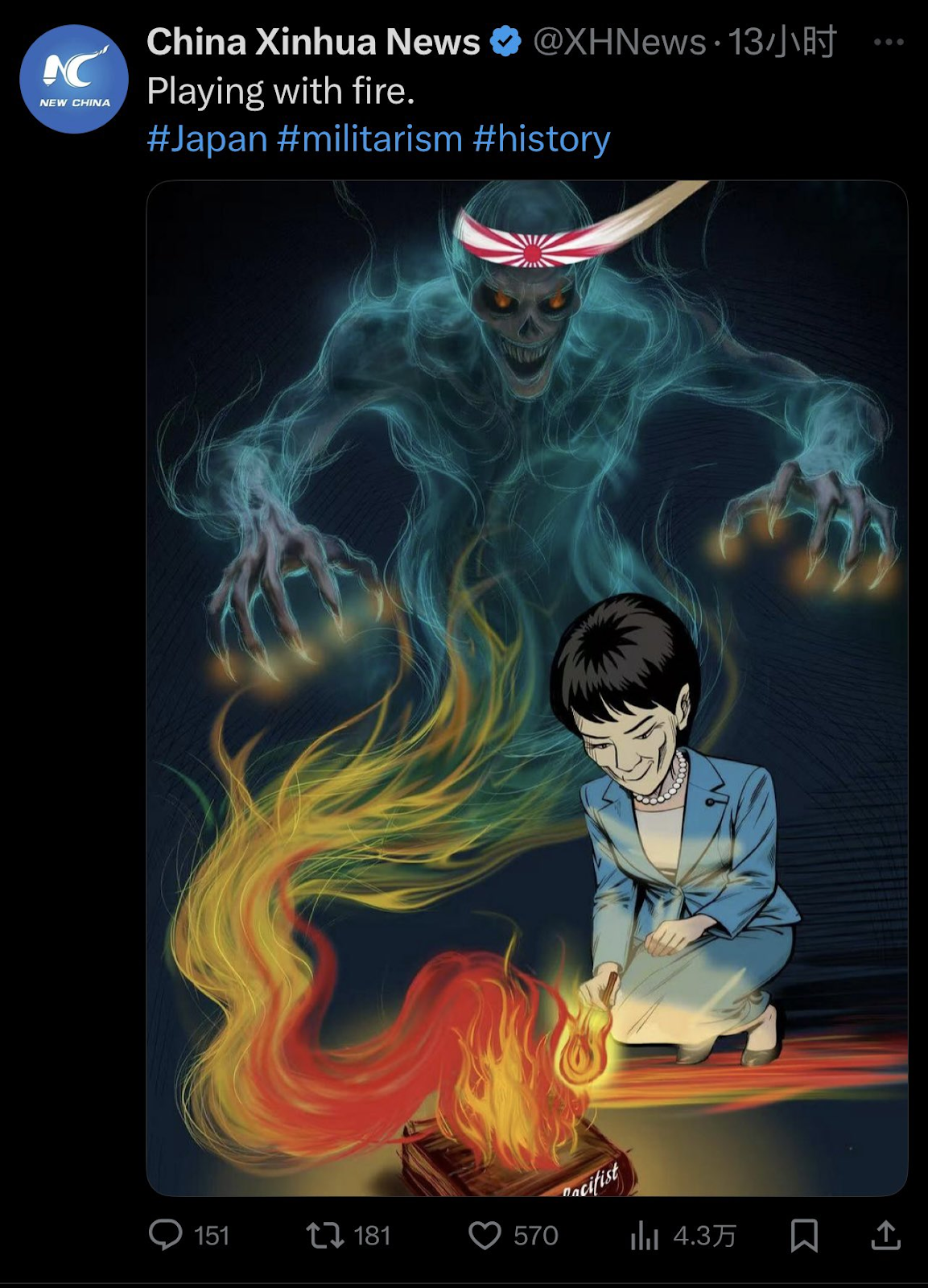
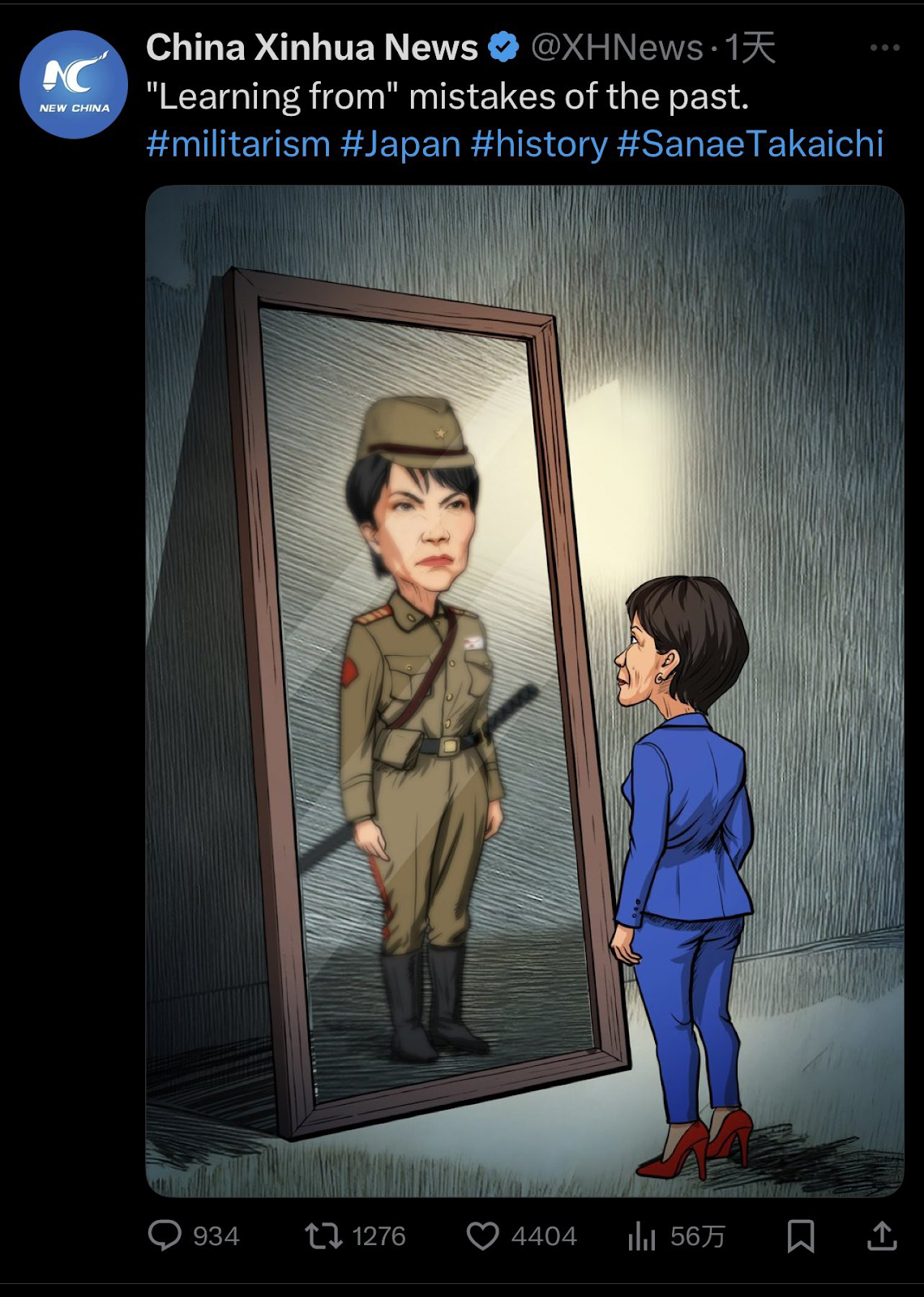
Japan remains a recurring character in this visual theatre. Chinese cartoons and posters frequently depict Tokyo as sleepwalking back into militarism, sometimes with explicit references to Prime Minister Sanae Takaichi. The framing aligns neatly with Beijing’s long-standing claim that Japan is acting less like an independent power and more like a regional franchise of U.S. strategy. In one poster, PM Sanae appears as a reckless disruptor, captioned: “A politician who attempts to disrupt the game with a dangerous move,” a line that leaves little doubt about who Beijing thinks is responsible for regional instability.
.
India has not been spared. During periods of strain most notably the 2020 Galwan border crisis Indian imagery has featured prominently.
A Global Times cartoon titled “Mirror, mirror on the wall, who’s the superpower in the world?” showed an elephant in India’s tricolour admiring an exaggerated, muscular reflection. The message was unmistakable: mock India’s ambitions precisely when soldiers were dying on the border. The cartoon was later deleted following international backlash, illustrating both the bluntness of China’s messaging and its sensitivity when reputational costs rise. Similar visuals have surfaced since, particularly during border tensions or moments of closer India–U.S. alignment.
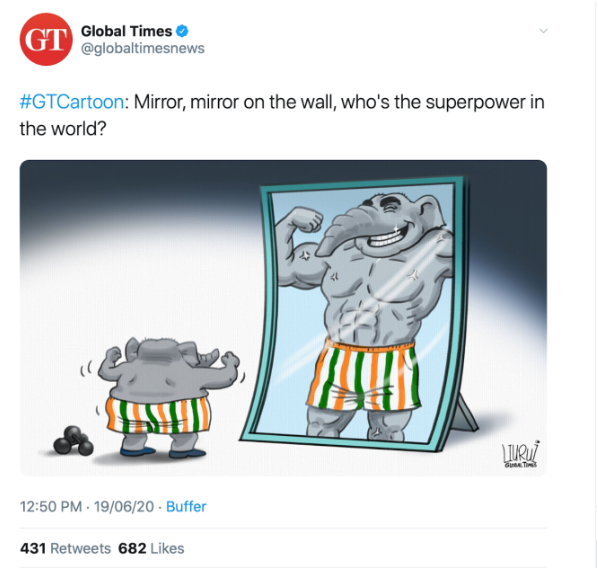
Notably, many of these cartoons circulate primarily on Western social media platforms such as X, rather than Chinese-language websites. The target audience, it seems, is external opinion rather than domestic mobilisation.
Discourse Creation, Not Diplomatic Rupture
According to Cherry Hitkari, Doctoral Fellow at the Institute of Chinese Studies and the Harvard–Yenching Institute, this trend does not represent a rupture in China’s diplomacy. She notes that what is now translated as “propaganda” has never carried negative connotations within socialist systems, where it is understood as education and discourse-setting.
Since the Russia–Ukraine war, many Chinese analysts increasingly see public opinion as a “second battlefield,” one dominated by Western technological reach and media influence. Political cartoons, she argues, are therefore part of a broader hybrid strategy to strengthen China’s “right to speak” and defend what Beijing defines as its national interests. While the tone has become more nationalist particularly for younger audiences the state remains cautious about letting popular nationalism dictate policy. The objective remains discourse creation, not mass mobilisation.
Not everyone is convinced this comes without cost. New Delhi-based China expert Jabin Jacob warns that such cartoons can provoke backlash. Some visuals, he notes, are simply tasteless, inviting diplomatic pushback abroad and uncomfortable questions at home about whether symbolism is substituting for substance.
The Shift From “Wolf Warrior” Diplomacy
This turn toward visual propaganda fits neatly with Beijing’s emphasis on strengthening China’s “international discourse power,” a phrase repeatedly invoked by President Xi Jinping, which aims not to merely respond to events, but to define how those events are framed, debated, and remembered.
In this sense, cartoons represent an evolution from “Wolf Warrior” diplomacy. Where wolf warriors were loud, personalised, and delivered by named diplomats, cartoons are decentralised, deniable, and platform-native. They allow rhetorical escalation without incurring the diplomatic or economic costs that once followed more confrontational official statements. Beijing, seems to believe that a picture provokes more efficiently than a press release.
Why These Cartoons Matter
Platform choice is key. X functions as a hub for policymakers, journalists, defence analysts, and strategic communities. These cartoons are not designed to persuade so much as to insert Beijing’s framing into elite discourse cycles even if the reaction is hostile or mocking.
The growing use of AI-generated visuals has further reduced costs and increased speed, allowing rapid responses to geopolitical developments with eye-catching content. While none of this signals a fundamental shift in China’s foreign policy, it does reflect a greater tolerance for reputational risk in the contest over narratives.
Beyond the United States, India, Japan, and Taiwan, several other countries have been on the receiving end of China’s visual propaganda. Australia famously protested in 2020 after a graphic depicting an Australian soldier threatening a child circulated online. Canada was targeted with mocking visuals during the arrest of Huawei executive Meng Wanzhou, portraying Ottawa as obedient to U.S. interests.
In Southeast Asia, countries such as the Philippines have appeared in posters linked to South China Sea disputes, framed as reckless or manipulated by Washington. European Union states have been depicted collectively as weak, divided, or strategically submissive, particularly over Ukraine and technology controls. Together, these cases underline how Beijing deploys cartoons selectively to pressure governments, frame disputes, and provoke reactions without the inconvenience of formal diplomatic escalation.
Why Venezuela Matters To India’s Rise
For Indian observers, the recent U.S. military action against Venezuela under President Donald Trump offers a masterclass in what not to do when power meets impatience.
Strip away the American chest-thumping, and what remains is a familiar story: a great power convinced of its own righteousness, mistaking speed for strategy and spectacle for success.
India would be wise to study this episode carefully—not because we are tempted to emulate it, but because the pressures that produced it are not uniquely American. Big states everywhere face the same temptations: to shortcut diplomacy, to conflate leverage with legitimacy, and to believe that force settles arguments that politics has failed to resolve.
Power: Easy To Use, Hard To Justify
From an Indian strategic perspective, the most striking feature of the Venezuelan operation is not its military execution but its casual disregard for international legitimacy. You know you have a challenge when regime change is spoken of openly, sovereignty is treated as an inconvenience, and legality is seen as something to be sorted out later—if at all.
India’s own experience should inoculate us against such thinking. From Kashmir to Doklam to Ukraine debates at the UN, New Delhi has consistently argued that process matters. Not because international law is sacred scripture, but because weak process today becomes dangerous precedent tomorrow. When powerful countries normalise unilateral intervention, they quietly license similar behaviour elsewhere—often by actors far less restrained.
Energy Security Not Licence For Adventurism
The subtext of the Venezuelan action, thinly disguised, was energy. Oil has a way of dissolving lofty rhetoric into transactional impulses. For India—one of the world’s largest energy importers—this lesson is especially relevant. New Delhi has learnt, sometimes painfully, that energy security is best pursued through diversification, contracts, and diplomacy. The alternative—treating resources as strategic prizes to be seized—invites instability, retaliation, and long-term supply risk. Energy gained through force is rarely secure; it must be guarded endlessly, at escalating cost.
The Perils Of Shock Therapy
Another familiar element in the Venezuelan case is the faith placed in sanctions and economic strangulation. The assumption is simple: squeeze hard enough, and political collapse will follow. Indian policymakers know this assumption well—and know its limits.
Sanctions often hurt societies more than regimes, harden elite resolve, and create perverse incentives for smuggling, criminal networks, and external patrons.
India’s calibrated use of economic pressure in its neighbourhood has always been paired—at least in theory—with political engagement. New Delhi’s earlier attempts to blockade Nepal only led to lingering long-term resentment. Venezuela is a reminder that economic pain does not automatically translate into political compliance.
The Fantasy Of Spheres Of Influence
There is an older, almost colonial instinct at work in this episode: the belief that geography confers entitlement. Big powers periodically convince themselves that certain regions are “theirs” to manage, discipline, or reorder. Indian history offers little comfort to such thinking.
India has resisted framing South Asia as an exclusive sphere of dominance, precisely because we know how quickly smaller neighbours react against perceived hegemony. Influence that relies on intimidation is brittle. Influence built through consent, interdependence, and restraint lasts longer—even if it feels slower and less satisfying in the short term.
Of course, kindness, particularly in international relations, is often mistaken for weakness.
Which is where that old adage of ‘Speak Softly, But Carry a Big Stick’ comes in. India must not just wield that big stick, but also show that it is ready and able to use it. But only when pushed against the wall, and not to push smaller, weaker nations around.
Optics Matter
One of the underappreciated aspects of the Venezuelan episode is the global reaction. Condemnation did not come only from rivals, but also from countries that otherwise have little sympathy for Caracas. The message was clear: the method, not just the target, was the problem.
India has invested decades in cultivating an image—sometimes frustratingly cautious—of a rising but responsible power. That reputation pays dividends in crises, whether at the UN, in trade negotiations, or during regional standoffs. Loud interventions may energise domestic audiences, but they quietly drain international credibility.
Domestic And Foreign Policy Don’t Mix
Indian analysts will also recognise another pattern: foreign adventures launched under domestic political pressure. History is littered with examples where leaders sought external drama to simplify internal complexity. The results are rarely elegant.
India’s own democratic churn ensures constant political noise. The Venezuelan case is a reminder that foreign policy made for domestic applause often ages badly. Strategic patience should not be mistaken for indecisiveness.
Takeaways For New Delhi
The real lesson for India is not about Venezuela per se. It is about temperament. India is rising, influential, and increasingly consequential. With that comes temptation—to speak louder, act faster, and prove strength theatrically. The Venezuelan episode shows the cost of giving in to that temptation.
Military, economic and political power are absolutely critical, but so is speaking softly. India does not need to shout to be heard. Its advantage lies precisely in doing the opposite—thinking longer, speaking less, and acting with an eye not just on outcomes, but on precedents.
In the end, the most useful takeaway from Trump’s Venezuelan gamble is simple and deeply Indian in spirit: just because you can, does not mean you should.
Nepal: Leaders Who Refused To Stay Relevant And Now Don’t Matter
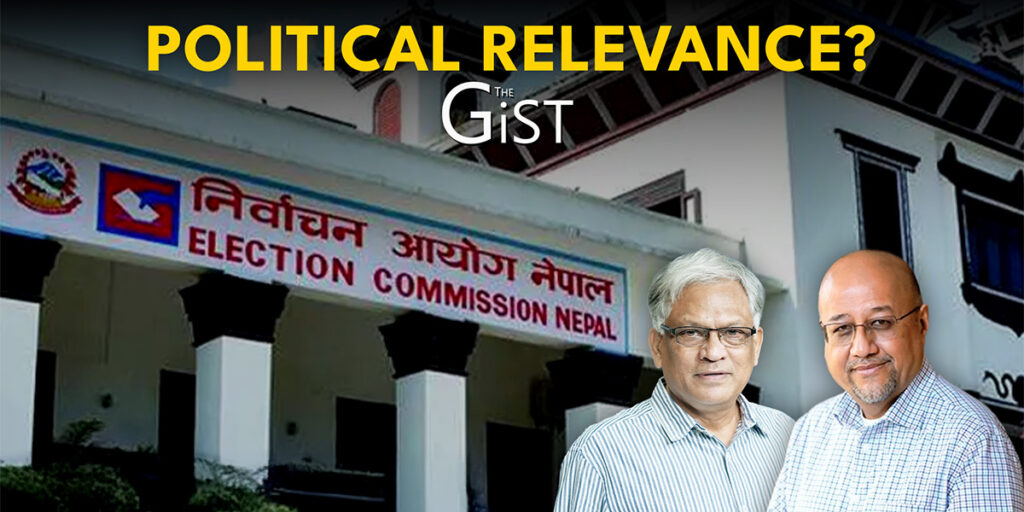
Are politicians like Sher Bahadur Deuba of the Nepali Congress or KPS Oli of the CPN(UML) or even Prachand who leads the Maoists, no longer relevant after the uprising of last year?
“They will try, to use the resources at their disposal to stay relevant. But I don’t think they have read the message of September 2025 very clearly. This is what happens with many leaders with authoritarian streaks … they have not brought in a culture of democracy within their own party.”
Sujeev Shakya, founder of the Kathmandu Economic Forum who runs his own NGO Beed in Nepal, was talking to The Gist about developments in his country since the GenZ uprising that ousted the government of KPS Oli.
Shakya acknowledges that they have authority and they have the resources. But can they stay relevant given what has happened is a big question.
In his view, Nepal has seen significant development over the last two decades, but the political class and the politics has not kept up with the economic transformation. So people’s expectations have increased.
“People are doing entrepreneurship. They want a more robust laws. They want the government to function efficiently. People have the money, they want to travel, they want to go and study outside. But there are roadblocks,” he pointed out.
“There are challenges when it comes to getting approvals, getting permits, getting, you know, people have the money to buy cars, but to get a driving license is a big headache.”
Add to that the money in the hands of the political class, especially the “nepo kids”, showing off flashy cars, foreign travel and so on, created enormous frustration among a people struggling to get jobs, being unable to buy a home in cities like Kathmandu
“I think people were just fed up of the rampant corruption and impunity that people, the leaders got, and that’s why they were targeted using the young people,” Shakya says.
Tune in for more in this conversation with Sujeev Shakya, CEO of the Kathmandu Economic Forum.
China–Japan Trade Row Deepens With Chemical Probe
China’s Ministry of Commerce announced on Wednesday that it has initiated an anti-dumping investigation into dichlorosilane imports from Japan, according to a statement posted on its official website.
Dichlorosilane is a precursor chemical mainly used in thin-film deposition processes in chip manufacturing and is of significant importance to integrated circuit manufacturing.
The investigation comes a day after China announced a ban on exports of dual-use items to Japan amid strained bilateral ties.
Scope and Industry Concerns
China said the probe was initiated at the request of its domestic dichlorosilane producers, which claimed volumes imported from Japan showed an overall upward trend from 2022 to 2024 while prices fell by a cumulative 31%, causing damage to the production and operation of the local industry.
The probe covers alleged dumping between July 1, 2024 and June 30, 2025 and assessing potential injury to domestic producers from January 1, 2022 to June 30, 2025, according to the statement.
In a separate document published by the ministry, a firm representing the industry provided a list of producers, exporters and importers of the compound including three Japanese companies, namely Shin-Etsu Chemical, Air Liquide Japan G.K. and Mitsubishi Chemical Group Corporation.
Geopolitical Context
The investigation will generally conclude before January 7, 2027, with a possible extension of six months, the ministry said, adding that authorities will conduct the investigation in accordance with the law and make an objective and fair ruling.
Ties between the Asian neighbours have deteriorated since Prime Minister Sanae Takaichi said in early November that a Chinese attack on the democratically governed island of Taiwan could be deemed an existential threat to Japan, a remark that Beijing said was “provocative.”
(With inputs from Reuters)