

Support us by contributing to StratNewsGlobal on the following UPI ID
ultramodern@hdfcbank

Strategic affairs is our game, South Asia and beyond our playground. Put together by an experienced team led by Nitin A. Gokhale. Our focus is on strategic affairs, foreign policy and international relations, with higher quality reportage, analysis and commentary with new tie-ups across the South Asian region.
You can support our endeavours. Visit us at www.stratnewsglobal.com and follow us on YouTube, Twitter, Facebook and Instagram.
र 500 per month
र 1000 per month
र 5000 per year
र 10000 per year
Donate an amount of your choice
र 500 per month
Donate र 500 per month

र 1000 per month
Donate र 1000 per month
र 5000 per year
Donate र 5,000 per year
र 10000 per year
Donate र 10,000 per year
Donate an amount of your choice
Donate an amount of your choice

Bangladesh: Imam Arrested For Inciting Violence Against Dipu Chandra
Bangladesh Police have arrested Imam Yasin Arafat as a prime suspect in the lynching and burning of garment worker Dipu Chandra Das. Arafat was apprehended in the Sarulia area of Demra, Dhaka, with assistance from the Dhaka Metropolitan Police (DMP)
Das was lynched by a mob in Bhaluka, Mymensingh, on December 18, following the unrest in Bangladesh that began with the killing of Sharif Osman Hadi, a 32-year-old student leader.
The killing occurred on December 18 in Bhaluka, Mymensingh, amid nationwide unrest triggered by the death of student leader Sharif Osman Hadi. Additional Superintendent of Police Abdullah Al Mamun stated that Yasin allegedly incited a crowd at the Pioneer Factory gate using religious slogans. The mob reportedly assaulted Das before dragging him to the Square Masterbari area, where he was tied to a tree and set on fire. To date, 21 individuals have been arrested, with nine providing confessional statements, as reported by the Dhaka Tribune.
Police said Yasin had been in hiding since the incident.
The death of Das is part of a spike in communal violence documented by the Bangladesh Hindu Buddhist Christian Unity Council. In December alone, the Council recorded 51 incidents, including 10 murders, 23 cases of arson and looting, and several instances of torture based on blasphemy allegations. This trend continued into the new year; on January 8, a 25-year-old Hindu man drowned in Naogaon while fleeing a chasing mob.
Veteran journalist Deep Halder described the public nature of these killings as reminiscent of IS or Taliban in a quote he gave the Australian Broadcasting Corporation. “Thousands of Hizb-ut-Tahrir activists have defied barricades, clashed with cops inside Dhaka during such marches. The Bangladesh Jamaat-e-Islami has called for the nation to be run by Sharia law.”
Amid criticism that the interim Yunus government has failed to provide adequate protection, minority leaders met with BNP Acting Chairman Tarique Rahman on January 3. They presented an eight-point demand for security and justice. While Rahman promised that rights would be protected regardless of faith, it is yet to be seen if his words can be converted into action.
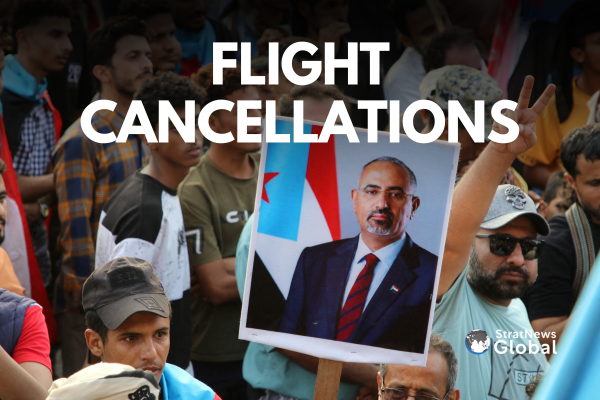
Airlines Cancel Dozens of Flights Between Gulf States and Iran Amid Protests
At least 42 flights between Gulf states and Iranian cities were cancelled on Friday as unrest continued across Iran, according to airport and airline data. The Dubai Airports website showed that flydubai cancelled at least 17 scheduled services between Dubai and Iranian destinations including Tehran, Shiraz and Mashhad.
No official reason was given for the cancellations, but the disruptions coincided with a nationwide internet blackout in Iran that began on Thursday and extended into Friday. The outage followed intensifying anti-government demonstrations that have spread to multiple cities since late December.
Growing Unrest and Flight Disruptions
The protests, sparked by deepening economic hardship and high inflation, have prompted a heavy response from Iranian authorities. Communication restrictions and transportation delays have compounded the impact of the unrest, according to regional observers.
Flydubai did not immediately respond to requests for comment. The airline, which operates regular services to several Iranian destinations, has previously suspended flights during periods of heightened regional tension.
Turkey and Qatar Also Affected
Turkish media reported that Turkish Airlines cancelled 17 flights to and from Iran on Friday, while domestic carrier Ajet cancelled six flights. Budget airline Pegasus Airlines also suspended several of its scheduled routes to Iranian cities.
Meanwhile, Hamad International Airport in Doha showed that at least two flights between Qatar and Tehran were cancelled on Friday. Airport officials did not specify the cause of the cancellations, though regional aviation analysts linked them to uncertainty surrounding the situation in Iran.
Regional Impact and Broader Context
Air connectivity between Iran and neighbouring Gulf countries remains vital for business and travel, particularly as diplomatic and commercial relations have gradually improved since 2023. However, the latest wave of protests has raised renewed concerns about stability and safety in Iranian airspace, prompting airlines to exercise caution.
The developments follow a pattern seen during previous periods of unrest in Iran, when carriers temporarily scaled back operations citing security and communication disruptions. Industry sources said they were closely monitoring the situation and would adjust schedules as conditions evolve.
with inputs from Reuters
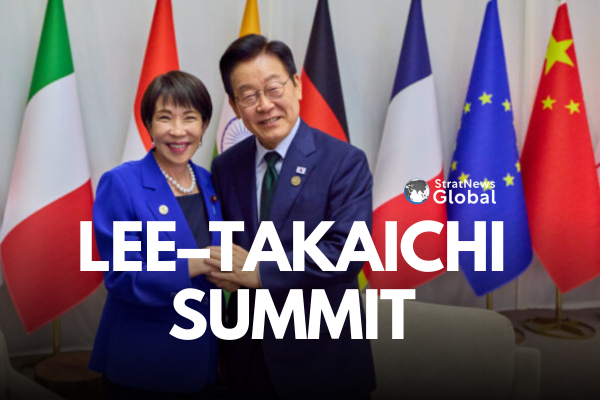
Lee Jae Myung to Visit Japan for Summit with Prime Minister Takaichi
South Korean President Lee Jae Myung will visit Japan on 13 and 14 January for a summit with Japanese Prime Minister Sanae Takaichi, the presidential office announced on Friday. The meeting, to be held in Nara City, will mark the first official visit by Lee since taking office and is aimed at improving relations between the two neighbours.
According to the presidential statement, Lee and Takaichi will meet on 13 January for formal talks, followed by a dinner. They are expected to discuss a wide range of topics, including regional security, global economic challenges and cooperative measures on social issues.
Focus on Future-Oriented Cooperation
The summit seeks to reinforce a shared goal of fostering future-oriented and stable relations between South Korea and Japan. Both governments have recently signalled an interest in deepening cooperation after years of strained ties over trade and historical disputes.
In addition to the formal summit, Lee and Takaichi will attend diplomatic events together during the visit. Lee will also hold a separate meeting with South Korean residents living in Japan to strengthen community engagement and emphasise bilateral people-to-people ties, the statement said.
Regional Topics on the Agenda
Lee’s security adviser, Wi Sung-lac, said during a briefing that the leaders may also address several pressing regional issues. These include ongoing tensions between China and Japan, and discussions on the possible participation of North Korean athletes in the Asian Games, scheduled to take place in Japan this September.
The visit is expected to highlight the two countries’ commitment to dialogue and cooperation amid shifting regional dynamics. Observers view the meeting as a key step towards reinforcing diplomatic stability in Northeast Asia, while advancing economic and security partnerships between Seoul and Tokyo.
with inputs from Reuters
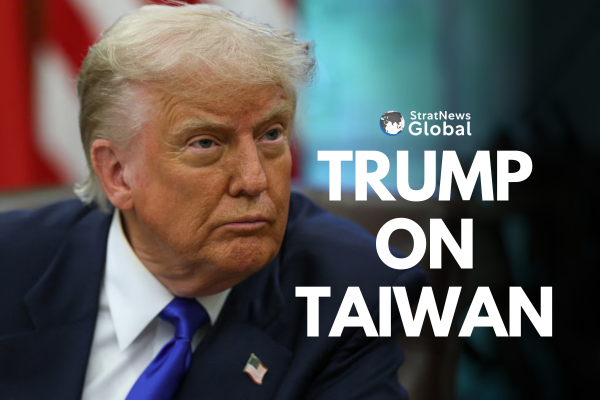
Trump Says Xi Controls China’s Taiwan Policy but Warns Against Action
U.S. President Donald Trump has said it is “up to” Chinese President Xi Jinping to decide how China handles Taiwan, though he cautioned that any change to the current situation would make him “very unhappy.” His remarks were published by The New York Times on Thursday, following an interview conducted a day earlier.
“He considers it to be a part of China, and that’s up to him what he’s going to be doing,” Trump said. “But I’ve expressed to him that I would be very unhappy if he did that, and I don’t think he’ll do that. I hope he doesn’t do that.”
The comments came as Trump discussed lessons Xi might draw from his recent military operation in Venezuela. He dismissed comparisons between Taiwan and Venezuela, arguing that the self-ruled island does not pose the same kind of threat to China that the government of Nicolás Maduro posed to the United States.
Trump Confident Xi Will Avoid Conflict During His Presidency
Trump reiterated his belief that Xi would not take action against Taiwan during his presidency, which ends in 2029. “He may do it after we have a different president, but I don’t think he’s going to do it with me as president,” he said.
The Trump administration outlined in a strategic paper last year that its objective is to prevent conflict with China over Taiwan and the South China Sea by strengthening U.S. and allied military power. The policy aims to deter any unilateral moves that could destabilise the region.
Beijing Reaffirms Sovereignty Claim
China maintains that Taiwan is part of its territory and has never ruled out using force to bring the island under its control. “The Taiwan question is purely China’s internal affair, and how to resolve it is a matter purely within China’s sovereign rights,” said Liu Pengyu, spokesperson for China’s embassy in Washington.
Taiwan’s government rejects Beijing’s claims, asserting its democratic governance and autonomy. While the United States has no formal diplomatic relations with Taiwan, it remains the island’s key international supporter and is bound by law to provide defensive equipment.
Longstanding Tensions Remain
The Taiwan issue has long been a source of friction in U.S.-China relations. Trump, despite his firm rhetoric on China in other areas, has generally avoided stating how he would respond if tensions over the island were to escalate. His recent comments underscore his preference for maintaining stability through personal diplomacy with Xi while keeping military deterrence as a safeguard.
with inputs from Reuters
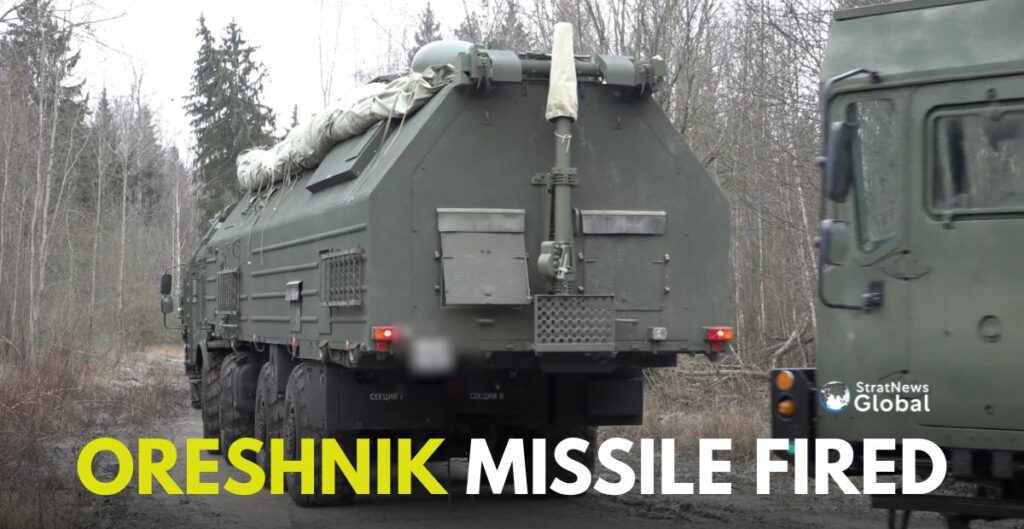
Russia Fires Hypersonic Oreshnik Missile At Ukraine
Russia’s military said it launched a hypersonic Oreshnik missile at a Ukrainian target, claiming it was in retaliation for an alleged drone strike on President Vladimir Putin’s residence last month — an accusation Kyiv denies.
It is the second time that Russia has used the intermediate-range Oreshnik, a missile which President Vladimir Putin has boasted is impossible to intercept because of its reported velocity of more than 10 times the speed of sound.
The missile is capable of carrying nuclear warheads, although there was no suggestion that the one used in the overnight attack had been fitted with them.
The Russian Defence Ministry said the strike had targeted critical infrastructure in Ukraine. It said Russia had also used attack drones and high-precision long-range land and sea-based weapons.
“The strike’s targets were hit,” the ministry said in a statement, describing the targets as a factory producing drones used in the alleged attack against Putin’s residence, as well as energy infrastructure.
Lviv regional Governor Maksym Kozytskyi said a critical infrastructure facility had been targeted. Local media said Stryi, a gas field with a huge gas storage facility, was probably the intended target.
Russian war correspondents released a video purportedly showing the moment the Oreshnik struck its target in western Ukraine. Filmed across a snow-covered landscape, what looked like six flashes were seen striking the ground followed by a loud bang and a series of detonations. Reuters could not immediately verify the authenticity of the video.
Ukraine has called the Russian allegation that its drones tried to attack one of Putin’s residences in the Novgorod region on December 29 “an absurd lie” designed to sabotage already troubled peace talks.
Strike Reported By Head Of Western Ukrainian Region
The Ukrainian air force confirmed on Friday that Russia had fired an Oreshnik missile launched from the Kapustin Yar test range near the Caspian Sea.
Moscow first fired an Oreshnik – Russian for “hazel tree” – against what it said was a military factory in Ukraine in November 2024. On that occasion Ukrainian sources said the missile was carrying dummy warheads, not explosives, and caused limited damage.
Putin has said that the Oreshnik’s destructive power is comparable to that of a nuclear weapon, even when fitted with a conventional warhead. Some Western officials have expressed scepticism about the Oreshnik’s capabilities. One U.S. official said in December 2024 that the weapon was not seen as a game-changer on the battlefield.
Russia released a video in December of what it said was the deployment of the Oreshnik missile system in close ally Belarus, a move meant to boost Moscow’s ability to strike targets across Europe in the event of a war.
(With inputs from Reuters)
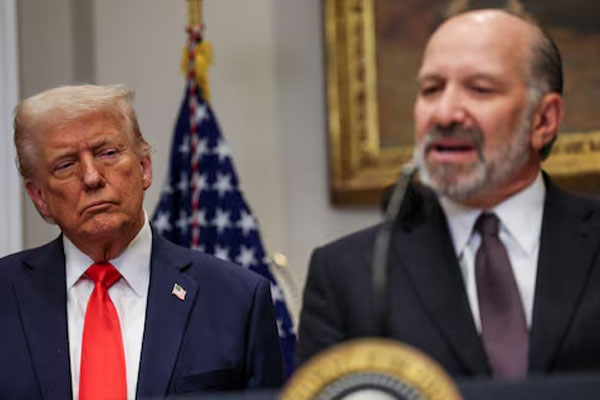
Modi’s Call That Never Came: Trump’s Ego Demanded A Phone Call
“It’s all set up, you have to have Modi call the president … they (Indians) were uncomfortable doing it. So Modi didn’t call.”
Modi didn’t call, so the India-US trade deal didn’t go through, US Commerce Secretary Howard Lutnick revealed on a podcast.
“Then India comes back and says okay we’re ready, I said ready for what, it was like three weeks later, are you ready for the train that left the station … India was on the wrong side of the see-saw, they couldn’t get it done when they needed to and all these other countries kept doing deals.”
Lutnick acknowledged there may have been domestic issues underlying Modi not calling up Trump on the phone.
“There’s a lot of countries and they each have their own deep internal politics and to get something approved by their parliament of by their government, these are deeply complex things but we got them done. We got Europe done, then we did Korea, country after country.”
The India deal was always up there. In fact, Lutnick recalled after the deal with the UK was done, that included a phone call to Trump from Prime Minister Keir Starmer, the president had referred to India a number of times. Now it appears what was negotiated at that time no longer holds.
“The US has stepped back from that trade deal that we had agreed to earlier. We are not thinking about it anymore,” Lutnick said. But he also said that the door remains open. “India will work it out,” he said.
Lutnick’s revelations confirm what is widely believed, that Trump’s ego got in the way of signing a deal where India had conceded more than it was willing to in the past.
Indian diplomats say that Lutnick’s remarks trivialised the complex and intense nature of trade negotiations that are always done institutionally and not through personal phone calls or by massaging some one’s ego. Clearly, for the man occupying the White House, spectacle and flattery are important.
What happens now? Trump has already announced 500% tariffs on countries buying Russian oil, that includes India and China. Although diplomats say the India-US relationship is broader than trade, it’s not clear how much and for how long it can be insulated from Trump’s public sparring and personalised attacks.
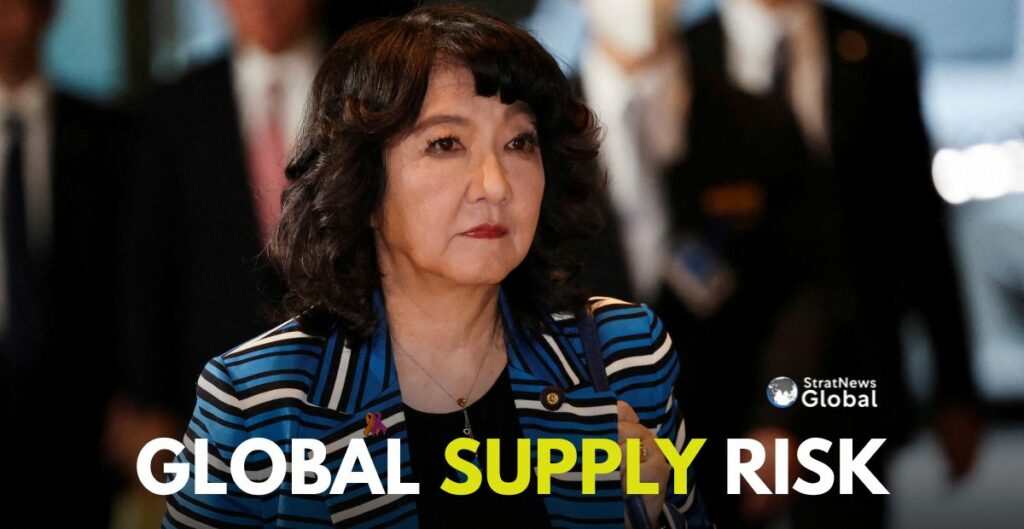
Japan, U.S. To Discuss Rare Earths Amid China Export Curbs
Japan’s Finance Minister Satsuki Katayama announced on Friday that she will meet U.S. counterparts next week to address rare earths supply issues, while reiterating Tokyo’s criticism of China’s new export restrictions.
Katayama said she was “very concerned” about Beijing’s actions and that she would share Japan’s stance at next week’s meeting.
Ban on Dual-Use Items
Beijing on Tuesday announced a ban on exports of dual-use items to the Japanese military. On Thursday, the Wall Street Journal reported that China had also begun restricting exports to Japanese companies of rare earths and powerful magnets containing them.
Asked about the report, Japan’s trade minister Ryosei Akazawa did not comment on whether China had halted Japan-bound export permit reviews, saying Tokyo was analysing the situation.
“What we can say is we’re coordinating closely with relevant countries, including the U.S., because China’s rare earth-related regulations affect the global economy,” Akazawa added.
G7 Meeting
Finance ministers from the G7 nations will meet in Washington on January 12 to discuss rare earths supplies, three sources familiar with the matter told Reuters.
Asked about China’s move, Katayama said recent developments were being addressed and discussed by finance ministers from the Group of Seven.
“These discussions are ongoing because there is a shared recognition, at least among the G7, that securing monopolistic positions through non‑market means, and then using that position as a strategic weapon, is unacceptable,” she said.
“Such practices are seen as, in a sense, crisis‑inducing for the global economy and highly problematic from the standpoint of economic security,” she added.
(With inputs from Reuters)
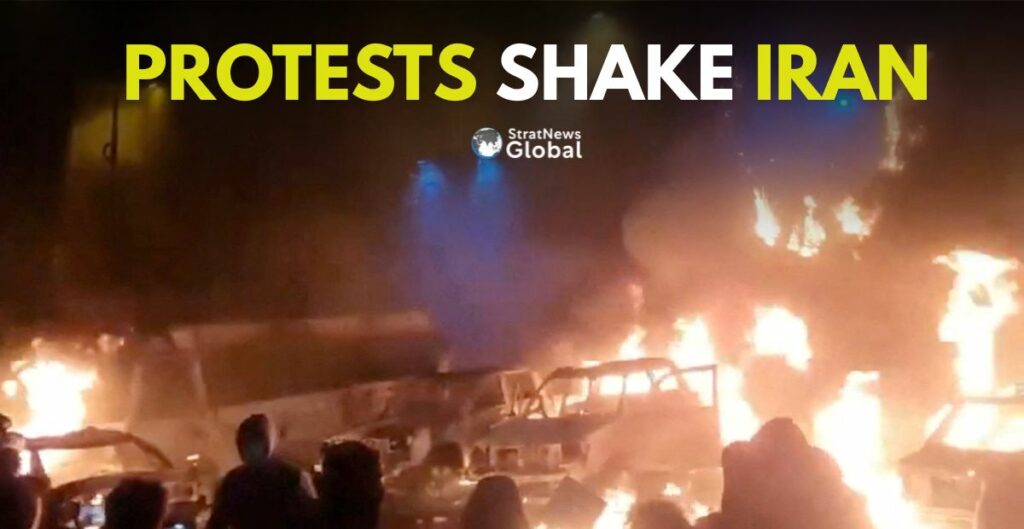
Iran Faces Deepening Crisis As Protests Spread Nationwide
Iran’s clerical establishment faces a growing legitimacy crisis as anti-government protests spread nationwide, though they remain smaller than the 2022–23 unrest sparked by Mahsa Amini’s death.
Starting in Tehran with shopkeepers in the Grand Bazaar angered by a sharp slide in the rial currency, the latest protests now involve others – mainly young men rather than the women and girls who played a key role at the Amini protests.
The U.S.-based Human Rights Activists News Agency (HRANA), has reported at least 34 protesters and four security personnel killed, and 2,200 arrested during the unrest, which analysts say highlights a deeper disillusionment with the Shi’ite status quo.
Authorities have tried to maintain a dual approach to the unrest, saying protests over the economy are legitimate and will be met by dialogue, while meeting some demonstrations with tear gas amid violent street confrontations.
Nearly five decades after the Islamic Revolution, Iran’s religious rulers are struggling to bridge the gap between their priorities and the expectations of a young society.
Protesters Take Over the Streets
A former senior official from the establishment’s reformist wing said the Islamic Republic’s core ideological pillars — from enforced dress codes to foreign policy choices – did not resonate with those under 30 – nearly half the population.
The hijab, a flashpoint during the Amini protests, is now being enforced selectively.
In the ongoing protests, many protesters are venting anger over Tehran’s support for militants in the region, chanting slogans such as “Not Gaza, not Lebanon, my life for Iran,” signalling frustration at the establishment’s priorities.
Tehran’s regional sway has been weakened by Israel’s attacks on its proxies – from Hamas in Gaza to Hezbollah in Lebanon, the Houthis in Yemen and militias in Iraq – as well as by the ousting of Iran’s close ally, Syrian dictator Bashar al-Assad.
No Easy Way Out for Iran’s Supreme Leader
Supreme Leader Ayatollah Ali Khamenei, facing one of the most precarious moments of his decades-long rule, responded by vowing Iran “will not yield to the enemy.”
The former Iranian official said there is no easy way out for the 86-year-old leader, whose decades-old policies of building proxies, evading sanctions and advancing nuclear and missile programs appear to be unravelling.
Israeli Prime Minister Benjamin Netanyahu has praised the protests, calling them “a decisive moment in which the Iranian people take their futures into their hands”.
Inside Iran, opinions are divided on whether foreign military intervention is imminent or possible and even firm government critics question whether it is desirable.
(With inputs from Reuters)
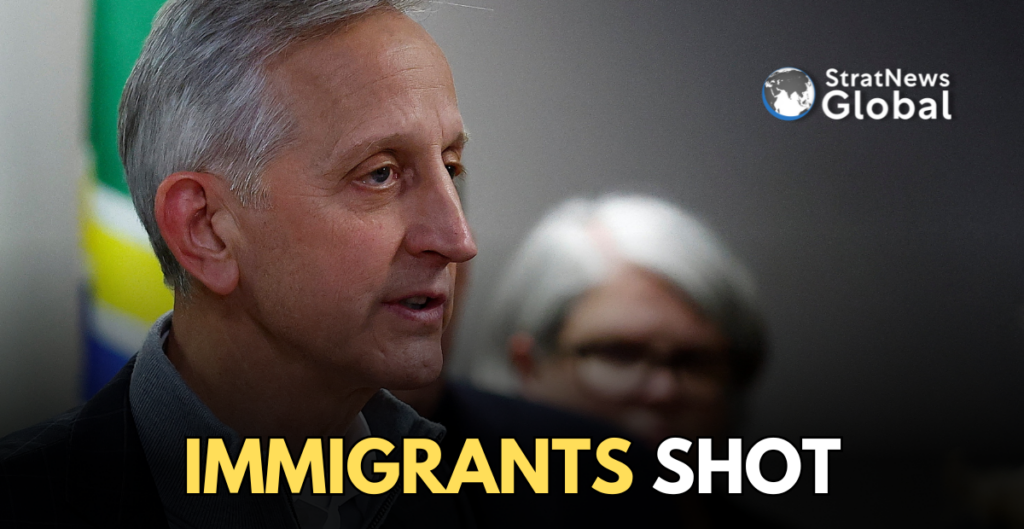
USA Immigration Agent Shoots Two People In Portland
A U.S. immigration agent shot and wounded a man and a woman in Portland, Oregon, authorities said on Thursday, leading city and state officials to call for calm given public outrage over the ICE shooting death of a Minnesota woman a day earlier.
“We understand the heightened emotion and tension many are feeling in the wake of the shooting in Minneapolis, but I am asking the community to remain calm as we work to learn more,” Portland police chief Bob Day said in a statement.
The Portland shooting unfolded Thursday afternoon as U.S. Border Patrol agents were conducting a targeted vehicle stop, the Department of Homeland Security said in a statement.
The statement said the driver, a suspected Venezuelan gang member, attempted to “weaponise” his vehicle and run over the agents. In response, DHS said, “an agent fired a defensive shot”, and the driver and a passenger drove away.
Reuters was unable to independently verify the circumstances of the incident.
Pause On Immigration Crackdown
Portland and Oregon leaders said at a news conference Thursday evening that they had no details on what led to the shootings, even whether the violence was linked to immigration enforcement.
While they said the FBI was investigating, Portland Mayor Keith Wilson and Oregon Governor Tina Kotek, both Democrats, called for a pause in the federal immigration crackdown pending a full and independent investigation.
“There was a time when we could take them at their word,” Wilson said of how federal officials had described the shooting. “That time is long past.”
At the same news conference, state Senator Kayse Jama, who arrived in the U.S. 28 years ago as a refugee from Somalia, addressed federal immigration agents: “We do not need you, you are not welcome, you need to get the hell out of our community.”
In an earlier statement, Portland police said that the shooting took place near a medical clinic in the eastern part of the city. Six minutes after arriving at the scene and determining federal agents were involved, police were informed that two people with gunshot wounds – a man and a woman – were asking for help at a location about 2 miles (3 km) to the northeast of the medical clinic.
Police said they applied tourniquets to the man and woman, who were taken to a hospital. Their condition was unknown.
Minneapolis Shooting
The shooting came a day after a federal agent from U.S. Immigration and Customs Enforcement (ICE), a separate agency from the Border Patrol within the Department of Homeland Security, fatally shot a 37-year-old mother of three in her car in Minneapolis.
That shooting has prompted two days of protests in Minneapolis.
Officers from both ICE and Border Patrol have been deployed in cities across the U.S. as part of Republican President Donald Trump’s immigration crackdown.
While the aggressive enforcement operations have been cheered by the president’s supporters, Democrats and civil rights activists have decried the posture as an unnecessary provocation.
U.S. officials contend criminal suspects and anti-Trump activists have increasingly used their cars as weapons, though video evidence has sometimes contradicted their claims.
(with inputs from Reuters)
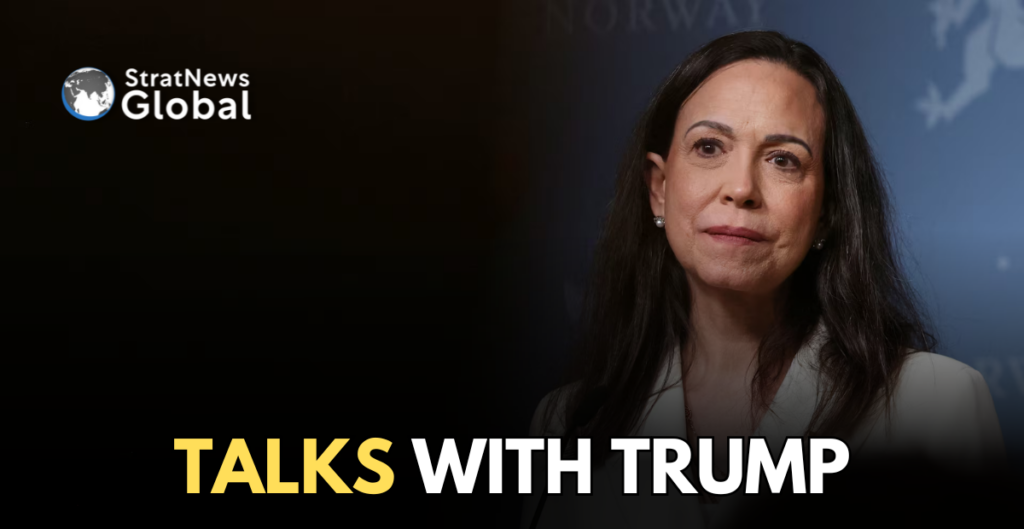
Trump To Meet Venezuela’s Opposition Leader Machado Next Week?
American President Donald Trump indicated on Thursday that opposition leader of Venezuela Maria Corina Machado, was coming to Washington next week.
During an interview on Fox News’ “Hannity” program, Trump was asked if he plans to meet with Machado following U.S. strikes on Venezuela that resulted in the capture of its president, Nicolas Maduro.
“Well, I understand she’s coming in next week sometime, and I look forward to saying hello to her,” Trump responded.
The White House did not immediately respond when reached for additional details on the meeting.
First Meeting With Machado
This will be Trump’s first meeting with Machado, who said earlier this week that she hadn’t spoken to the U.S. leader since she won the Nobel Peace Prize in October.
The future governance of the South American country remains in doubt. Trump over the weekend dismissed the idea of working with Machado, saying “she doesn’t have the support within or the respect within the country.”
Trump told Fox News that it will take time for the South American country, currently led by interim acting President Delcy Rodriguez, to get to a place where it can hold elections.
“We have to rebuild the country. They couldn’t have an election,” he said. “They wouldn’t even know how to have an election right now.”
U.S. Interest In Venezuela
Venezuela, an OPEC member, is one of the biggest producers of oil. Its industry has become a focal point of the Trump administration, with a senior official telling Reuters that oil sales to the United States will start immediately, with an initial shipment of approximately 30 million to 50 million barrels and will continue indefinitely.
Trump said he will meet with oil executives at the White House on Friday. Those oil companies, according to the president, will play a key role in rebuilding Venezuela’s oil industry.
“They’re going to rebuild the whole oil infrastructure. They’re going to spend at least $100 billion, and it’s an unbelievable oil that they have, and an unbelievable quality of oil and amount of oil,” he said.
(with inputs from Reuters)