

Support us by contributing to StratNewsGlobal on the following UPI ID
ultramodern@hdfcbank

Strategic affairs is our game, South Asia and beyond our playground. Put together by an experienced team led by Nitin A. Gokhale. Our focus is on strategic affairs, foreign policy and international relations, with higher quality reportage, analysis and commentary with new tie-ups across the South Asian region.
You can support our endeavours. Visit us at www.stratnewsglobal.com and follow us on YouTube, Twitter, Facebook and Instagram.
र 500 per month
र 1000 per month
र 5000 per year
र 10000 per year
Donate an amount of your choice
र 500 per month
Donate र 500 per month

र 1000 per month
Donate र 1000 per month
र 5000 per year
Donate र 5,000 per year
र 10000 per year
Donate र 10,000 per year
Donate an amount of your choice
Donate an amount of your choice
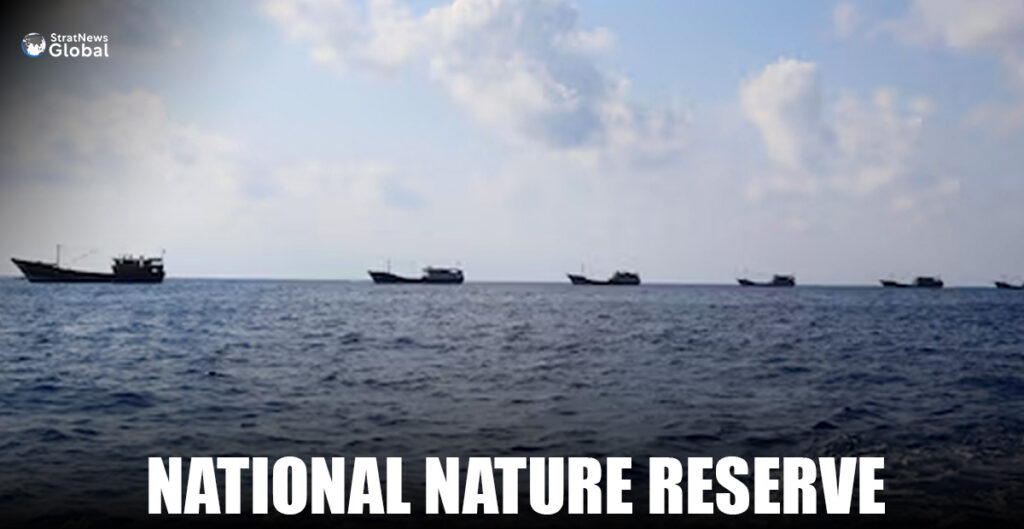
China Plans Nature Reserve At Disputed South China Sea Shoal
China has approved establishing a national nature reserve at the disputed Scarborough Shoal in the South China Sea, its government announced on Wednesday, framing the move as a step to reinforce Beijing’s territorial claims and maritime rights in the contested waters.
Scarborough Shoal, which Beijing calls Huangyan Island and which is known in the Philippines as the Panatag Shoal, has long been a flashpoint in the dispute between Beijing and Manila over sovereignty over and fishing access to a conduit for more than $3 trillion of annual ship-borne commerce.
The surrounding waters serve as a key shipping route, heavily patrolled by the U.S. Navy, while also providing rich fishing grounds and potential mineral resources.
Last month, a Chinese navy vessel accidentally collided with a Chinese coast guard ship while attempting to block a Philippine coast guard vessel near Scarborough Shoal. Philippine military officials suggested that the high-speed collision may have resulted in at least two Chinese fatalities, according to video evidence.
Later in August, the Philippines, Australia, and Canada conducted joint exercises east of the shoal, deploying aircraft and three warships to simulate responses to aerial threats.
Chinese State Council’s Notice
On Wednesday, China’s State Council posted a notice online stating that specifics regarding the area and size of the project would be provided separately by the National Forestry and Grassland Administration.
“The establishment of the Huangyan Island National Nature Reserve is a crucial measure to safeguard the diversity, stability, and sustainability of Huangyan Island’s natural ecosystem,” the notice stated, using China’s name for Scarborough Shoal.
The Philippine embassy in Beijing did not immediately respond to an emailed request for comment.
China claims almost the entire South China Sea, overlapping the exclusive economic zones of Brunei, Indonesia, Malaysia, the Philippines and Vietnam. Unresolved disputes have festered for years over ownership of various islands and features.
In 2016, the Permanent Court of Arbitration in The Hague ruled that China’s sweeping claims in the region were not supported by international law, a decision that Beijing rejects.
Tensions have simmered in recent years in the strategic waterway. Last month, Manila and Beijing traded accusations over an encounter at the Scarborough Shoal that resulted in the first known collision between Chinese vessels in the area.
The designation of the nature reserve is “an important guarantee for maintaining the diversity, stability, and sustainability of the atoll’s natural ecosystem,” China’s State Council said.
The specific boundaries and zoning of the reserve will be announced separately by the National Forestry and Grassland Administration, it added.
(With inputs from Reuters)
Lithuanian FM Says No NATO Member Is Safe As Drone Incidents Risk Escalation
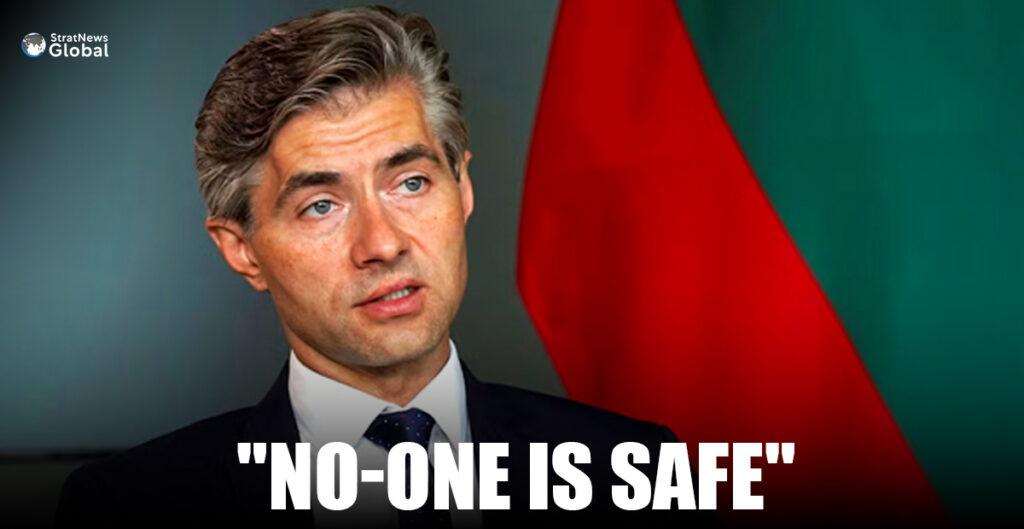
Russian drone incursions into NATO territory risk escalating into an “exchange of military power,” Lithuania’s Foreign Minister Kestutis Budrys said on Wednesday, carefully avoiding the term “conflict.”
Poland shot down drones that entered its airspace during a widespread Russian attack in western Ukraine on Wednesday, with the NATO member calling the incursion “an act of aggression” and marking the first time a member of the alliance has fired shots in the war.
‘On Brink Of War’
Polish Prime Minister Donald Tusk told parliament it was “the closest we have been to open conflict since World War Two”, although he also said he had “no reason to believe we’re on the brink of war”.
Poland said 19 objects had entered its airspace during a large Russian air attack on Ukraine, and that it had shot down those that posed a threat.
Tusk called the incident a “large-scale provocation” and said he had activated Article Four of NATO’s treaty, under which alliance members can demand consultations with their allies.
‘No-One Is Safe’
“No-one is safe here, no-one is safe in the region, no-one is safe in Europe and within the alliance, because those incidents are very close to the situations when everything is going to escalate,” Budrys said.
“We have a strong interest – probably the strongest and biggest one – to avoid these scenarios… Scenarios like we are getting in some situations where we exchange the use of military power against each other”, he said when asked whether such incidents risk dragging NATO into direct conflict with Russia.
The Baltic country, a member of both NATO and the European Union that shares borders with Russia and its ally Belarus, has not received confirmation that the Russian drone incursion into neighbouring Poland was intentional, Budrys said.
Russia has the responsibility to avoid military drones flying into NATO territory, and NATO must send a “strong message to Russia that they’re dealing with something that can escalate,” Budrys said.
“It is in everyone’s interest to avoid this, Russia’s also,” said the minister.
NATO should also work to increase air defences in the Baltics and in Poland, which all border Russia or Belarus, Budrys added.
(With inputs from Reuters)
Israel’s Qatar Strike Has Multiple Splinters Flying Around
The Israeli strike on Hamas officials in the heart of Doha, Qatar, comes two days after six Jewish civilians were killed at a Jerusalem bus stop by two Palestinians from the occupied West Bank. Does that presume this was Israel’s retaliation for the deaths of its people?
“It could be,” said a former Indian diplomat with long experience of the Arab world. As he put it, “the Israeli strike was disproportionate, which mirrors the killing of over 64,000 Palestinian civilians in the months following the Hamas attack from Gaza on Israel’s southern settlements two years back.”
The Israeli casualties from the Hamas attack was reported at 1,195, so clearly when the Jewish state hits its enemies, it hits hard showing little or no mercy.
That the attack targeted Hamas negotiators involved in parleys to end the war, suggests a cynical view of peace among Israel’s top leadership and even perhaps a disregard for how this attack could impact the remaining Israeli hostages held by Hamas.
Did the US know that Israel was planning a strike of this kind? President Trump says he didn’t know and by the time they got to know, it was too late.
India’s former ambassador to Jordan and Libya, Anil Trigunayat, believes that “The U.S.’s muted reaction against the killing of Hamas leaders in Doha, which is under their own security umbrella, also indicates that for the U.S., Qatar is expendable.”
For the region, it is time to show Arab solidarity. The UAE President Sheikh Mohammad bin Zayed is in Doha, Jordan’s Crown Prince Hussein is also expected and the Saudi King Mohammad bin Salman.
The Saudis and the UAE are known to dislike the Qatari leadership. In fact, in 2017 they enforced a blockade that ended only in 2021. The “bad blood” reflects the role Qatar has played in the region, supporting the Arab Spring of 2010-11 that saw the region’s traditional monarchies come under pressure from mobs in the streets demanding democracy.
Qatar hosts Afghanistan’s Taliban and of course Hamas. It is known to support the Muslim Brotherhood. Add to that close ties with Shia Iran. Not to forget the Al Jazeera television channel which beams programmes and features its Arab neighbours don’t like.
Diplomats say Qatar has leveraged its weight as a “gas giant” to punch above its weight, implicitly threatening the use of the assorted terrorist groups on its soil against its neighbours. And for insurance it has the US Al-Udeid air base on its soil.
But how solid is that insurance? Does it still hold after the Israeli attack? These questions must be warming the deliberations of Qatar’s top leadership. If Hamas could be targeted in this manner, what of the others?
It’s a serious loss of face for the Qatari Emir Tamir bin Hamad bin Thani. His government has vowed retaliation. Could it seek to use the terrorist groups it hosts to target Israel? Will its Gulf Arab neighbours, perhaps egged on by the US, seek to get Qatar to hue to their line which envisages eventual reconciliation with Israel?
More to the point, where will the Hamas leadership go? To Turkey as some are suggesting? Do the Turks want them? How freely will they be allowed to operate. Don’t forget, Turkey is a NATO member.
Trigunayat believes Netanyahu wants to end the war on his terms, by decimating and decapitating the Hamas leadership. The Qatar strike may not have been entirely successful in that regard, but count on the Israelis to persist.
Trump Calls For 100% EU Tariffs On China, India To Pressure Putin
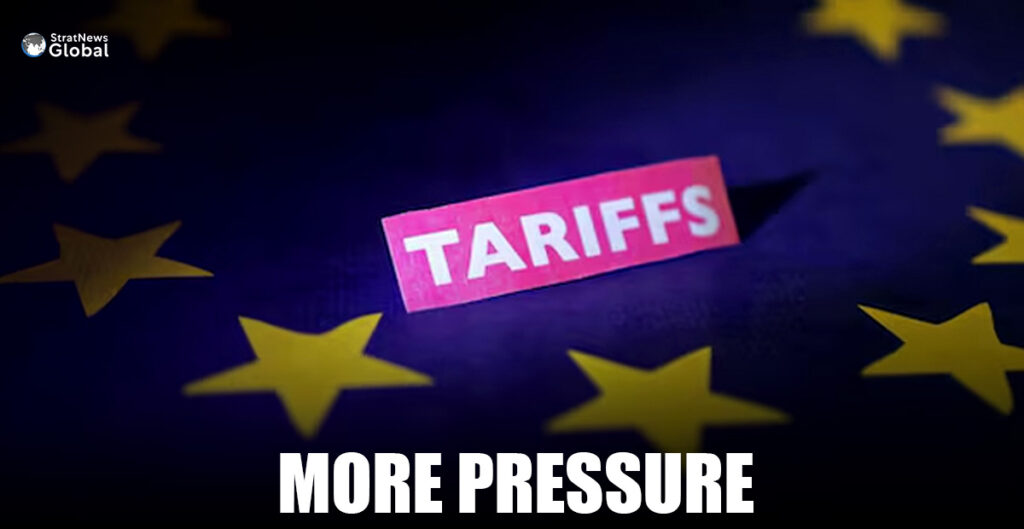
U.S. President Donald Trump on Tuesday called on European Union (EU) officials to impose tariffs of up to 100% on China as part of a broader strategy aimed at pressuring Russian President Vladimir Putin, according to a U.S. official and an EU diplomat.
Trump also encouraged the European Union to slap India with similarly expansive tariffs, said the official, who requested anonymity to discuss private conversations.
China and India are major purchasers of Russian oil and, as such, they play a vital role in keeping Russia’s economy afloat as it continues to pursue its expanded invasion of Ukraine, which began in 2022.
Trump made the request, which was conveyed via conference call, to EU sanctions envoy David O’Sullivan and other EU officials. The EU delegation is currently in Washington to discuss sanctions coordination.
The EU diplomat said the U.S. had indicated it was willing to impose similar tariffs if the European Union heeded the U.S. request.
“They are basically saying: We’ll do this, but you need to do it with us,” the diplomat said.
Strategic Shift
The U.S. request, if heeded, would result in a change of strategy for the EU, which has preferred to isolate Russia with sanctions rather than tariffs.
China firmly opposes the U.S. applying such so-called economic pressure, its foreign ministry said at a regular press briefing on Wednesday, adding that it also opposed the use of China in discussions on Russia.
Trump, whose request was first reported by the Financial Times, has frequently threatened to impose tariffs on India and China as punishment for their purchases of Russian crude.
While Trump did hike tariffs on India over the summer by 25 percentage points in part due to its economic relationship with the Kremlin, Trump has yet to pull the trigger on the more punishing options he has floated.
At times, he has complained that Europe itself has not fully decoupled from Russia, which supplied about 19% of EU gas imports last year, although the bloc says it is committed to fully ending its dependency on Russian energy.
Later on Tuesday, Trump suggested that the U.S. could, in fact, boost trade with India, writing in an evening social media post that the U.S. and India are working to address trade barriers between the nations.
He added that he was looking forward to speaking with Indian Prime Minister Narendra Modi.
(With inputs from Reuters)
France’s New Prime Minister Assumes Office Amid Widespread Protests
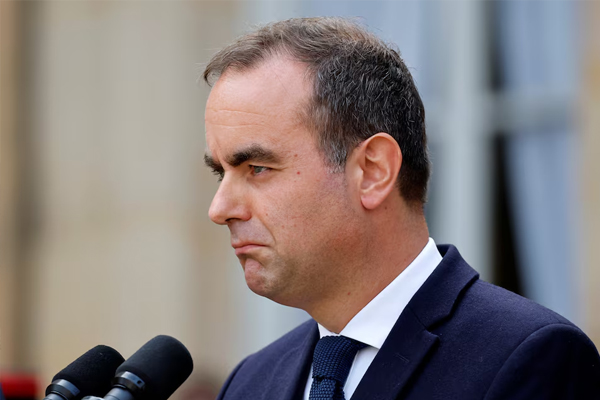
Sebastien Lecornu, a staunch ally chosen by President Emmanuel Macron as France’s fifth prime minister in just two years, assumed office on Wednesday amid sweeping anti-government protests that underscored the severity of the nation’s political turmoil.
Lecornu, a conservative Macron protege who most recently served as his defence minister, arrived at the prime minister’s residence at midday, where he met with former Prime Minister Francois Bayrou, who was ousted by parliament on Monday over plans to trim the country’s outsized deficit.
Lecornu may then use his first speech to lay out how he will seek to reach consensus with an unruly parliament, split into three distinct ideological blocs, and pass a slimmed-down budget for next year.
Budget Challenge
Lecornu has to send a full draft of the 2026 budget to parliament by October 7, although there is some wiggle room until October 13, after which lawmakers will run out of time to pass the budget by year’s end.
Reactions to Lecornu’s appointment on Tuesday underscored the challenge he faces. Parties broadly agree on the need to slash France’s deficit, which reached 5.8% of GDP in 2024, but not on how to do it.
While the hard-left said it would seek to topple Lecornu with an immediate no-confidence motion, the far-right National Rally (RN) signalled tentative willingness to work with him on the budget – as long as its budgetary demands are met.
“His budget will be RN or his government will not be,” RN lawmaker Laure Lavalette posted on X late on Tuesday.
The RN is France’s largest parliamentary party and, as such, a crucial factor in any potential no-confidence motion. Still, Lecornu is seen as the closest member of Macron’s circle to the RN, having dined with RN president Jordan Bardella last year.
‘Block Everything’ Protests
Lecornu’s other path to passing a budget involves uniting the Socialists, who want to water down budget cuts and tax the rich, with his former party The Republicans, who are dead-set against any tax rises.
Macron, in an unusual step, called Socialist party leader Olivier Faure on Tuesday to tell him he would not be appointing a leftist as prime minister. On Wednesday, Faure appeared to leave the door ajar to working with Lecornu, while also saying he would support a no-confidence measure if he felt the government didn’t take on board its budgetary priorities.
Thousands of people across France, meanwhile, took to the streets as part of the so-called “Block Everything” protests, an expression of broad discontent with Macron, proposed budget cuts and the entire political class.
Authorities deployed some 80,000 police nationwide to contain protesters who disrupted traffic, burned rubbish bins and at times clashed with security forces.
“Anger has been rumbling for months, even years,” said Daniel Bretones, a union member protesting in Marseille. “We’re on the fifth prime minister under Macron’s second term, and it has never changed anything.”
(With inputs from Reuters)
Israel Vows To Target Hamas Leaders Who Survived Qatar Strike
If Hamas leaders were not killed in Tuesday’s air strike on Qatar, Israel would eliminate them in a future attempt, the Israeli ambassador to the United States said, after the operation stirred concerns it could derail ceasefire efforts in Gaza.
“Right now, we may be subject to a little bit of criticism. They’ll get over it. And Israel is being changed for the better,” Yechiel Leiter told Fox News’ “Special Report” programme late on Tuesday.
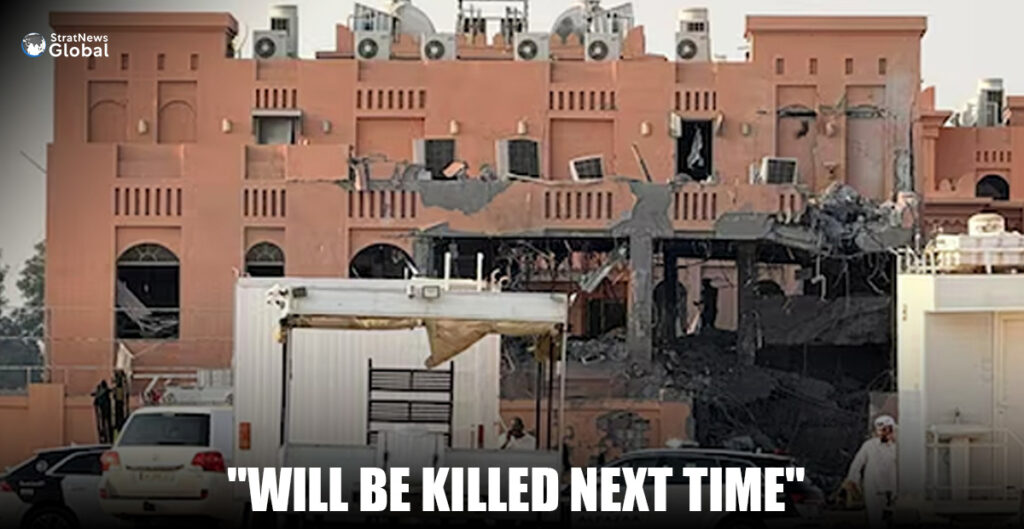
Israel attempted to kill the political leaders of Hamas with the attack in the Qatari capital Doha on Tuesday, escalating its military action in the Middle East in what the U.S. described as a unilateral attack that does not advance American and Israeli interests.
The airstrike took place shortly after Hamas’ armed wing claimed responsibility for a shooting on Monday that killed six people at a bus stop on the outskirts of Jerusalem.
The widely condemned Doha operation was especially sensitive because Qatar has been hosting and mediating in negotiations aimed at securing a ceasefire in the Gaza war.
“If we didn’t get them this time, we’ll get them the next time,” Leiter said.
Leader’s Son Killed In Strike
Hamas said five of its members had been killed in the attack, including the son of its exiled Gaza chief and top negotiator Khalil al-Hayya. It said its top leaders survived.
A senior Israeli official said on Wednesday that optimism about the results of the strike has turned to doubt.
Qatar, which said one of its security forces was killed in the attack, said Israel was treacherous and engaged in “state terrorism.”
The attack generated a flurry of diplomacy between Arab states.
United Arab Emirates President Sheikh Mohammed bin Zayed Al Nahyan arrived in Qatar on Wednesday, UAE state news agency WAM reported.
Jordan’s Crown Prince Hussein is also expected to visit Qatar on Wednesday, while Saudi Arabia’s Crown Prince Mohammed bin Salman is expected to arrive in Doha on Thursday, an official with knowledge of the matter told Reuters.
The visits, which were not previously scheduled, were a show of regional solidarity with Qatar following the Israeli strikes, the official said.
The European Commission will propose sanctioning extremist Israeli ministers and the suspension of trade-related measures in a European Union agreement with Israel, European Commission President Ursula von der Leyen said.
The proposals reflect growing EU criticism of Israel’s conduct of the war in Gaza and increased pressure on the bloc’s executive body to take action.
The Doha airstrike followed an Israeli warning to Palestinians to leave Gaza City, an area once home to about a million people, as it tries to destroy what is left of Hamas.
Residents there expressed alarm that the Doha strike might destroy chances for a ceasefire.
Missiles Hit High-Rise Building
Families, some carrying their belongings on vehicles, donkey carts and rickshaws, continued to stream out of Gaza City along the coastal road in anticipation of a major Israeli offensive.
“Does this mean there is no hope that a ceasefire can be reached? I am afraid that now Israel would speed up its occupation of Gaza City,” said Um Tamer, 65, a mother of five.
Israeli planes fired two missiles towards a 12-floor building in the city shortly after it warned those living inside to leave, but local health authorities said at least 15 people were killed among displaced families living in tent encampments around the building near the city’s beachfront.
At least 30 people have been killed across the enclave on Wednesday, according to medics.
The families of Israeli hostages held in Gaza said they were fearful for the fate of their loved ones after the decision to launch strikes on the Hamas leadership in Qatar, just as a new ceasefire push was underway.
Impact On Ceasefire Talks ‘Unclear’
Asked how the strike would affect ceasefire negotiations, U.S. Ambassador to Israel Mike Huckabee told Reuters:
“The honest answer is, we simply don’t know. Hamas has rejected everything so far. They continually reject every offer that’s put on the table.”
The militant group, which has ruled Gaza for nearly two decades but today controls only parts of the enclave, on Saturday once again said that it would release all hostages if Israel agreed to end the war and withdraw its forces from Gaza.
Prime Minister Benjamin Netanyahu is pushing for an all-or-nothing deal that would see all of the hostages released at once and Hamas surrendering.
He has defied global condemnation of operations like the one that struck Doha on Tuesday, extending military operations across the Middle East against its Iran-backed enemies since Hamas attacked Israel in 2023.
Israel has killed several top Hamas leaders since the Palestinian militant group attacked Israel in October 2023, killing 1,200 people, mostly civilians and taking 251 hostage, according to Israeli tallies.
Israel’s military response in Gaza killed over 64,000 people, mostly civilians, according to local health authorities, and reduced the Palestinian enclave to rubble.
(With inputs from Reuters)
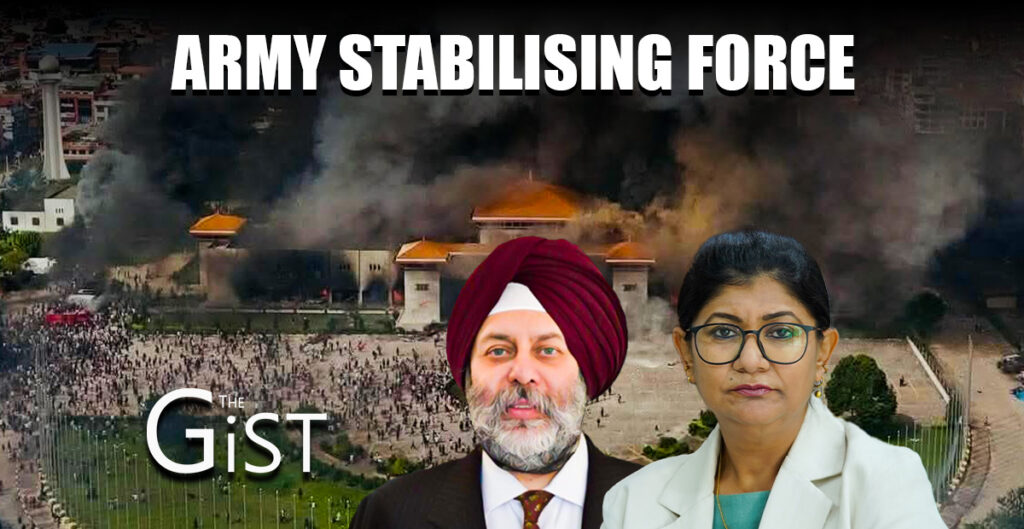
Army Seeking To Stabilise Nepal, Bring Calm To Streets: Manjeev Singh Puri
“It’s a democracy with a vengeance. The entire political establishment there was actually one because the two largest parties had become one rather than being what is normal in a parliamentary democracy,” Manjeev Singh Puri, India’s former ambassador to Nepal told Stratnewsglobal.
“Streaks of authoritarianism were certainly there … Also, unlike India, Nepal as a society has become very globalized in the last 30 odd years. More than 25% of Nepalese are overseas. In terms of its remittances to GDP, it’s one of the five top countries in the world. Every family has members overseas.
“Therefore, social media was an important channel for communication. It was also an important channel in a place where the economy wasn’t doing well,” Puri pointed out.
As the capital city Kathmandu burnt, Nepal’s President Ram Chandra Paudel appealed to the protestors to exercise restraint and engage in dialogue.
According to Puri, “When the (former) prime minister (Oli) took this decision (to ban social media), I can only say it was an authoritarian kind of decision no matter pegging it on some Supreme Court ruling from several months back. The fact of the matter is people came out, they got mobilized because everyone in Nepal is well connected,” he said.
The Nepali Army also appealed for calm as protests turned violent. Former Nepal PM Sher Bahadur Deuba and his wife Foreign Minister Arzu Rana Deuba were severely assaulted by the protestors while their home was burnt down.
Just a few days back, Arzu Deuba was seen in an event in Kathmandu where the United States handed over two military aircraft to Nepal.
Puri stressed that the Nepali Army had been closely watching what was going on in Sri Lanka and Bangladesh and thus allowed people to “vent their anger” before springing into action.
“Because what is the other alternative? Firing? No. You have to handle this with sagacity. You have to handle it with patience. You have to give people an answer.”
The Nepalese Army has let people express their anger and anguish, it will urge the protestors now “to come together for Nepal.”
“I believe this is a time for sagacity at political leadership level. It’s a time for empathy and is a time for healing and also a time for calm,” he added.
The Guns Of Kyapho & PTSO
The Guns Of Kyapho & PTSO
In a documentary series, ‘Along The China Front: Commanding The Tawang Heights’, Part IV, we travel from Tawang to the Kyapho model border post along the Tibet border. We also document the Pankang Teng Tso or PTSO Lake area. In addition, we get a glimpse of the Indian Army’s artillery firepower at these altitudes. In this series, a StratNews Global team of Amitabh P. Revi and Rohit Pandita documents the criticality in India dominating the heights. And the game-changing role of artillery at these altitudes.
As Lt Gen Sanjay Kulkarni (Retd), the Former DG, Infantry and, Ex-Brigade Commander, Tawang Sector, makes clear, “holding posts at heights (is an) absolute necessity. Additionally he adds,” the Chinese get the correct message that they don’t mess around with the Indians.” Brig S.K. Chatterji (Retd), a former Battery Commander of India’s first ever Bofors Unit, which was deployed in the Tawang Sector after the Sumdurong Chu incursion says, “the guy on the top has a tremendous advantage”. Furthermore, the Editor of BharatShakti adds “without artillery fire being really intense, you cannot possibly put your bet on trying to win the battle. It’s the decisive factor.”
The Guns Of Kyapho
Kyapho in the vernacular is a combination of two words- Kya, meaning deer, and Pho meaning cave. India first occupied Kyapho in October 1986. This was during the Sumdurong Chu standoff initiated by a Chinese incursion. The then Chief of Army Staff, General K Sundarji, in response, ordered Operation Falcon. Markedly, he airlifted troops and heavy equipment to Zemithang. Since then, Indian troops on multiple heights are on strategically higher ground.
The Kyapho model border post was inaugurated in October 2022. At this time, it has a surveillance tower, cook house with dining hall, water supply as well as solar and wind converters. It also has an 80-man living shelter and state-of-the-art phone connectivity.
This episode premiered on June 30, 2023, and hit 200,000+ views on March 15, 2024. It crossed 300,000 + views on September 10, 2025.
Watch another episode: Yangtse: How India Beat Back PLA Incursions & Where The Army Looks Down On Chinese Positions.
Related Stories/Videos:
https://stratnewsglobal.com/defence-security/crossing-the-sela-heights-the-roads-to-tawang-much-light-at-the-end-of-game-changing-tunnels/
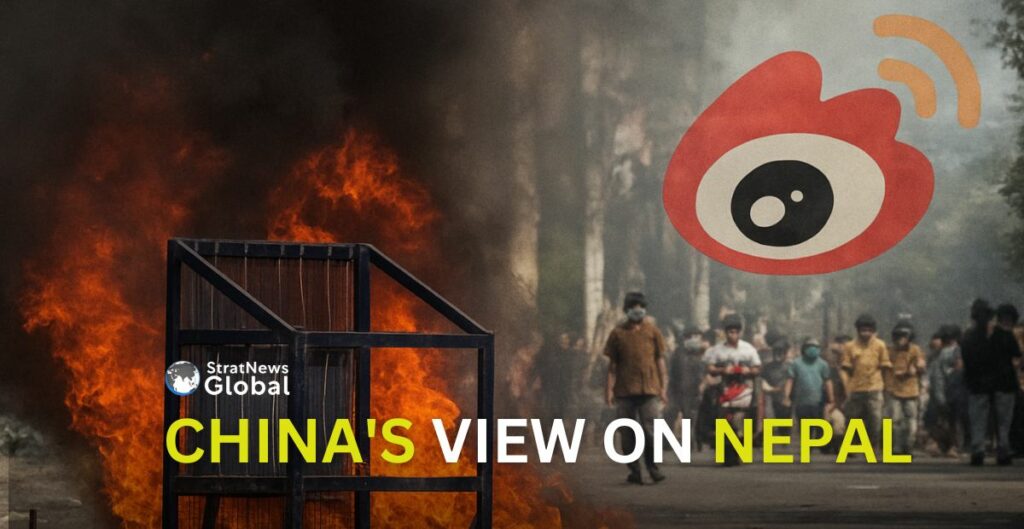
Chinese Netizens Suspect US, India Role In Nepal
Alongside the chatter of Apple’s new iphone 17 Air release, Chinese microblogging site Weibo is abuzz with the hashtags of Nepal. As Nepal grapples with violent ‘Gen-Z’ protests and resignation of PM K.P.Oli, Chinese netizens reacted with a mix of anxiety, suspicion and advice.
Chinese netizens looked at the unrest in a wider regional context. “Is (the riot in) Indonesia over yet? Why is Nepal in a mess now?” one user asked, linking Kathmandu’s unrest to recent youth-led protests in Southeast Asia. Another wrote: “Indonesia, Serbia, Nepal… who is next? This Mid-Autumn [Festival] has become a test of political stability.”
The discussions were dominated by the suspicion of foreign interference. Several users accused US of playing a greater role in the protest, “America’s dirty tricks,” one wrote, while another said, “the possibility of America being behind it is big.” Others linked India to the unrest: “It’s not just India, America too is definitely a part of it.”
Some netizens drew parallels with Middle Eastern turmoil: “Another Syria in the making—first comes euphoria followed by the realization of total disaster.”
Another user recalled the $500 million U.S. Millennium Challenge Corporation grant signed with Nepal, alleging it forced Kathmandu to subordinate its domestic laws and open the door to NGOs.
Amid all this, some users urged proactive Chinese engagement. “Why don’t we help our ally?” one user asked. Another suggested that China could leverage platforms such as the China-Nepal Cooperation Forum to help Nepal build “versions of the CPPCC or NPC”.
One user even went on to predict that instability would spread: “It’s just a matter of time the fire will spread to Bhutan.”
The resignation of Prime Minister Oli triggered mixed responses. Some hailed it as a “victory of Nepalese people” while others urged harsher measures: “Learn from Indonesia, arrest a few and the rest will behave.”
Chinese netizens’ reactions highlight how Nepal’s unrest is viewed in China less as a local democratic reckoning and more as a reflection of broader global power struggles.
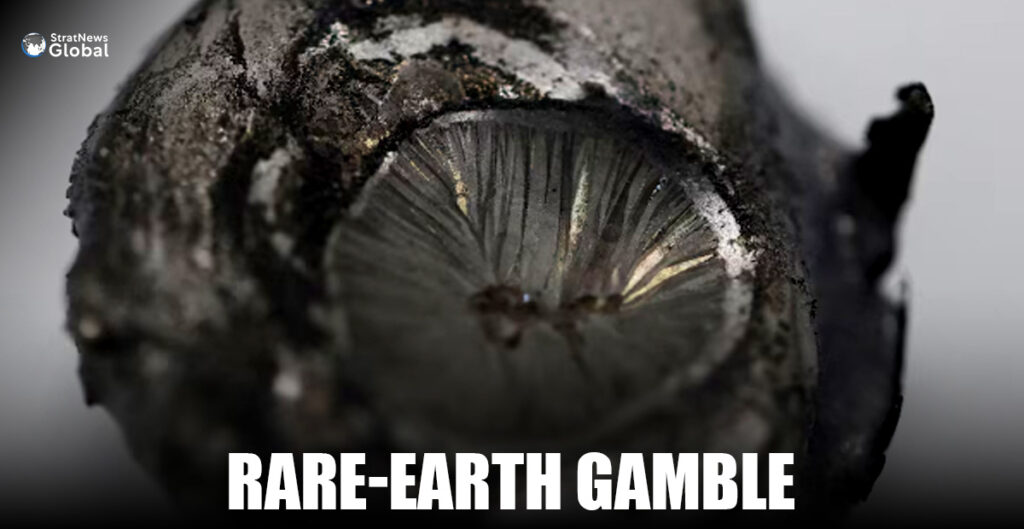
India Weighs Rare-Earth Deal With Myanmar Rebels Following Chinese Curbs
India is seeking to secure rare-earth samples from Myanmar with the help of a powerful rebel faction, four sources said, as it looks for alternative supplies of a strategic resource dominated by China.
India’s Ministry of Mines asked state-owned and private firms to explore collecting and transporting samples from mines in northeastern Myanmar that are under the control of the Kachin Independence Army, three of the people said.
State-owned miner IREL and private firm Midwest Advanced Materials – which received government funding last year for the commercial manufacturing of rare-earth magnets – were among those involved in the discussions, the sources said.
New Delhi hopes to test the samples in domestic labs to ensure they contain sufficient levels of heavy rare earths that can be processed into magnets used in electronic vehicles and other advanced equipment, according to the people.
The ministry made the request – signalling a rare instance of Delhi engaging with a non-state actor – at an online meeting in July, according to two of the people. The meeting was attended by representatives from IREL, Midwest, and at least one other company, one of the sources said.
The KIA has started gathering samples for India’s analysis, said the fourth person, who is an official with the armed group. The rebels have also agreed to assess if bulk exports to India are possible, according to the KIA official, who, like the other sources, spoke on condition of anonymity to discuss sensitive matters.
Details of India’s engagement with the KIA are reported by Reuters for the first time.
India’s foreign and mining ministries did not respond to Reuters’ questions. IREL and Midwest also did not return requests for comment.
A spokesperson for KIA did not respond to calls and messages.
Chinese Control
Although rare earths are relatively abundant, China has near-absolute control over the technology that processes the minerals into magnets.
Beijing has sharply restricted exports of processed rare earths to major economies like India this year as it seeks to shore up geopolitical leverage amid its trade war with the United States.
Delhi has made moves to shore up supplies. Indian Prime Minister Narendra Modi said on Aug. 31 that he had discussed rare-earth mining during a meeting in China with Myanmar junta chief Min Aung Hlaing, whose forces are battling the KIA. He did not elaborate.
No deal was publicly announced, and the junta did not return a request for comment.
India is also seeking to address its lack of industrial-scale facilities to process rare-earth elements to high purity levels. IREL has sought partnerships with Japanese and Korean companies to begin commercial production of rare-earth magnets, Reuters reported last month.
Asked by Reuters about India’s engagement with the KIA, an Indian official familiar with deliberations in Delhi said that the country’s interest in critical minerals was not a secret. “We naturally encourage commercial cooperation on a business-to-business basis for securing rare earth minerals from available suppliers globally,” the official said, without directly referencing interactions with the rebel group.
IREL sent a team to Kachin state in December to study resources, Reuters previously reported. U.S. President Donald Trump’s administration has also heard proposals for tapping Myanmar’s supplies of rare earths, including one that would involve cooperation with India, the news agency reported.
China has an ongoing relationship with the KIA, which also supplies Beijing with heavy rare earths, said Angshuman Choudhury, a Singapore-based independent analyst of India-Myanmar relations.
“If China is liaising with the KIA to secure access to rare earths, why should India be left behind?” he said. “That competition also frames this outreach.”
A spokesperson for China’s Foreign Ministry said in response to Reuters’ questions that Beijing was not aware of the KIA potentially working with India, but “all relevant parties in northern Myanmar appreciate and thank China for its constructive role in maintaining peace and stability in the region.”
Long-Term Deal?
The KIA was formed in 1961 to secure the autonomy of Myanmar’s minority Kachin community and has since expanded to become one of the most formidable armed groups in the country.
After Myanmar’s military ousted an elected civilian government in a 2021 coup, triggering a nationwide uprising, the KIA emerged as a bulwark of the resistance against the China-backed junta.
Last year, it seized from junta-aligned forces the Chipwe-Pangwa mining belt in Kachin state that produces the bulk of the global supply of heavy rare earths like dysprosium and terbium.
While the KIA continues to supply China with the minerals, their relationship has run into friction over the KIA’s ongoing battle with junta troops over the strategically vital town of Bhamo.
Beijing sees the junta as a guarantor of stability in its backyard and has pressured the KIA to back down. The militia, in turn, is ramping up engagement with neighbouring India.
Officials in Delhi are interested in a long-term arrangement with the KIA to build a supply route for rare earths, but there are concerns over the logistical challenges of bringing large quantities of the material across remote and underdeveloped mountainous regions, two of the people said.
Minerals are transported to nearby China via a road network.
IREL is involved in some of those discussions, but it wants a private company to take responsibility for the transportation, according to three people familiar with the matter.
Even if the KIA and India were able to work out an arrangement over sending rare earths to India, the parties would face challenges processing the minerals without Chinese assistance, said Belgium-based rare-earths expert Nabeel Mancheri.
“Theoretically, if India gets these materials, they could separate and make useful products,” he said. “But it would take time to scale this up to produce meaningful quantities catering to international markets.”
(With inputs from Reuters)