China’s southwestern province of Yunnan is emerging as a strategic hub in Beijing’s efforts to secure critical minerals and diversify trade routes.
A recent South China Morning Post report says the province is playing an increasingly important role in strengthening China’s supply chains and reducing its reliance on vulnerable maritime routes.
Rich in gallium, rare earths and other strategic minerals essential for advanced weapons development, Yunnan has also developed into a key transport hub, linking China to Myanmar through highways, railways and oil and gas pipelines that eventually provide access to the Indian Ocean.
Infrastructure projects such as the China-Myanmar Economic Corridor, the oil and gas pipelines from Kyaukphyu to Kunming, and the China-Laos Railway have turned Yunnan into a crucial node in Beijing’s broader Belt and Road Initiative.
The SCMP report described Yunnan, which borders Myanmar, Laos and Vietnam, as an “irreplaceable gateway” to the resources of the Indochinese Peninsula. The study argued that the province offers an “effective solution” to China’s long-standing Malacca Dilemma by expanding overland access to energy, minerals and regional markets.
The region also serves as an important factor in China’s efforts for defence industry mobilisation.
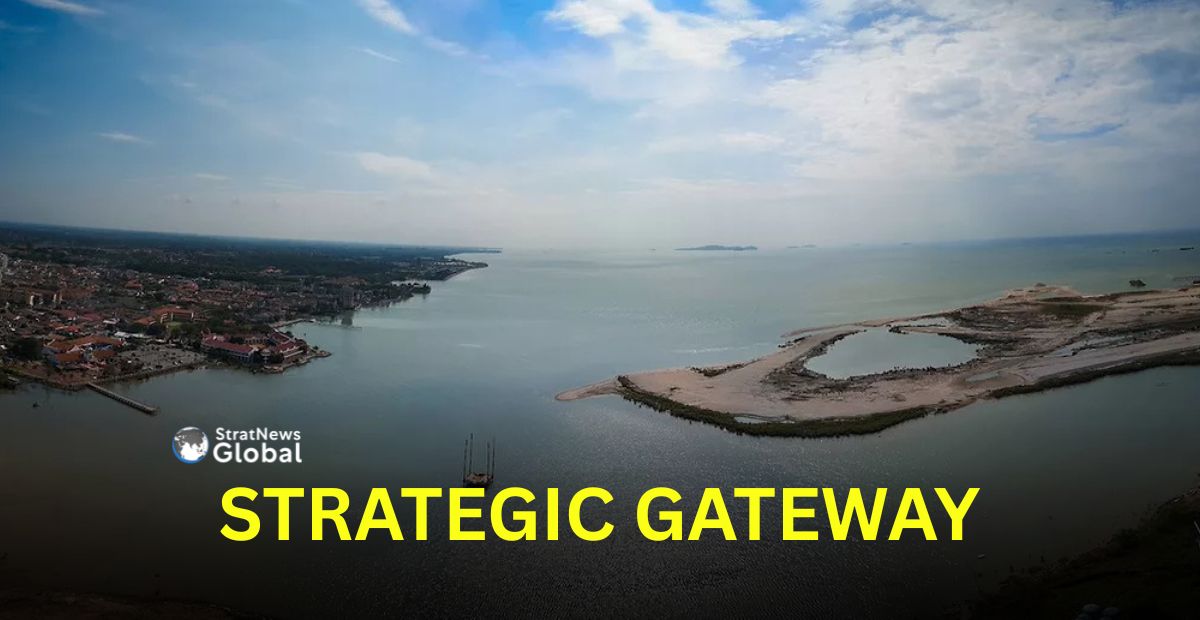
The renewed focus on Yunnan also reflects China’s long-standing concern over the ‘Malacca Dilemma’. Nearly 60 per cent of China’s maritime trade and roughly 80% of its crude oil imports pass through the Strait of Malacca, making it one of Beijing’s most closely watched maritime chokepoints. In any future conflict, disruption of this narrow shipping lane has often been viewed as one of Beijing’s biggest strategic vulnerabilities.
But how vulnerable is the Strait of Malacca in reality?
Experts note that the threat is overstated. Blockade is theoretically possible, but highly unlikely.
Unlike Hormuz, Malacca is managed by multiple Southeast Asian states including Malaysia, Singapore and Indonesia. These states are signatories to the UNCLOS and have consistently prioritised maritime security and freedom of navigation.
China may be the largest beneficiary of the route, but it is far from the only one. Japan and South Korea rely on the strait for energy imports, while ASEAN economies and India also depend on uninterrupted shipping through these waters. A prolonged disruption would trigger supply chain shocks across Asia and beyond.
China is being more cautious and appears to be unwilling to leave Malacca to chance. Yunnan’s growing influence suggests that China is preparing for geopolitical uncertainty which the world has seen in case of the Strait of Hormuz.