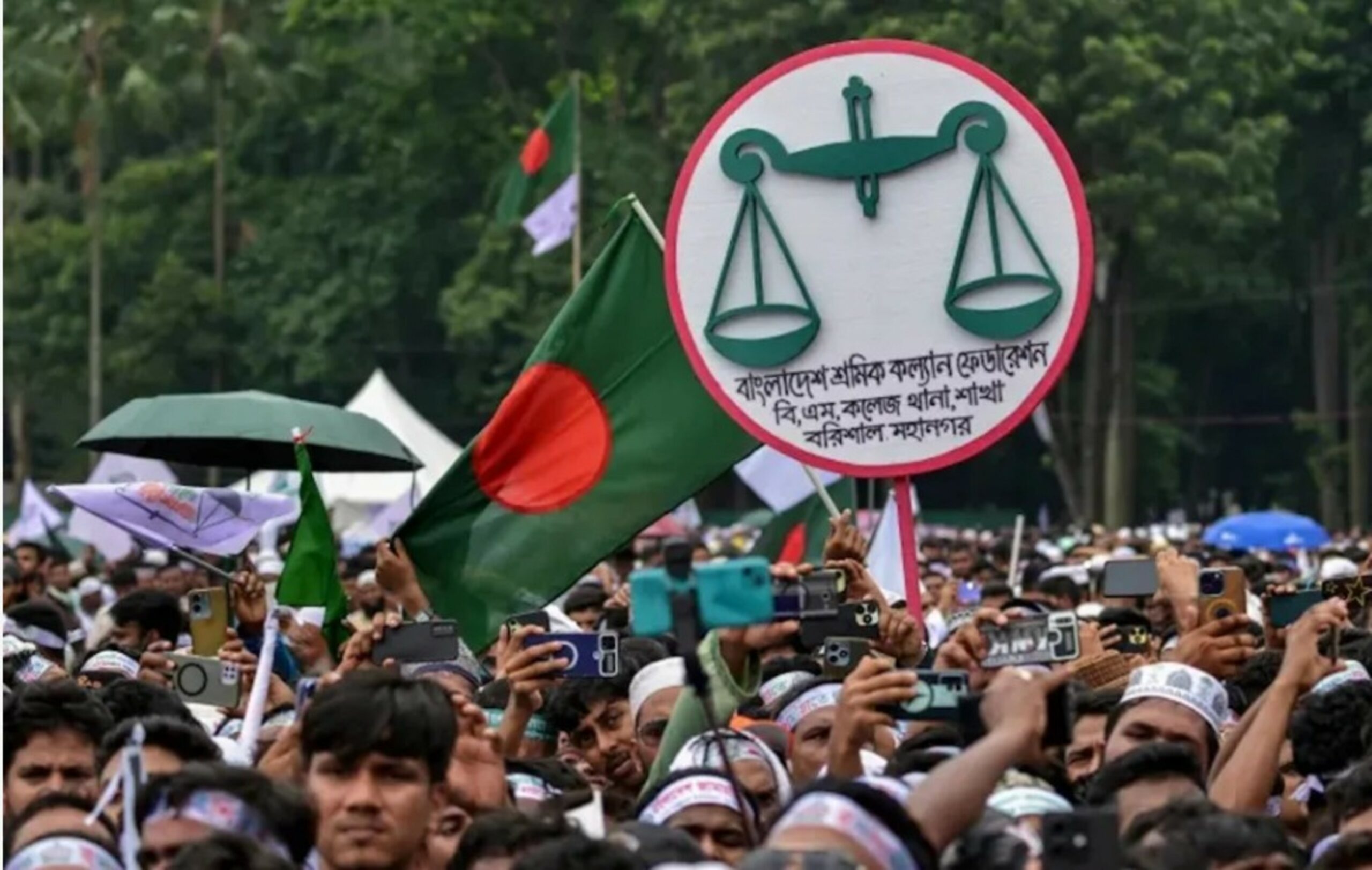
As Bangladesh prepares to vote for its parliamentary elections next week, many concerned voices are emerging over the possibility of the country sliding into a regressive mode in case the Jamaat-e-Islami or Jamaat, a party which believes in Islamic tenets and governance under the Sharia law, acquires a dominant role in the post-poll scenario.
Several old timers and social observers fear that the very foundation of Bangladeshi identity—based on language, culture and secularism more than religion—will be under threat if the Jamaat comes to power or wins enough seats in the next Parliament to influence the legislative agenda.
Intellectuals, prominent business leaders, think tank researchers and some common people that I could speak to during my recent visit to Dhaka, the capital of Bangladesh, acknowledged the seeming resurgence of support for the Jamaat with concern, but none was willing to go on record in sharing his or her view for fear of reprisals or adverse consequences.
“The Jamaat, with its past record of opposing the liberation war (of 1971) and collaboration with the Pakistani Army in unleashing a genocide against the Bengalis, is against the very idea of Bangladesh,” one researcher observed. He was, however, not sure if there is enough collective pushback against a determined Jamaat effort to rebrand itself as a moderate Islamic party.
“The Jamaat has cleverly pitched itself as an untested entity which deserves a chance to govern Bangladesh. Its campaign is focused on two aspects: One, that the party is non-corrupt, and two, compared to the BNP—its main rival in this election—the Jamaat is more disciplined and therefore will be able to provide more cohesive governance,” he added.
Bangladeshis, proud of their syncretic culture, language and music, have largely shunned the Jamaat politically so far, but in the wake of the fall of Sheikh Hasina as the Prime Minister and leader of the Awami League in August 2024, the Jamaat has systematically made inroads into large sections of the civil bureaucracy and the police force.
It has also captured the imagination of ordinary citizens by promising them clean administration and a prosperous Bangladesh, pointed out a business leader.
The rapidly rising influence of the party, which continues to support hardline Islamic ideology, has, however, alarmed many educated and better-informed Bangladeshis.
But most of them are silent, preferring not to voice their opinions lest they become targets for the aggressive bunch of cadres that the Jamaat operates with. Many of my old contacts and friends in Dhaka preferred to skip discussion on the consequences of a Jamaat-led or Jamaat-supported dispensation after the election. Instead, many of them complained of excesses by the Hasina regime and blamed India for protecting and ‘propping up’ Hasina despite being aware of her sins of commission and omission.
But as the elections draw closer, there are signs that the veneer of sophistication and moderation that the Jamaat has managed to portray so far is coming off.
A major scandal erupted when Jamaat chief Shafiqur Rahman posted a now-deleted comment on X equating modernity for women with “another form of prostitution”. The backlash that followed was swift and vocal and resulted in the post being deleted and a convenient excuse given: that the account was hacked.
The situation for religious minorities is also a big concern. Reports have emerged of the Bangladesh security forces led by mobs raiding Hindu homes and physically assaulting women, while radical imams openly claim that non-Muslim women can be treated as “sex slaves”.
Riding on the back of the July 2024 uprising, the Jamaat has attempted to rebrand itself through a mix of welfare outreach to the poor and appealing to the urban middle-class sentiment by promising non-corrupt governance.
But many missteps on gender rights and emerging competition from more radicalised parties such as the Islamic Andolan Bangladesh—its erstwhile alliance partner—besides the innate Bangladeshi abhorrence to a radicalised version of Islam, may just slow down the Jamaat juggernaut.
At least that is what secular Bangladeshis are hoping for.