The coordinated U.S.–Israel military strikes that killed Iran’s Supreme Leader Ali Khamenei mark one of the most consequential escalations in West Asia in decades, raising the risk of regional instability, global energy disruption and a difficult strategic balancing act for India.
Washington has defended the strikes as necessary to degrade Iran’s nuclear and missile capabilities. Israel, which has long viewed Tehran as its most serious long-term security threat, has argued that a nuclear-capable Iran would irreversibly alter the regional balance. However, the targeting of Iran’s highest political authority signals an objective that goes beyond degrading infrastructure — potentially altering the regime’s trajectory.
Whether that goal is achievable remains contested.
Analysts caution that Iran’s political system is not built around one individual alone. Its power structure rests on clerical institutions, layered authority centres and the Islamic Revolutionary Guard Corps (IRGC), alongside a deeply embedded nationalist identity.
Mudassir Quamar, Associate Professor at Jawaharlal Nehru University, described the strikes as pursuing multiple objectives.
“The US-Israel attack on Iran underlines the volatile nature of regional security in West Asia. The ongoing attacks are targeted to achieve four major goals: decimate Iran’s nuclear enrichment and capabilities; to destroy Iran’s ballistic missile stockpile and capacity; to end IRGC’s support for regional militias who pose a threat to Israeli security; and to change the regime in Tehran.
Noticeably, the attacks came on the heels of three rounds of Omani-mediated negotiations between the US and Iran, wherein some media reports suggest that substantive progress had been made in resolving the nuclear issue.”
He added that despite the killing of Khamenei, immediate systemic collapse appears unlikely.
“In the immediate circumstances, the population is expected to rally around the flag given the strong national and religious pride among Iranians.”
The escalation revives memories of the 2003 Iraq invasion over alleged weapons of mass destruction and earlier episodes of U.S.–Iran mistrust. These include the 1953 U.S.-backed ouster of Prime Minister Mohammad Mosaddegh, the subsequent rule of Mohammad Reza Pahlavi, and the 1979 Islamic Revolution led by Ruhollah Khomeini.
Tensions had briefly eased under the 2015 Joint Comprehensive Plan of Action negotiated during the presidency of Barack Obama, before the United States withdrew in 2018 under Donald Trump.
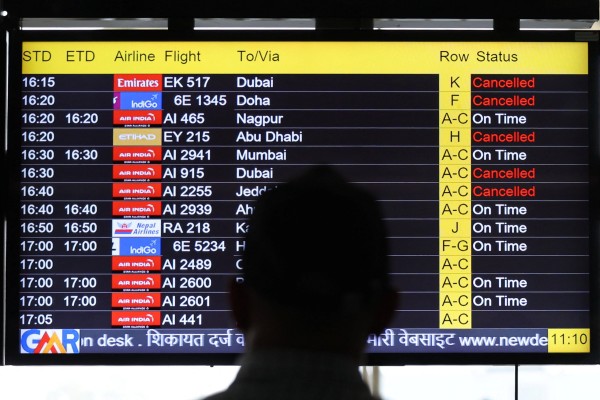
Iran has reportedly shut traffic through the Strait of Hormuz, through which nearly one-fifth of global oil and significant LNG supplies transit.
Ajay Srivastava of GTRI said the impact on India would be immediate.
“The immediate impact on India is economic and strategic: disruption in the Strait of Hormuz threatens a major share of its crude oil and LNG imports, raising freight costs, insurance premiums, and fuel prices, while a surge in global oil prices could widen the current account deficit and fuel inflation.”
Between 35% and 50% of India’s crude imports pass through this chokepoint. Alternatives — including rerouting shipments, increasing purchases from Russia or the United States, or drawing on reserves — would add to costs.
Ajay Sahai, Director General of the Federation of Indian Export Organisations, warned of broader trade disruption.
“The current escalation in West Asia presents serious trade and macroeconomic risks. The Strait of Hormuz, through which nearly one-fifth of global crude oil and LNG supplies transit, remains the critical chokepoint. Even the prospect of disruption has driven oil prices higher and sharply increased energy market risk premiums.”
He added, “Logistics flows across the Gulf and Red Sea corridors are being rerouted via the Cape of Good Hope… A 30–40% increase in freight rates in the near term is a realistic possibility.”
India’s exposure extends beyond energy. Around 9.5 million expatriates live in Gulf Cooperation Council states. New Delhi has investments in Iran’s Chabahar Port and significant maritime trade flowing through both the Gulf and Red Sea corridors. Escalation could also intersect with instability linked to Pakistan-Afghanistan tensions.
Diplomatically, India may be forced to balance relations with Washington and Tel Aviv against economic ties with Gulf states, particularly if Iranian retaliation targets U.S. bases in Saudi Arabia, the UAE, Qatar or Bahrain.
With retaliation underway and global shipping routes under pressure, the crisis risks evolving into a prolonged regional confrontation — one whose consequences may extend far beyond West Asia and test the resilience of energy-dependent economies worldwide.