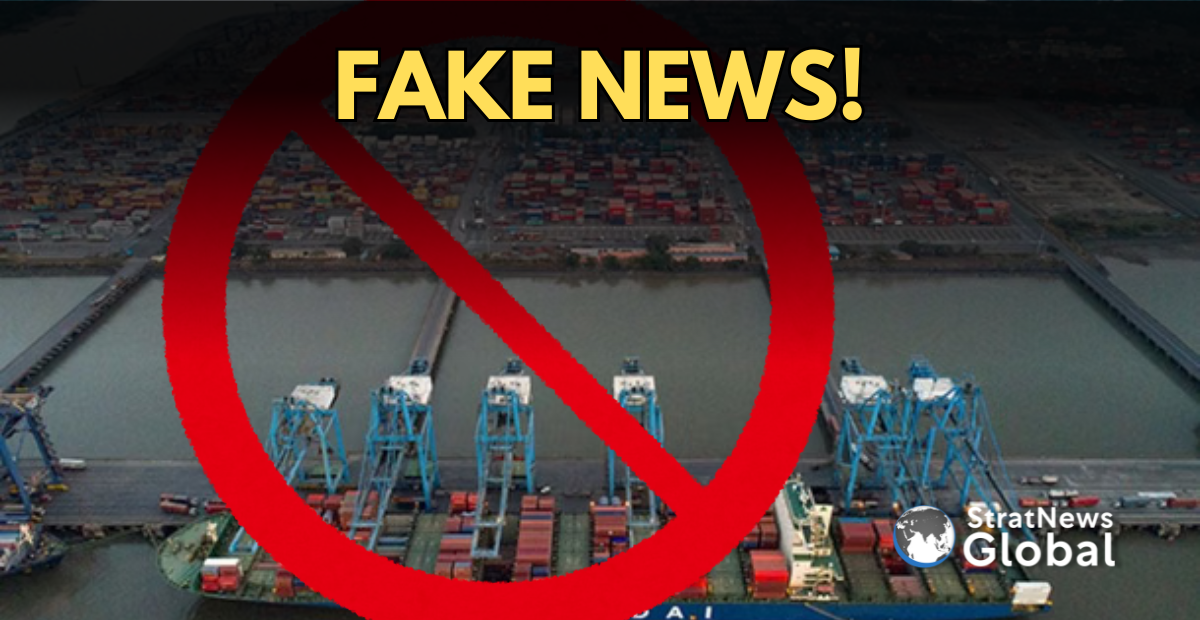
India on Thursday rejected claims on social media that U.S. naval forces were using Indian ports to attack Iran, calling the allegations “fake and false”.
The response from India’s Ministry of External Affairs came after remarks by retired U.S. Army officer Douglas MacGregor during an interview on the One America News Network, in which he suggested that U.S. naval forces had begun relying on Indian ports amid the ongoing conflict with Iran.
Dismissing the claim, the MEA said in a fact-check statement on social media that the assertions were “baseless and fabricated”. India stressed that no U.S. naval operations linked to the conflict with Iran are being conducted from Indian ports, and that any such suggestion misrepresents the nature of defence agreements between the two countries.
Officials clarified that bilateral defence arrangements between India and the United States, including the Logistics Exchange Memorandum of Agreement and the Communications Compatibility and Security Agreement, do not automatically grant access to Indian facilities for US military operations.
The Agreements
The logistics agreement allows the two sides to access each other’s bases for refuelling, supplies and repairs, but only on a case-by-case basis and with explicit approval. Officials stressed that the pact preserves India’s strategic autonomy and does not obligate New Delhi to assist U.S. military missions.
Similarly, COMCASA primarily enables secure communication systems on U.S.-supplied platforms used by Indian forces and does not mandate operational coordination in conflicts.
Sources also said India has not received any request from Washington for logistical assistance related to the ongoing hostilities with Iran.
New Delhi is attempting to maintain a careful diplomatic balance in the widening crisis in West Asia, given its longstanding civilisational ties with Iran and deep strategic partnerships with both the US and Israel.
Iran Navy Ship Sunk
On Wednesday, U.S. Defence Secretary Pete Hegseth confirmed that an American submarine torpedoed and sank the Iranian frigate IRIS Dena in international waters west of Sri Lanka.
The vessel had recently participated in the multinational naval exercise Ex Milan in Visakhapatnam, where ships from more than seventy countries gathered under the theme “United through Oceans”.
According to Sri Lankan authorities, the attack occurred roughly 40 kilometres west of Galle, shortly after the ship issued a distress signal. After being struck by a torpedo, believed to be a Mk 48 ADCAP, reports indicate the frigate sank within minutes. Rescue operations by the Sri Lankan Navy recovered several survivors, though dozens remain missing.
Iran’s Foreign Minister Seyed Abbas Araghchi condemned the attack, accusing Washington of committing “an atrocity at sea” and warning that the United States would “bitterly regret” the strike.
The incident has effectively pushed the ongoing West Asia conflict thousands of kilometres eastward, bringing it close to India’s maritime neighbourhood.
Rare Wartime Event
Naval analysts note that the destruction of a warship by a submarine is exceptionally rare in the modern era. Submarines sank more than 2,000 warships during World War II. However, in the eight decades since then, only a handful of such incidents have been recorded.
Among them are the sinking of INS Khukri during the Indo-Pakistani War of 1971, the destruction of Argentina’s General Belgrano during the Falklands War, and the sinking of South Korea’s ROKS Cheonan.
Therefore, the loss of IRIS Dena marks one of the rare submarine-induced warship sinkings in the post-World War II era.
Military experts say the incident highlights the growing importance of nuclear-powered attack submarines. These SSNs can operate stealthily for extended periods in hostile waters. They are considered among the most powerful platforms of naval warfare. The world’s largest fleets are operated by the United States, China, Russia, the United Kingdom and France.
Their ability to strike ships unexpectedly in international waters underscores their role as a decisive factor in maritime dominance.