Did India lose the plot on Iran, emerging on the “losing side”? Writer and researcher Avinash Paliwal who teaches at the School of Oriental & African Studies in London, makes the argument that India was “misaligned” with the US and Israel during the Iran war.
“India’s strategic partners started a war that worsened its regional security environment, torpedoed its economy, cost Indian lives, empowered Pakistan, and cemented China’s big power status. And New Delhi didn’t — or couldn’t — shape the war’s outcome,” he wrote in an analysis in The Hindustan Times.
While he lauds India’s policy of building relations with the UAE, he believes that initiative collapsed because it came at the cost of ties with Iran.
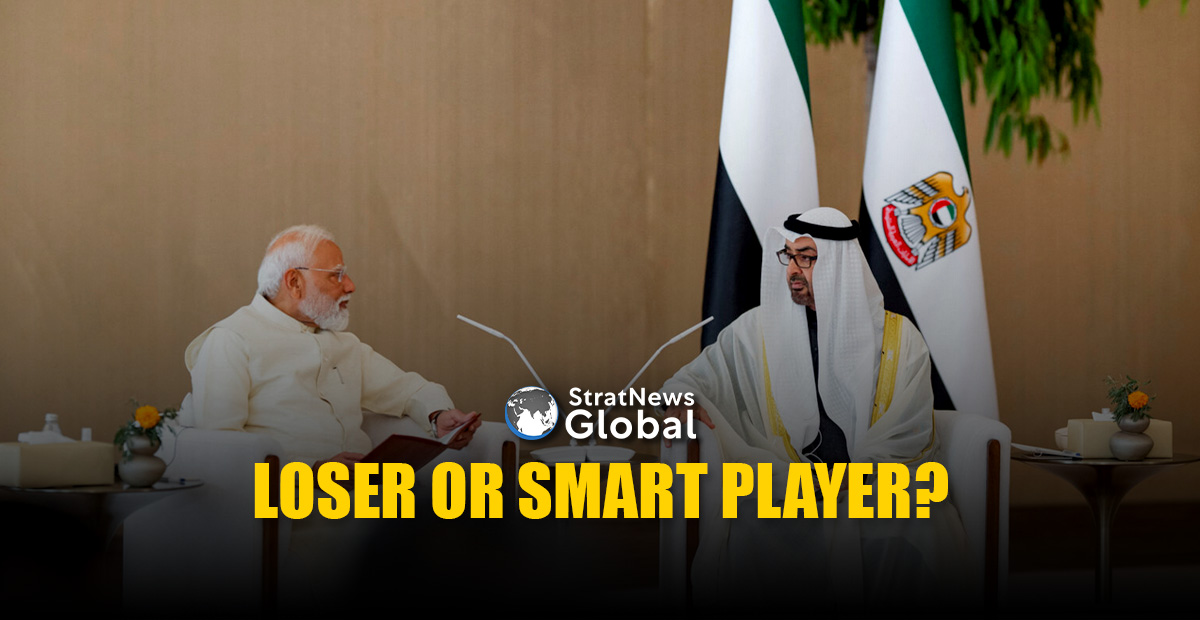
US Vice-President JD Vance has castigated Israel publicly impacting the broader alliance; the Saudi-UAE partnership has sundered; and Iran is now setting the terms of peace. Israel’s power and influence in the region has been hit hard, underscoring that Prime Minister Modi’s visit in February was ill-timed.
As for Pakistan, it always punched above its weight but this time it will have Iran on its side for having mediated its win.
But did Iran win this war? In an interview to StratNews Global, Prof Khinvraj Jangid, director of the Israel Studies Centre of Jindal Global University, said “Winning a war is a claim, to win a war is like winning an earthquake. Nobody wins an earthquake. Everybody loses in a relative degree of loss.
“The other point is Iran is extremely fragile internally. Iran is not a coherent, harmonious society with MTV, and one would expect that a civil war kind of a situation is always a reality there, depending on how much violence people can bear against the regime.”
He pointed to the split at a political level where the moderates are going to have a tough fight with the IRGC. Then there’s Iran’s future in the region.
“Iran attacked all (neighbouring) countries and they are not going to work with Iran anymore. And I think that’s the strategic future strength of Israel.”
Not only did Israeli Prime Minister Netanyahu visit the UAE when the war was on, he also supplied air defence systems and interceptors. The Gulf Arab states have made it clear that within a year and a half they will develop alternatives to the Strait of Hormuz leaving Iran isolated in the region.
As for India, Somnath Mukherjee, who is the chief investment officer for ASK Wealth Advisers and tweets frequently on geopolitics and current affairs, pointed out in a post that “India came out of this war showing off real power sinews.”
It ensured there was no shortage of oil or gas and the country’s macro stability remained intact, meaning inflation remained low during the war, government finances were steady and vulnerability to external shocks was minimised. There was also the fact that trade was largely unmolested despite dire warnings.
In his view, India came out of the crisis with a “clear privileged equation with the most consequential power in West Asia, the UAE.”
When India took a stand against US and Europe in favour of Russia, critics said India is making a mistake. Now when it sat out the regional war in West Asia, academics are carping at its so-called inaction. Critics and scholars have to decide what stance they want India to take. They can’t have it both ways