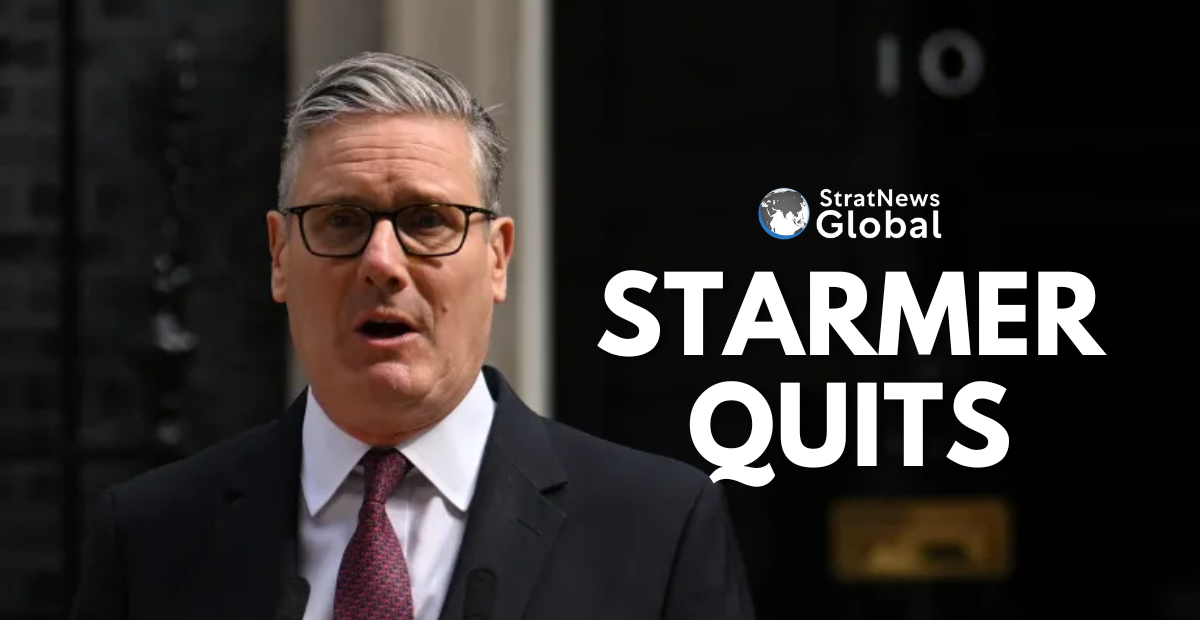
British Prime Minister Keir Starmer announced on Monday that he would resign, with a new Labour leader expected to be in place before Parliament returns in September.
Less than two years after securing a landslide election victory that promised stability after years of political turmoil, Starmer acknowledged that his party no longer believed he was the right person to lead it into the next general election.
“The question my party is asking now is whether I am best placed to lead us into the next general election. I have heard the answer of my parliamentary party to that question, and I accept that answer with good grace,” Starmer said.
Nominations for the leadership contest will open on July 9.
Andy Burnham Emerges as Clear Frontrunner
Attention has quickly turned to Andy Burnham, who is widely seen as the favourite to succeed Starmer.
Pressure on the prime minister had been building for months but intensified sharply after Burnham won a parliamentary election on Friday, defeating a candidate from Reform UK and returning to Westminster.
The victory boosted hopes among Labour MPs that Burnham’s communication skills and political profile could revive a party that has struggled to maintain public support under Starmer.
Despite being viewed as more left-leaning than Starmer, Burnham has repeatedly stated that he would respect existing fiscal rules, although investors remain cautious about how he would finance any additional spending commitments.
Pound Weakens as Political Uncertainty Grows
Financial markets have reacted nervously to the prospect of a leadership transition.
The pound slipped 0.3 per cent to around $1.319 on Monday, hovering near a three-month low. Sterling has lost roughly 3 per cent of its value since speculation about Starmer’s future intensified earlier this year.
Options markets also indicate that traders are paying more to hedge against currency volatility in the coming weeks, reflecting uncertainty over the direction of the next government.
While the pound and British government bonds remained relatively steady immediately after Starmer’s announcement, investors had largely anticipated the move.
Investors Focus on Britain’s Fiscal Challenges
Political uncertainty comes at a difficult time for Britain’s economy.
The UK currently faces the highest borrowing costs among G7 nations, driven by elevated debt levels, rising interest payments, weak economic growth and increasing demands for spending on areas such as defence and public services.
Benchmark 10-year gilt yields remain close to 4.85 per cent, not far from their highest levels since the 2008 financial crisis.
Analysts say markets are particularly concerned about whether a new Labour leader will maintain fiscal discipline.
“If there’s a contest, the danger would be that various protagonists get dragged into fiscal commitments that they would not otherwise have made,” said Jeremy Stretch, head of G10 currency strategy at CIBC.
Economists at Citibank warned that a Burnham-led government would inherit a fragile fiscal position with limited room for major policy shifts.
Seventh Prime Minister Since Brexit
Whoever succeeds Starmer will become Britain’s seventh prime minister since the 2016 Brexit referendum, highlighting the political instability that has characterised the country’s recent history.
Although Burnham has argued that Britain needs fundamental change and a renewed focus on reducing living costs, questions remain about his approach to economic policy, defence spending and foreign affairs.
For investors and voters alike, the leadership transition represents another test of whether Britain can deliver political stability while addressing deep-rooted economic challenges.
(with inputs from Reuters)