In a world defined by fractures and competing power centres, the Russia–India–China (RIC) triangle preferred to meet, not for the first time, in a bilateral format. This has been the case since 2020 after India and China clashed in the Galwan Valley that year.
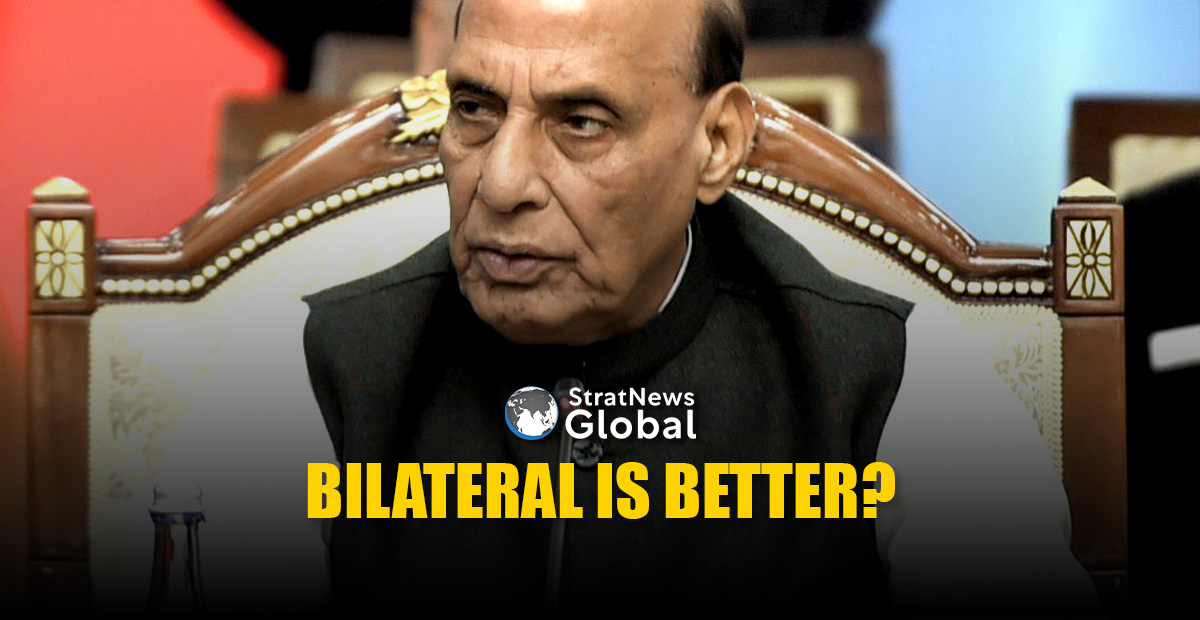
On the sidelines of the Shanghai Cooperation Organisation (SCO) Defence Ministers’ gathering in Bishkek, India’s Defence Minister Rajnath Singh held separate talks with his Russian and Chinese counterparts: Andrei Belousov and Dong Jun.
The preference for bilateral engagements reflected India’s geopolitical realities and strategic caution. Relations between Moscow and Beijing remain strong, but India’s ties with China continue to be shaped by unresolved boundary tensions, even as diplomatic channels are opening up gradually.
However, the sequencing of meetings in Bishkek on the sidelines, Russia first, China next, signals that New Delhi is intent on keeping both axes of the triangle engaged.
The timing is important. The SCO Defence Ministers’ meeting is taking place amidst the ongoing crisis in West Asia. The US-Israel war on Iran has not only created divisions among major powers, it has also impacted the global economy, the risk of terrorism has increased, cyber security and more.
It is against this background that India is now focusing on its diplomatic engagement with important players in Central Asia. The meetings also come ahead of the upcoming BRICS summit which will take place in New Delhi later this year.
Defence Ties
India’s meeting with Russia focussed more on deepening of defence cooperation and the delivery of the fourth unit of the S-400 air defence system which is expected to arrive in May and the fifth one later this year.
The two sides also talked about 12 Pantsir air defence systems through government to government deal while making another 40 systems under “Make in India” route. The talks covered upgrades to the existing platforms, and long-term collaboration.
With China, this was the first interaction between Singh and Dong since mid-2024. During talks the two sides recognized ongoing efforts to stabilise ties, and addressing the boundary question.
Counter-Terrorism
Addressing the SCO forum, Singh placed counter-terrorism at the centre of India’s security outlook. He called for decisive action against states that “abet, shelter or provide safe havens to terrorists,” reiterating India’s long-standing position of zero tolerance.
Referring to past SCO commitments, including the Tianjin Declaration, he stressed that credibility lies in consistency. “Terrorism has no nationality and no theology,” he said, urging member states to avoid double standards.
He also highlighted the role of the SCO’s Regional Anti-Terrorist Structure as a key instrument in tackling radicalisation and extremism, especially as global instability fuels new security threats.
Singh’s comments reflected more than immediate security concerns. They pointed to a larger philosophical view of world order. Do we need a “new order” or a “more orderly” one? Singh asked, and offered a framework based on coexistence, mutual respect, and dialogue rather than conflict.
That message fits in with India’s shifting strategic posture, often called “multi-alignment”, where it develops partnerships without formal alliances. By increasing its options, not reducing them, New Delhi has signed logistics arrangements with Western powers, kept old defence ties with Russia, and tread lightly with China.
As the road leads to the BRICS summit in New Delhi, the question is no longer whether RIC will meet, but how it will adapt to a world where geometry matters as much as geography.