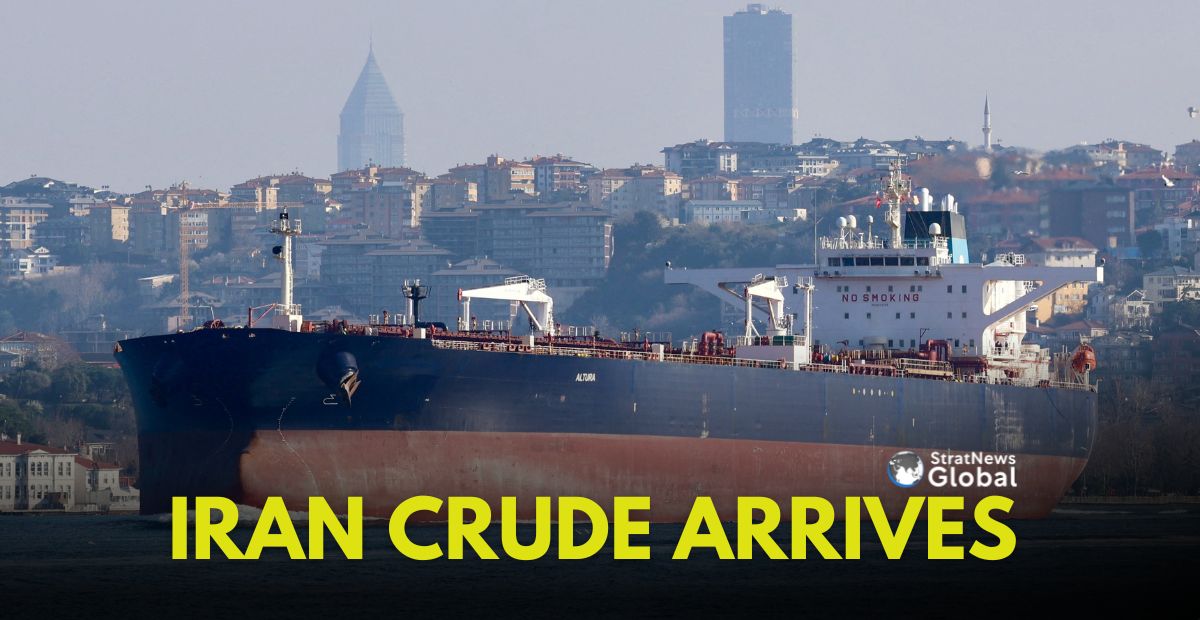
For the first time in nearly seven years, India will receive a cargo of Iranian crude oil, helped by a temporary easing of US sanctions amid the ongoing West Asia conflict.
Ship-tracking data from Kpler and MarineTraffic show that the Eswatini-flagged tanker Ping Shun, carrying about 600,000 barrels of crude from Iran’s Kharg Island is now headed towards Gujarat’s Vadinar port.
It is expected to arrive this weekend, according to ship-tracking data. The vessel had earlier indicated China as its destination before diverting towards India.
The last time India imported Iranian oil was in May 2019, when New Delhi halted purchases after the United States ended sanctions waivers under its “maximum pressure” campaign.
Sanctions Being Relaxed?
This is not a sign that US unilateral sanctions on Iran have been lifted. Instead, Washington has issued a narrow, time-bound waiver allowing crude that was already loaded on tankers as of March 20 to be delivered.
The window runs till April 19 and is aimed at easing pressure on global oil supplies, which have been hit by disruptions in the Strait of Hormuz due to the ongoing conflict. In effect, this is a one-off logistical relaxation rather than a policy shift.
“The Indo-Iranian oil trade has flickered back to life,” said Sumit Ritolia of Kpler, pointing out that the cargo comes at a time when refiners are dealing with tightening supplies.
State-run companies such as Indian Oil Corp. and Bharat Petroleum typically receive shipments at Vadinar, but none have confirmed the purchase so far. Nayara Energy, another key player at the port, is unlikely to be involved as its refinery is scheduled for maintenance shutdown this month.
Reliance Industries, which was earlier linked to reports of Iranian oil purchases, has denied any involvement.
Even with the temporary waiver, payment, insurance and shipping remain complicated due to continuing sanctions. Iran is still cut off from the global SWIFT banking system, and several banks in Asia are unwilling to process transactions involving Iranian crude.
India-Iran
India was once among Iran’s top oil buyers, importing over 20 million tonnes annually at its peak. That trade stopped abruptly in 2019, forcing refiners to shift to suppliers in Iraq, Saudi Arabia and the US.
More recently, discounted Russian crude became a major part of India’s import basket after the Ukraine war. Now, with the Strait of Hormuz effectively disrupted and global supplies tightening, Indian refiners appear to be exploring whatever options are available, including limited Iranian volumes.
The current cargo is small in the bigger scheme of India’s oil demand, but its significance lies elsewhere. It shows that even a narrow sanctions window can reopen old trade routes when supply pressures rise.
However, the full return of Iranian oil to India remains unlikely for now. Sanctions are still in place, and unless there is clarity on payments and insurance, most refiners are expected to stay cautious.
For the moment, this looks less like a comeback and more like a temporary adjustment driven by war, supply constraints and a brief opening created by Washington.