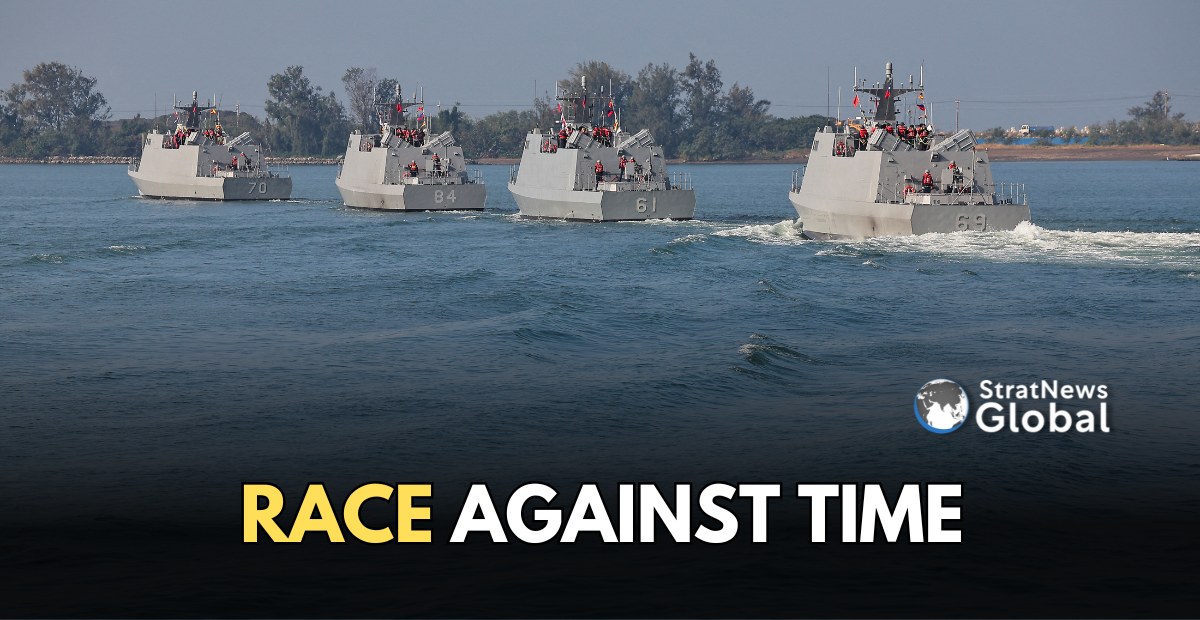
Taiwan ‘s military needs to test if it can respond immediately to a war breaking out, as the warning time for any Chinese attack is shortening, Defence Minister Wellington Koo said on Wednesday.
Taiwan is holding five days of “immediate combat readiness” drills this week, with the military basing some exercises on a scenario in which China suddenly turns a regular drill around the island into an actual attack. China views democratically governed Taiwan as its own territory and operates around the island almost daily; its newest aircraft carrier sailed through the Taiwan Strait on Tuesday.
The drills emphasise the ability to respond quickly and shift rapidly into combat readiness, Koo told reporters in parliament. “It is intended to build the speed we believe is necessary for converting from peacetime to wartime status,” he said. “Given the current threat situation from the enemy, and as we believe the warning time is shortening, we need to verify that we can respond immediately.” Taiwan holds regular drills, including firing its new U.S.-made HIMARS rocket system into the Taiwan Strait earlier this month, with its main annual Han Kuang exercises expected in August.
“Malicious Intent”
Speaking in Beijing, Zhang Han, a spokesperson for China’s Taiwan Affairs Office, said the drills showed the ruling Democratic Progressive Party’s “malicious intent to seek independence by force.” “In the face of the powerful people’s army, the DPP authorities’ posturing is completely futile; it will only harm and destroy Taiwan and bring about their own destruction,” she said.
Zhang reiterated that Beijing sought “peaceful reunification” but “will never pledge to renounce the use of force, and we will never leave any room for separatist activities seeking Taiwan independence in any form.” China held its most recent full-scale war games around Taiwan in late December.
Military Modernisation
President Lai Ching-te is leading a push to modernise the armed forces, including a goal to raise defence spending to 5% of GDP before 2030. “I ask all senior generals to lead force transformation with innovative thinking,” Lai told a military promotion ceremony, citing rapidly changing regional conditions and complex challenges.
The U.S., Taiwan’s most important supporter despite lacking formal diplomatic ties, has strongly backed the spending plans. “In line with the U.S. national security strategy, we aim to work alongside regional allies to maintain the status quo of the first island chain and prevent any attempts to take Taiwan by force,” Raymond Greene, the top U.S. diplomat in Taipei, told Taiwan’s United Daily News, referring to the area stretching from Japan to Taiwan, the Philippines and Borneo.
(with input from Reuters)