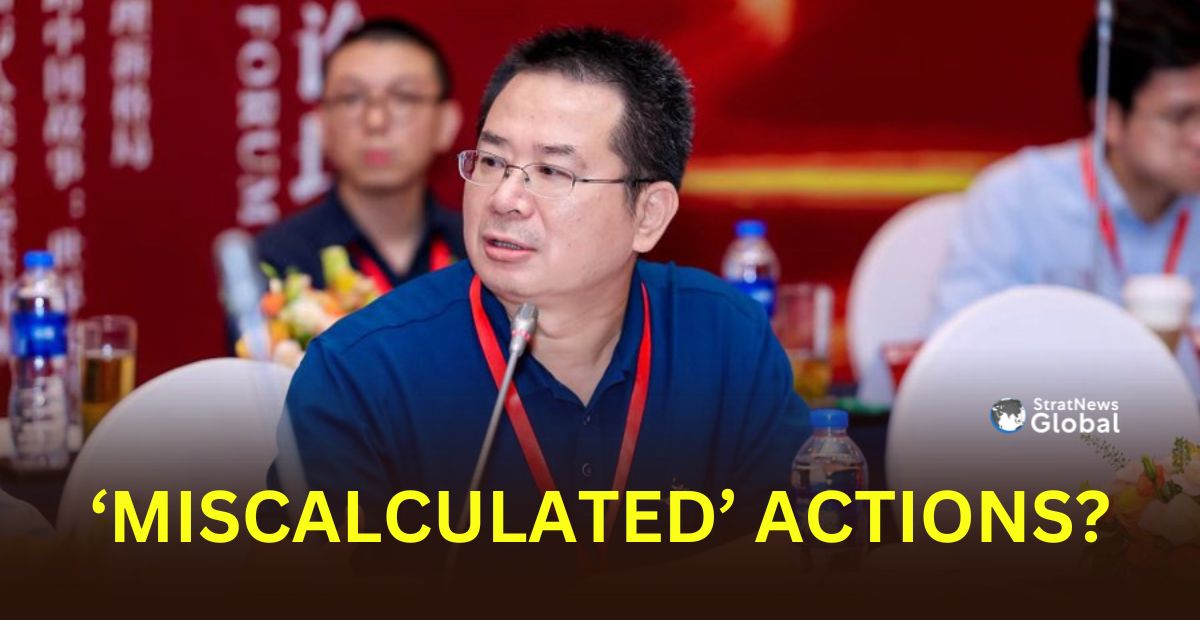
“Iran has already determined which side India is on,” said India scholar Liu Zongyi, director of the Centre for South Asia Studies at the Shanghai Institutes for International Studies (SIIS).
In an interview to the news site Guancha.cn, he argues that India made a major “strategic miscalculation” by siding with Israel before the US-Israel confrontation with Iran, betting that Iran would be quickly defeated and that an Israeli-dominated regional order would follow.
According to him, Modi hoped to become ‘America’s proxy policeman’ if Iran’s regime had collapsed. The calculation, he says, hinged on supporting Israel that would strengthen its ties with Washington, help advance the India-Middle East-Europe Economic Corridor.
He also linked this to India’s growing concerns about China and Pakistan, claiming India views US weapon system as essential to counter Chinese capabilities, and Israel could be a key channel in obtaining the same. But India miscalculated, leaving it diplomatically marginalized.
Liu accused India of a “series of strategic miscalculations” over the past decade, including misjudgement in post-COVID US-China rivalry, distancing itself from Russia during Russia-Ukraine war, expecting Trump to continue pro-India stance in his second term, and misjudging Iran’s military capabilities.
He believes that India hopes to attract investment and industries relocating from conflict-affected parts of the Middle East.
On India-Iran relations, Liu argued ties are full of twists and turns. He pointed to repeated disruptions in cooperation over Chabahar Port, where India’s investments were affected by US pressure and sanctions.
Referring to recent reports of Iranian forces warning or firing near Indian-linked tankers in the Strait of Hormuz, Liu said such incidents were “not unexpected” and could reflect Iran’s conclusion that India had sided with its adversaries.
Liu also questioned India’s claim of maintaining “strategic autonomy”, saying that Delhi was inclined towards the US in major geopolitical contests. He pointed to India’s defence ties with the US, participation in US-led critical minerals initiatives, and alignment with Israel.
On the economic front, he said the crisis in the Strait of Hormuz exposed the structural problem in India’s economy. Disruptions in liquefied natural gas supplies had affected industries and fertilizer production, increasing costs and placing pressure on agriculture and economic growth.
In his view, India remains deeply integrated into Asian supply chains centred on China despite political tensions between the two countries.