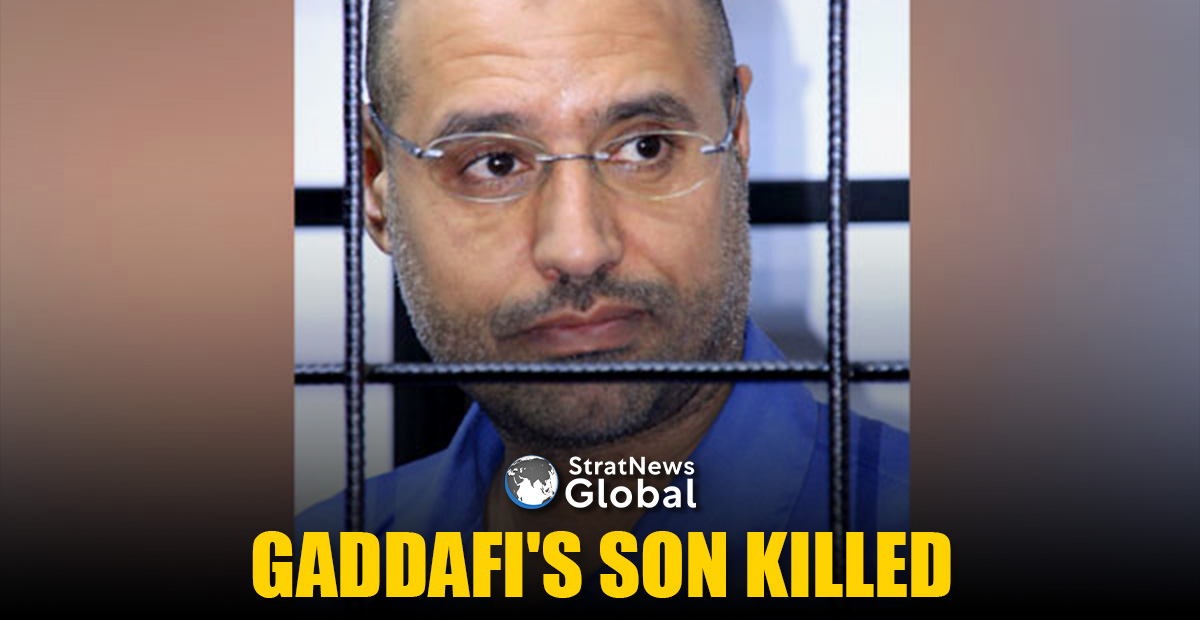
Libya’s Saif al-Islam Gaddafi went from his notorious father’s heir apparent to a decade of
captivity and obscurity in a remote hill town before launching a presidential bid that helped derail an attempted election.
Saif al-Islam’s office said in a statement on Tuesday that he had been killed during a “direct confrontation” with four unknown gunmen who broke into his home.
The office of Libya’s attorney general said investigators and forensic doctors examined Saif al-Islam’s body and determined that he died from gunshot wounds and that the office
was working to identify suspects.
Despite holding no official position, Saif al-Islam, 53, was once seen as the most powerful figure in the oil-rich North African country after his father Muammar Gaddafi, who ruled for more than four decades.
Saif al-Islam shaped policy and mediated high-profile, sensitive diplomatic missions. He led talks on Libya abandoning its weapons of mass destruction and negotiated compensation for the families of those killed in the bombing of Pan Am Flight 103 over Lockerbie, Scotland, in 1988.
Determined to rid Libya of its pariah status, he engaged with the West and championed himself as a reformer, calling for a constitution and respect for human rights.
Educated at the London School of Economics and a fluent English speaker, he was once seen by many governments as the acceptable, Western-friendly face of Libya.
But when a rebellion broke out against Gaddafi’s long rule in 2011, Saif al-Islam immediately chose family and clan loyalties over his many friendships to become an architect of a brutal crackdown on rebels, whom he called rats.
Speaking to Reuters at the time of the revolt, he said: “We fight here in Libya, we die here in Libya.”
He warned that rivers of blood would flow and the government would fight to the last man and woman and bullet.
“All of Libya will be destroyed. We will need 40 years to reach an agreement on how to run the country, because today, everyone will want to be president, or emir, and everybody will want to run the country,” he said, wagging his finger at the camera in a TV broadcast.