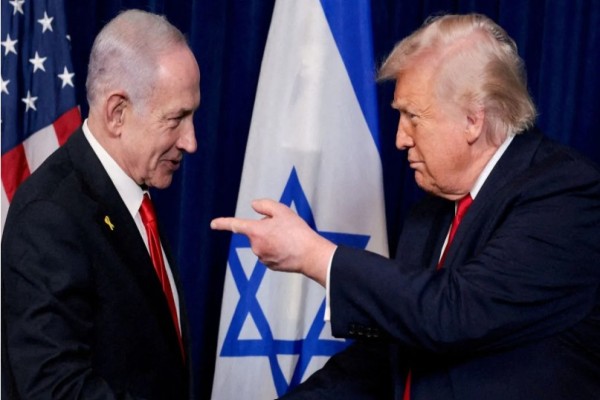
For decades, the United States and Israel have maintained one of the world’s closest strategic partnerships.
Despite recurring differences over settlements, peace talks and Iran, Washington provided military aid, diplomatic cover and political backing, while Israel served as America’s most reliable partner in West Asia.
The Iran war of 2026 exposed the limits of that relationship.
As fighting subsided and Washington shifted towards diplomacy and regional stabilisation, Israel found itself increasingly side-lined from discussions that would shape the region’s future security order.
US Vice President JD Vance’s reply to Israeli criticism of the Trump administration’s approach towards Iran was unusually blunt.
“Donald J. Trump is the only head of state in the entire world who is sympathetic to the nation of Israel at this moment in time. If I was in the cabinet of the Israeli government, I might not be attacking the only powerful ally I have left,” he said.
“Over the last three months, two-thirds of the defensive weapons that have protected your homeland have been built by American hands and paid for by American tax dollars,” he added.
While American officials have often disagreed with Israeli governments, they have rarely framed those disagreements in terms of Israeli dependence. Underlining Israel’s growing global isolation since the Gaza war adds to the slight.
Israeli Prime Minister Benjamin Netanyahu’s response reflected his concern over reliance on Washington for military support. Israel needed to “free ourselves of dependence” on American military aid and become more self-reliant, he argued.
Israel already possesses one of the world’s most advanced defence industries, producing missile-defence systems, drones, cyber capabilities and precision weapons. The push for greater self-sufficiency is about strategic freedom.
The United States has little appetite for another prolonged military commitment in West Asia. Stabilising energy markets, protecting shipping routes and preventing escalation now rank above pursuing Israel’s preferred approach towards Iran. Achieving those goals requires engagement with Tehran, however uncomfortable that may be for Jerusalem.
“The 60-day roadmap leading to the re-opening of the Strait of Hormuz and waiver of sanctions on sale of crude oil and natural gas by Iran is a clear indication that US has got the off ramp that it was desperately looking for,” says Rajeev Agarwal, a senior consultant at Chintan Research Foundation and the author of Between Tehran and Tel Aviv. “Israel on the other hand, feels abandoned midway, with limited options.”
For Netanyahu and Israel’s security establishment, Iran remains the central long-term threat. Any arrangement allowing Tehran to recover economically or politically merely postpones a future confrontation, they feel.
A similar divide emerged during the Obama administration’s pursuit of the nuclear deal with Iran. Netanyahu openly challenged Washington and took his case directly to Congress. Yet even then, senior American officials rarely spoke publicly about Israeli dependence on US support.
The Iran war has coincided with a broader shift in American foreign policy. China, technological competition and economic security command far more attention than they did a decade ago. While Washington remains committed to Israel’s security, it is now unwilling to subordinate every diplomatic initiative to Israeli preferences.
None of this points to an imminent rupture. Military cooperation, intelligence sharing and the political and institutional ties between the two countries remain exceptionally strong.
But the Iran war exposed a reality both governments have long preferred to avoid acknowledging. The old assumption was that American support and Israeli strategic preferences would naturally converge. The events of 2026 suggest otherwise.
The United States still sees Israel as a critical ally. Israel still sees the United States as an indispensable partner.
What has changed is the recognition that partnership does not always guarantee agreement.