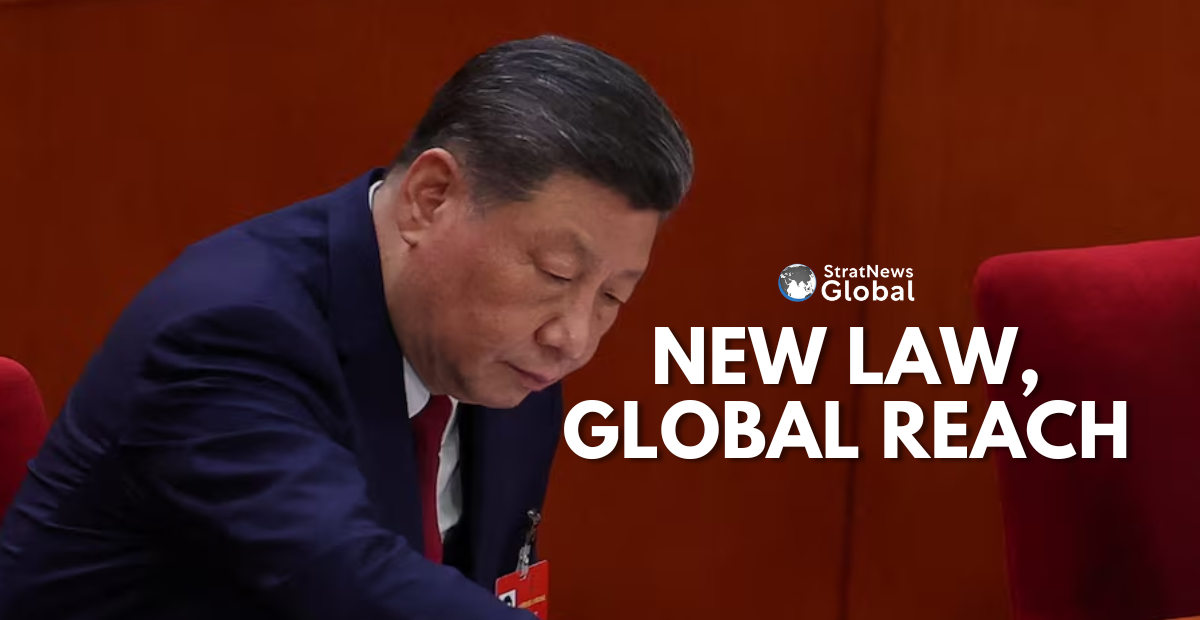
China has the right to target individuals and organisations outside its borders who violate its newly adopted ethnic unity law, a senior official said on Wednesday, arguing that the provision is lawful, necessary and consistent with international practice.
The legislation, passed in March and due to take effect on 1 July, is aimed at fostering a “shared” national identity among China’s 55 officially recognised ethnic minority groups.
Law Targets Separatism Beyond China’s Borders
The new law contains a provision allowing authorities to hold individuals and groups outside the People’s Republic of China legally accountable for actions deemed to undermine “ethnic unity and progress” or incite ethnic separatism.
The measure has prompted concerns, particularly in Taiwan, where officials and observers fear it could provide Beijing with an additional legal basis to pursue individuals it regards as supporters of independence.
Rights groups have also expressed concern over China’s past use of international mechanisms, including Interpol red notices, to seek the detention of individuals abroad accused of offences that Beijing considers political or separatist in nature.
Beijing Rejects Foreign Criticism
Speaking at a press conference in Beijing, Vice Justice Minister Hu Weilie dismissed concerns about the overseas provision, accusing unnamed Western media outlets of misrepresenting the legislation.
“This provision is based on China’s national conditions, conforms to legal principles, and is consistent with international practice. It is a legitimate, lawful, necessary, and feasible legal provision,” Hu said.
He added that countries around the world use domestic legislation to counter separatist activities and maintain social stability.
Safeguarding Sovereignty and Security
According to Hu, the overseas provision is designed to address unlawful activities involving ethnic affairs originating outside China and will help safeguard the country’s sovereignty, security and development interests.
He said the law would also protect the rights and interests of people from all ethnic groups within China.
Hu further argued that enforcement of the legislation would not affect normal exchanges between China and other countries, including academic cooperation, trade ties and people-to-people interactions.
Concerns Persist
Despite Beijing’s assurances, the law’s extraterritorial scope is likely to remain controversial. Critics argue that the measure could expand China’s ability to pursue activists, dissidents and groups abroad that advocate for causes involving Tibet, Xinjiang, Taiwan or other issues Beijing links to separatism.
Supporters, however, maintain that the legislation is intended to strengthen national unity and counter activities that Chinese authorities consider threats to territorial integrity and social cohesion.
(with inputs from Reuters)