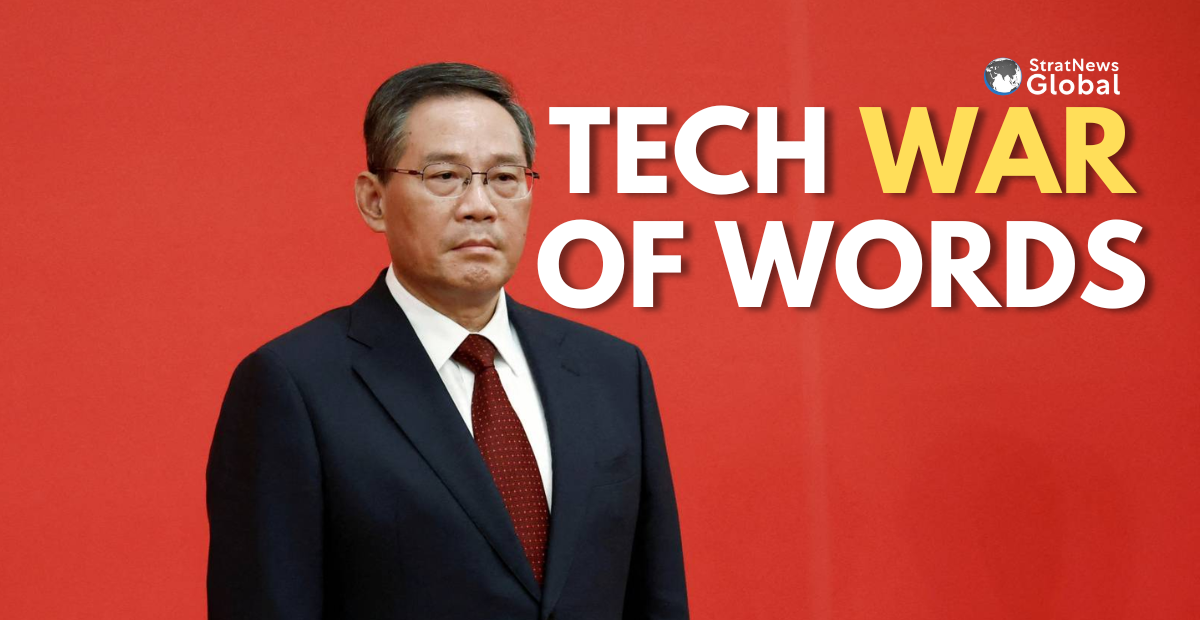
China’s Premier Li Qiang defended on Wednesday his country’s emergence in frontier technologies from AI to electric vehicles, rejecting accusations it was down to state subsidies, in a speech at a World Economic Forum summit in Dalian.
Singling out Huawei as having “long suffered from foreign restrictions,” but without referencing the United States or European Union, which have both curbed the company’s role in critical infrastructure, Li said China’s prowess in technology and innovation was down to the huge sums its firms invest. “People say Chinese products are competitive mainly because the Chinese government extends subsidies, but that is not the case: the Chinese government is not that wealthy,” the country’s No. 2 official added, in a rare moment of joviality for the man in charge of the $20 trillion economy’s day-to-day operations.
A Widening Trade Front
Beijing could soon confront a second, European front in its trade war with the West, analysts say, as Brussels increasingly echoes Washington’s concerns over alleged state support for Chinese firms and the risk they could dominate critical technologies including AI, big data and manufacturing.
This growing alignment between the U.S. and EU on tech-related concerns marks a notable shift, as China has historically sought to exploit differences between Washington and Brussels to soften the impact of Western trade restrictions.
China Touts Its Achievements
Li struck a defiant tone in the northeastern Chinese port city, highlighting China’s achievements in multi-use rockets, quantum technology and semiconductors. He also pointed to the rapid pace at which Chinese researchers are consuming AI tokens in their pursuit of fresh advances, framing this as evidence of organic technological momentum rather than state-engineered success.
Military Concerns Persist
The U.S. earlier this month expanded the Pentagon’s blacklist of alleged “Chinese military companies” to 188 entities, reflecting concerns China’s military could tap the private sector for advancements. Such concerns have increasingly shaped Western policy toward Chinese technology firms, even as Beijing insists its innovation ecosystem remains primarily commercial in nature.
Li said China would continue to participate in global discussions on the governance of AI and other frontier technologies with a “responsible and constructive attitude,” debates which experts say will have major ramifications for the use of these technologies on battlefields and in civilian life.
(with input from Reuters)