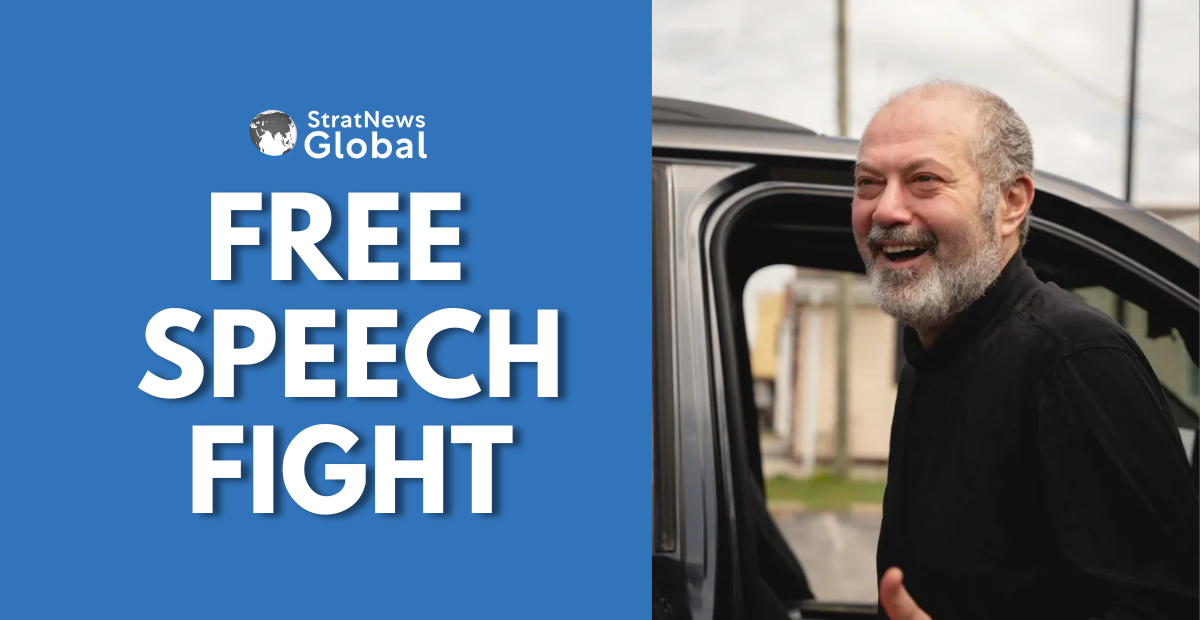
Islamic Society of Milwaukee President Salah Sarsour, a Palestinian American detained by U.S. Immigration and Customs Enforcement in March, was released from detention on Thursday after an order by a federal judge.
“Mr. Sarsour has raised a ‘substantial’ First Amendment retaliation claim, which could render his detention unlawful,” U.S. District Court Judge James Patrick Hanlon said in the ruling. ISM, Wisconsin’s largest mosque, says Sarsour, 53, is a legal permanent resident who has lived in the U.S. for over three decades after growing up in the Israeli-occupied West Bank. The mosque said Sarsour was “being targeted on the basis of his Palestinian and Muslim background, and his advocacy for Palestinian rights.”
“I will never stop speaking for Palestine and humanity, wherever I am,” Sarsour said after his release. “I am so relieved to be with my family.” Sarsour, who has type 2 diabetes, lost more than 30 pounds in detention, his legal team said.
A Disputed Past Conviction
Sarsour has no criminal record in the U.S. but was convicted as a teenager in an Israeli military court before coming to the U.S. Israeli rights group B’Tselem says West Bank military courts have a 96% conviction rate and a history of extracting confessions through torture. The Department of Homeland Security said Sarsour was convicted of throwing Molotov cocktails at homes of Israeli armed forces; Sarsour denies committing such crimes. “There is no First Amendment right to fund terror organizations and lie on immigration forms,” DHS said. Sarsour has denied supporting extremists.
The judge said Sarsour should remain in Wisconsin, and the case against him continues. The Council on American-Islamic Relations, among advocates calling for his release, welcomed the ruling.
Part of A Broader Crackdown
The Trump administration has cracked down on pro-Palestinian voices by attempting to deport foreign protesters, threatening funding freezes for universities where protests were held, and ordering screening of immigrants’ online comments. The measures have faced judicial obstacles. Trump alleges pro-Palestinian voices support extremism, while advocates say the government wrongly conflates criticism of Israel’s Gaza assault with antisemitism.
(with input from Reuters)