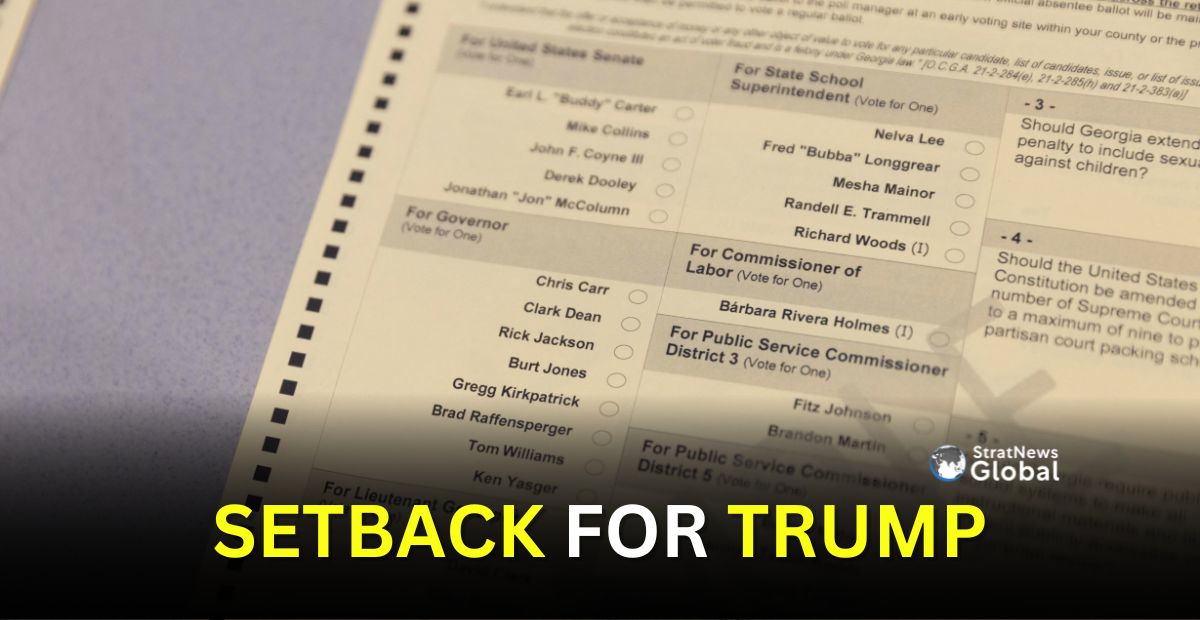
Georgia Republicans rejected President Donald Trump’s pick for governor on Tuesday, handing him his most embarrassing primary defeat in this election cycle. Voters selected businessman Rick Jackson over Lieutenant Governor Burt Jones, who was endorsed by Trump and Governor Brian Kemp, with Jackson leading by 5 percentage points when the race was called. The loss follows the June 2 defeat of Trump-endorsed U.S. Representative Randy Feenstra in Iowa’s gubernatorial primary.
Trump’s Mixed Night In Georgia
While Trump’s pick in the governor’s race lost, his preferred Senate candidate, U.S. Representative Mike Collins, defeated former football coach Derek Dooley by double digits. Collins, dubbed “MAGA Mike” by Trump, will face Senator Jon Ossoff, a rising Democratic star, in November. Georgia and Michigan are the only Trump-won states that Senate Democrats are defending in the midterms.
Collins faces a fundraising disadvantage against Ossoff, who has raised $60 million, compared to Collins’ $1.2 million, though the Senate Leadership Fund has pledged $44 million to flip the seat.
Jackson, a healthcare executive, spent more than $100 million despite launching his campaign only in February, branding himself a conservative outsider who rose from poverty to billionaire status. He will face Democrat Keisha Lance Bottoms, a former Atlanta mayor. Analysts say Jackson faces a tough road despite his ability to self-fund. “This is not going to be a particularly good year to be a Republican in this state,” said Charles Bullock, a political science professor at the University of Georgia. “Democrats could win the governorship.”
Trump’s Clout In the South
In Alabama, Trump-endorsed Representative Barry Moore defeated former Navy SEAL Jared Hudson in Tuesday’s runoff, leading by 16 percentage points. He is heavily favored to win the Senate seat in November, given Trump’s 30-point margin in the state in 2024.
Minimum Wage Increase Heading For Defeat
Oklahoma voters appear set to reject a ballot measure raising the state’s minimum wage to $15 by 2029, with the “no” vote leading by 15 points. Republican Governor Kevin Stitt and over 100 Republican legislators opposed the increase, citing economic risks, though Labor Commissioner Leslie Osborn backed it, noting the minimum wage hasn’t changed since 2009.
(with input from Reuters)