China has unveiled a fresh package of financial reforms aimed at promoting the global use of the yuan, strengthening liquidity management and further opening its financial markets as the country navigates a difficult economic transition.
Speaking at the annual Lujiazui Forum in Shanghai on Wednesday, People’s Bank of China (PBOC) Governor Pan Gongsheng announced a series of initiatives designed to enhance the yuan’s international standing and improve the resilience of China’s financial system.
As China shifts its growth model away from property and investment-led expansion towards technology and innovation, regulators stressed the need to balance market reform with financial stability.
New offshore Yuan initiatives
To strengthen Shanghai’s role as a global financial hub, six major state-owned banks, including Bank of China and China Construction Bank, have been authorised to conduct offshore yuan transactions within Shanghai’s free trade zone.
The central bank also introduced a new facility known as the FIMA RMB Repo, allowing overseas central banks and sovereign wealth funds to access yuan liquidity more easily by using high-quality Chinese bonds as collateral.
According to Pan, growing foreign participation in China’s bond market has increased demand for liquidity management tools, making such reforms necessary to support international investors.
The measures form part of Beijing’s broader strategy to internationalise the yuan and reduce reliance on a global financial system dominated by the US dollar.
Digital Yuan expansion gathers momentum
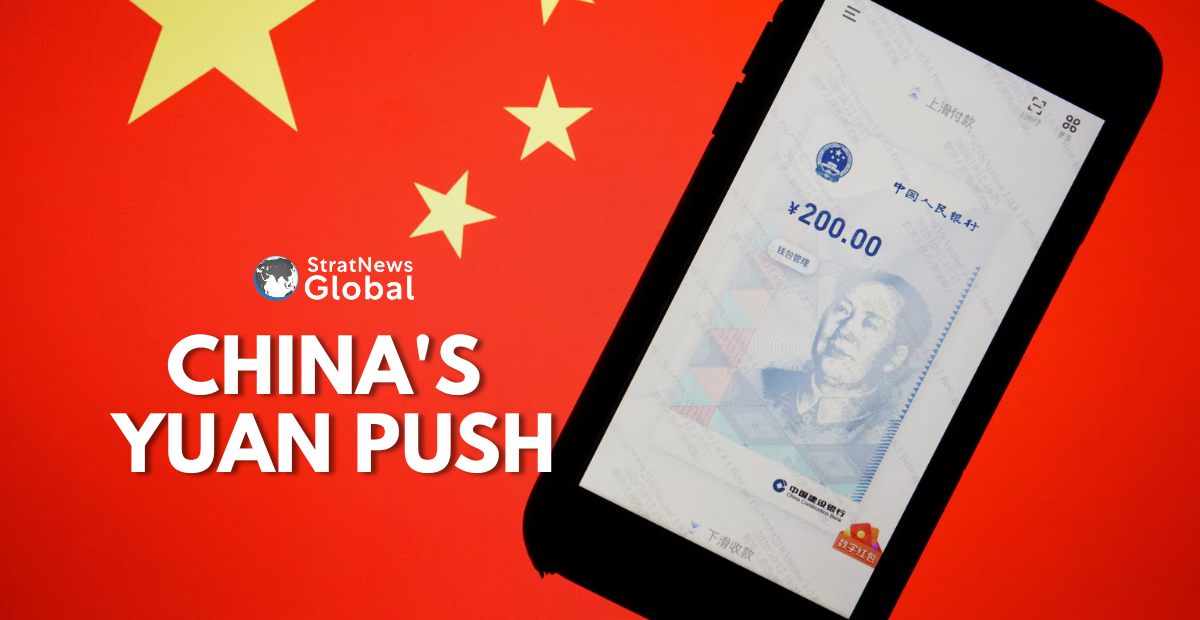
The latest announcement follows moves earlier this week to promote the international use of China’s digital currency, the e-CNY.
On Tuesday, the PBOC’s digital yuan operation centre signed agreements with 26 financial institutions in Shanghai to support wider adoption of the digital currency and encourage its use in cross-border transactions.
The initiative reflects China’s long-term ambition to develop alternative payment systems and strengthen the yuan’s role in international trade and finance.
Central bank adapts to a changing economy
Alongside internationalisation efforts, the PBOC announced plans to improve domestic liquidity management.
Pan said the central bank would expand the use of overnight reverse repo operations and is studying a new emergency liquidity facility for non-bank financial institutions. The proposed tool aims to support market stability during periods of stress while avoiding excessive risk-taking.
The governor acknowledged that China’s economic structure is changing rapidly. While bank lending growth has slowed, bond and equity financing have become increasingly important sources of capital.
“It is difficult and unnecessary for China’s credit growth to maintain its previous pace,” Pan said, describing the shift as a reflection of deeper economic restructuring.
Analysts believe the changes signal an evolution in the central bank’s role. Rather than focusing solely on banking institutions, the PBOC is increasingly managing broader financial market liquidity and stability.
Regulators focus on systemic risks
Senior financial officials also used the forum to underline their commitment to preventing systemic financial risks.
Ding Xiangqun, head of China’s National Financial Regulatory Administration, said regulators remain confident they can manage risks associated with smaller financial institutions, the property sector and local government debt.
He warned that cross-border and cross-market financial risks are becoming more interconnected and pledged stronger regulatory oversight.
Authorities also promised to channel more financial resources towards emerging sectors such as artificial intelligence, robotics and advanced manufacturing while cracking down on market manipulation, speculative activity and illegal financial practices.
Supporting China’s next phase of growth
China’s economy continues to face significant challenges, including weak consumer demand and a prolonged property downturn. At the same time, investment in strategic sectors such as AI, advanced technology and green industries remains strong.
Reflecting this transition, foreign exchange regulator Zhu Hexin announced new quotas under the outbound Qualified Domestic Institutional Investor (QDII) programme, while securities regulator Wu Qing said China’s stock market would actively embrace technological innovation while maintaining strict oversight.
Taken together, the measures highlight Beijing’s effort to modernise its financial system, strengthen global confidence in the yuan and support a new phase of economic development centred on innovation and high-quality growth.
(with inputs from Reuters)