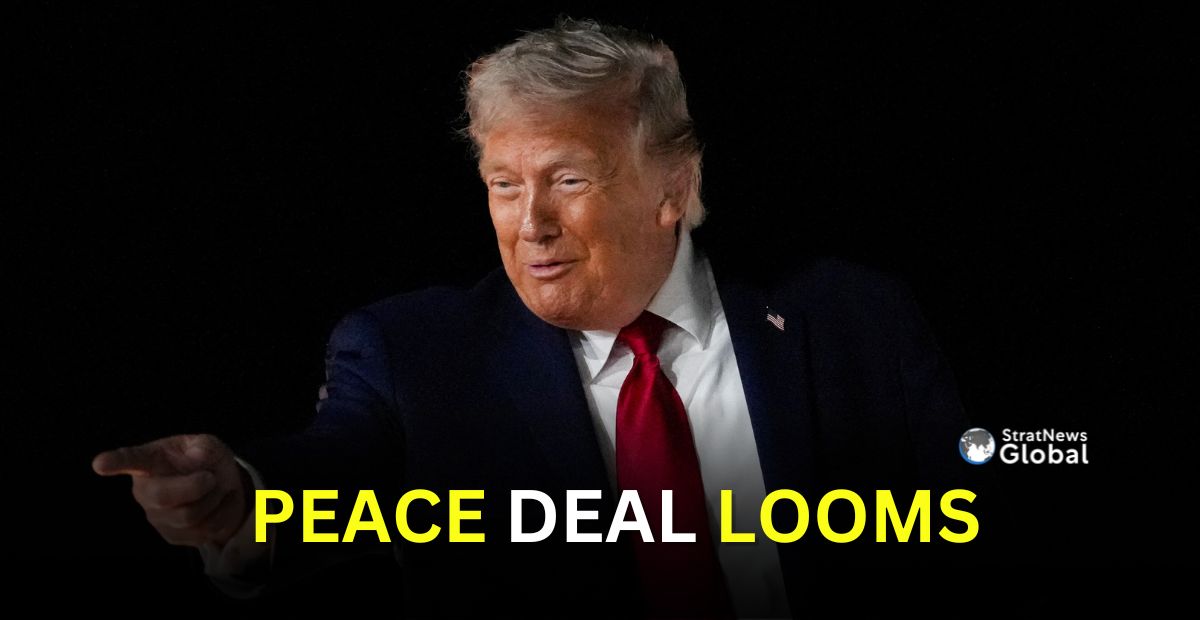
President Donald Trump said on Thursday that the United States and Iran could reach and sign a peace agreement as early as this weekend, a move that could lead to the reopening of the strategically vital Strait of Hormuz to commercial shipping. However, Iran responded by saying that no final decision had yet been made on any proposed deal.
If concluded, the agreement would mark the most significant diplomatic breakthrough since the conflict began three months ago. The war has claimed thousands of lives and contributed to a sharp rise in global energy prices, largely due to concerns over disruptions to oil and gas supplies through the Gulf region.
Iranian media reported Foreign Ministry spokesperson Esmaeil Baghaei as saying that large parts of the text under negotiation have been finalized but Iran would not compromise on its red lines.
Since mid-March, Trump has repeatedly claimed that a deal with Iran to end the war was close. The two sides have traded strikes this week, straining a ceasefire announced in April.
Trump has repeatedly said that any peace deal must ensure Iran cannot develop a nuclear weapon. Iran denies it is seeking such a weapon.
Iran’s demands include the lifting of international sanctions, the release of billions of dollars in frozen assets and recognition of its control of the Strait of Hormuz.
Tit-For-Tat Strikes
The conflict has killed thousands, primarily in Iran and Lebanon, and driven up global energy prices since U.S. and Israeli strikes on Iran began on February 28. Fighting has intensified in recent days despite a fragile ceasefire, with both sides exchanging attacks.
This week, the United States launched fresh strikes near the Strait of Hormuz after a U.S. helicopter was downed, while Iran targeted American bases with missiles and drones. Iranian state media also reported that its forces blocked a tanker from transiting the Strait of Hormuz without coordination.
The strategic waterway, through which about one-fifth of global energy supplies normally pass, has remained largely disrupted since the war began.
Domestic Pressures
The conflict has become a political challenge for President Donald Trump, with rising fuel prices hurting his approval ratings and some Republicans fearing electoral fallout in November’s midterms.
At the same time, Trump faces pressure from Iran hawks within his party to ensure any deal blocks Tehran’s path to a nuclear weapon.
Trump said countries including Israel, Saudi Arabia, Qatar and the United Arab Emirates had approved the proposed agreement.
However, Israeli Prime Minister Benjamin Netanyahu said Israel was not a party to the understanding, while reiterating support for a deal that curbs Iran’s nuclear and missile programmes and support for regional proxies.
Iran, meanwhile, continues to demand an end to Israeli military operations in Lebanon.
(With inputs from Reuters)