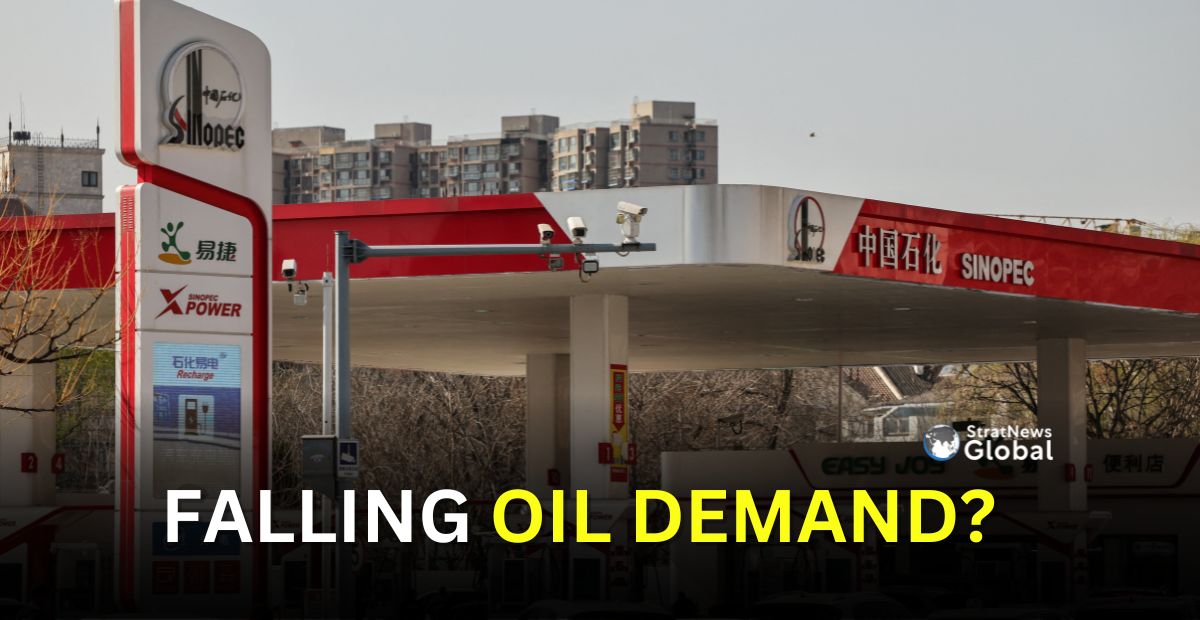
Three months into the conflict involving Iran, oil markets are adjusting to an unexpected development: China, the world’s largest crude importer, appears to require far less fuel than previously projected.
According to industry sources familiar with internal data, gasoline sales at Sinopec , operator of China’s largest petrol station network and the world’s biggest refiner, fell 8% year-on-year in April, while diesel sales declined 6%.
Fuel use in China had already been falling in recent years due to slowing economic growth and the rise of electric cars and trucks, but the recent decline is especially steep and has caught industry players by surprise.
Goldman Sachs estimates the drop in the use of gasoline and related products was about 20% in April, while China-basedGL Consulting put the decline at around 15%.
Chinese are changing the way of travel, rail journeys grew around 10% in March and April annually, compared to around 5% last year, according to Ministry of Transport data. Travel by subway or taxis, which are electrified in many cities, is also growing rapidly, the data shows.
China’s EV fleet, by far the world’s largest, also got more use in April. Charging rose 69% from a year earlier to an all-time high, according to the state-backed China Charging Alliance.
Cut on Crude oil
China has cut crude imports drastically since the start of the war, in part by dipping into stockpiles built while prices were cheap, easing the crunch from the near-closure of the Strait of Hormuz and putting a lid on prices.
May oil imports slumped 29% to their lowest in eight years at 7.8 million bpd, following a 20% tumble in April.
While those levels are unsustainable without China further tapping reserves, say analysts, the possibility that behavioural changes will persist and hasten the decline in fuel use has significant implications for global oil demand and a Chinese refining sector already facing overcapacity.
Gasoline and diesel demand is now much more elastic in China thanks to EVs and the electrification and prevalence of mass transit, said S&P Global analyst Minmin Hu.
“The drop in fuel consumption during the COVID period was due to mobility constraints,” she said.
“The difference now is that demand is declining spontaneously.”
Diesel And The Property Crisis
Rising prices add to the decline in consumption for diesel caused by China’s five-year property sector crisis.
An independent fuel trader surnamed Zhang in Guangdong province said some local government-funded construction projects are struggling to fund diesel purchases for land-levelling as prices rise and budgets tighten.
His company’s diesel and gasoline sales have halved in the past few months, he told Reuters.
Another fuel trader in China’s southwest, surnamed Song, said demand from logistics, mining and industry had dropped considerably while many construction clients had “disappeared entirely,” having already swapped their diesel trucks for electrics.
Will It Last?
Sinopec expects national demand for gasoline, diesel and jet fuel to fall around 10% on-year in the second and third quarters, according to an industry source briefed by Sinopec. They declined to be named as they were not authorised to speak to media. S&P told Reuters it expects a similar drop in the second quarter.
In February – before the war – the refiner forecast diesel and gasoline use would fall this year by 6% and 5%, respectively.
EV use continues to grow. The transport ministry said about a quarter of all vehicles on highways over the May Day holidays were electric or hybrids, a third more than last year.
Ride-sharing company Didi told Reuters half its car rental bookings during the May holiday were for electrics or hybrids, just over double the number over the same period last year.
(With inputs from Reuters)