India has gone to the UN Security Council over the US attack on a tanker near the Strait of Hormuz in which two Indian seamen were killed and one is missing. What the Security Council can do is not clear since the US is a permanent member of that august body.
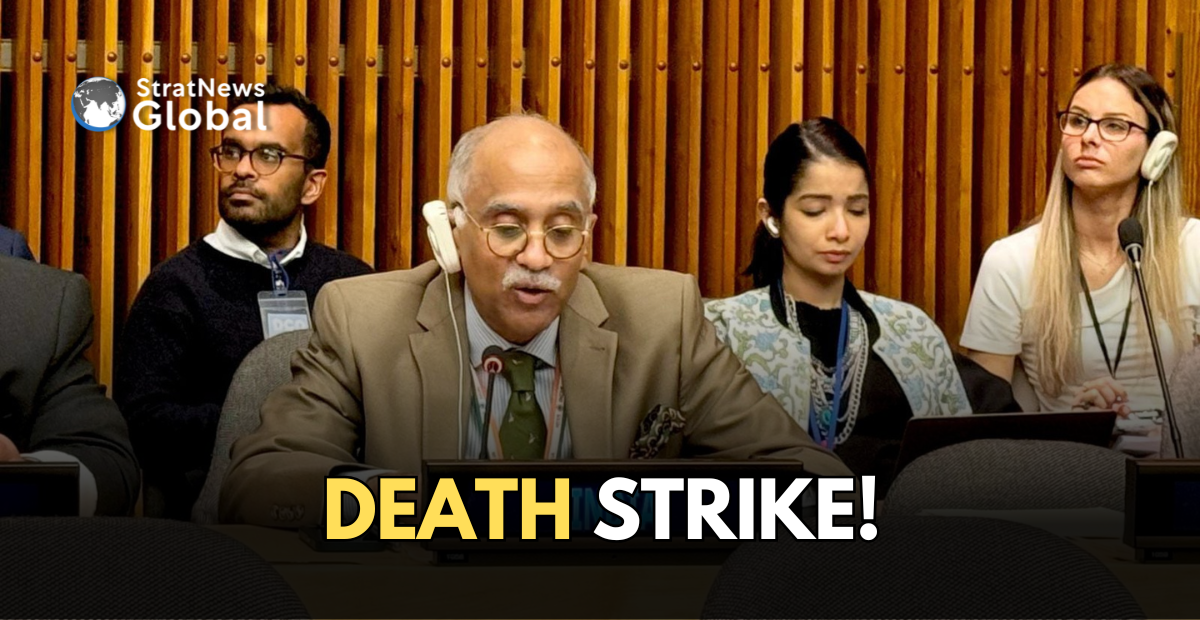
For the record, India’s ambassador to the UN P Harish warned that attacks on commercial vessels were directly affecting Indian citizens.
“Many Indian nationals have lost their lives or are missing as a result of attacks against countries of the region and against merchant vessels and sea lanes of communication,” he said.
Noting that Indian sailors constitute a significant portion of the global maritime workforce, he urged freedom of navigation and protection for commercial shipping.
Meanwhile the Forward Seamen’s Union of India (FSUI) has raised serious questions about the circumstances surrounding the tanker attack. General Secretary Manoj Yadav said communication with the vessel had been severely disrupted, making it difficult to independently verify all details.
“We have been unable to establish a connection with the ship,” Yadav said, adding that information available to the union indicated that two crew members had died while the Chief Engineer remained missing.
“The US naval forces were aware of the nationalities of those on board the vessels and detention could have been considered as an alternative if instructions were not followed,” he said.
Earlier, Delhi had issued a demarche to the United States, following the deaths and disappearance of the Indian seamen. Chargé d’Affaires Jason Meeks had also been summoned and read the riot act.
It is now established that the tanker Settebello with 24 Indian crew on board was at the entrance to the Strait of Hormuz when it was hit. While 21 sailors have been rescued, three crew members were initially reported missing. Seafarers’ representatives later indicated that two Indian sailors had died, while the vessel’s Chief Engineer remained unaccounted for.
According to US Central Command, the tanker was allegedly transporting Iranian oil in violation of an American maritime blockade. The US military said aircraft fired precision munitions into the vessel’s engine room after the crew failed to comply with instructions issued by American forces.
Maritime security agencies reported that the vessel transmitted a distress signal indicating that its engine room had been hit, leading to a fire on board. Omani authorities subsequently launched rescue operations.
The Settebello incident occurred just days after another vessel carrying 24 Indian crew members reportedly came under action by US forces in the same region. All crew members from that vessel were eventually rescued with assistance from Omani authorities.
India has repeatedly stated that nearly 10 million Indian citizens live and work across the Gulf region, making stability there a matter of both economic and humanitarian importance.
“Our trade and energy supply chains are dependent on stability in the region and any major disruption has serious consequences for the Indian economy,” P Harish told the UNSC.
At both the diplomatic and multilateral levels, India’s message has remained consistent: commercial shipping must not become collateral damage in regional conflicts.
At the United Nations, India backed diplomatic engagement, mediation and dialogue as the only sustainable path forward, while urging all parties to avoid further escalation.
While New Delhi has carefully avoided taking sides in the wider US-Iran confrontation, the deaths and disappearance of Indian crew members have transformed what was previously a regional security concern into a direct national issue.