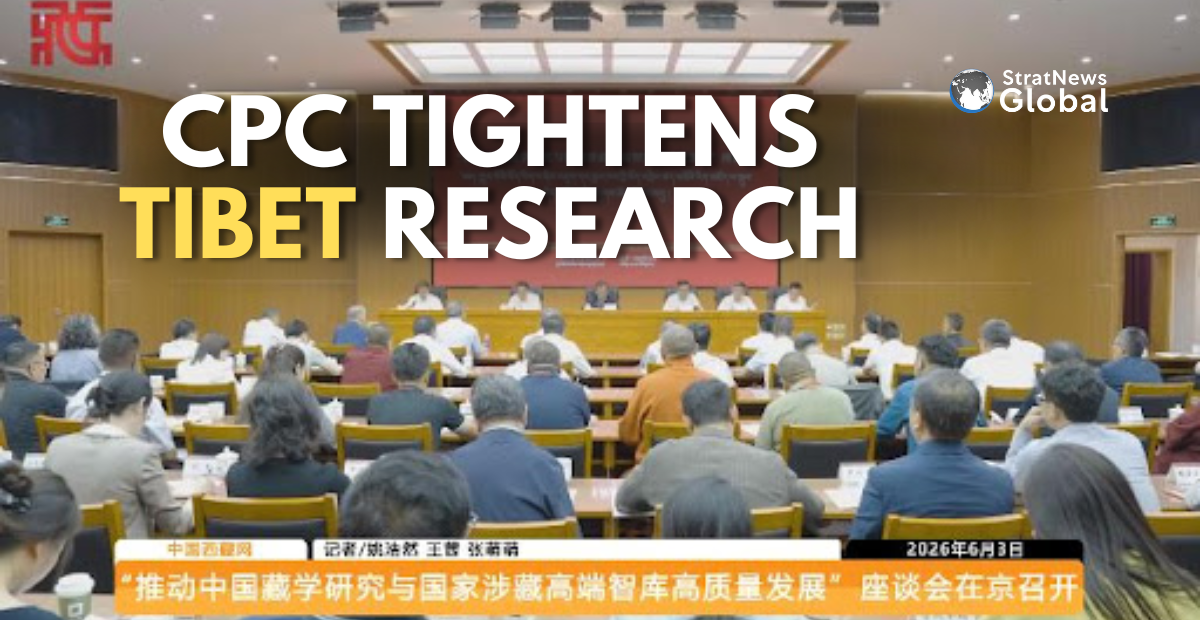
A symposium on “Promoting High-Quality Development of Tibetan Studies and National High-Level Think Tanks Related to Tibet” was held in Beijing on 3 June, according to Xinhua News Agency.
The event was attended by Li Ganjie, a member of the Political Bureau of the Communist Party of China (CPC) Central Committee and head of the United Front Work Department.
Focus on Tibet Research and Policy Alignment
Li said that since its establishment 40 years ago, the China Tibetology Research Center has played a central role in advancing Tibet studies, coordinating research efforts, and supporting policy objectives related to the region.
He said the institute has contributed to what he described as the development of China’s independent Tibetology knowledge system and the strengthening of academic communication and influence.
Strategic Role of Tibet Studies
Li stressed that Tibet studies are becoming increasingly important in supporting governance and development policy in the region, particularly in promoting long-term stability and what officials describe as high-quality development.
He also said Tibetan studies should help strengthen ideological foundations, improve governance capacity, and enhance China’s international “discourse power” on Tibet-related issues.
The remarks come amid ongoing efforts by Beijing to shape global narratives on Tibet, where China maintains administrative control over the Tibet Autonomous Region and surrounding Tibetan-inhabited areas.
Call for Stronger Ideological Direction
According to the readout, Li called for strengthening theoretical foundations, improving strategic coordination, and ensuring research aligns with the Communist Party’s broader policy direction on Tibet.
He also emphasised expanding international outreach, improving dissemination of research findings, and building stronger talent pipelines in the field.
Representatives from Tibet, Sichuan, Yunnan, Gansu and Qinghai, along with academics and think tank researchers, attended the symposium.
(with inputs from Reuters)