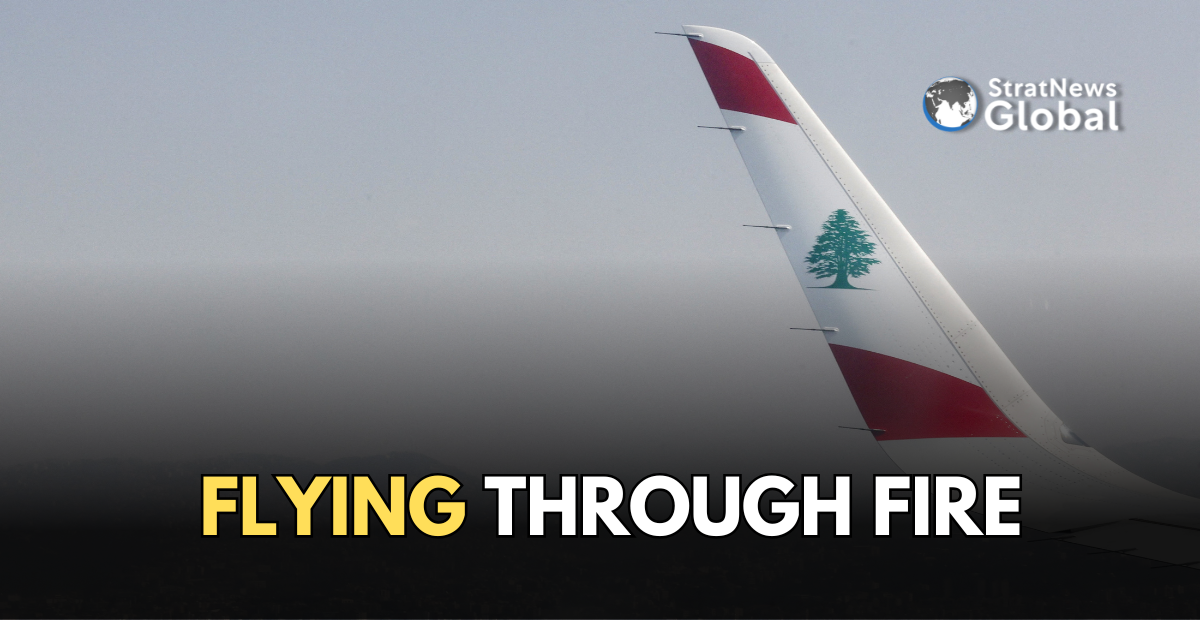
Lebanon’s aviation regulator has launched a safety audit of Middle East Airlines (MEA) as pilot groups raised concerns that crews were being asked to fly close to airstrikes and penalised for reporting safety incidents, according to letters seen by media agencies.
The audit puts scrutiny on the Beirut-based flag carrier, which has kept the country connected through war and financial collapse even as many foreign airlines have avoided large parts of Middle East airspace because of missile and drone risks since the U.S.-Israeli war against Iran began in February.
MEA, operating a fleet of around 20 planes across the Middle East, Europe and West Africa, has been praised at home for continuing to fly during regional conflict and helping prop up a weak economy increasingly dependent on tourism and expatriate remittances.
The airline said any flights during military hostilities were conducted based on risk assessments developed alongside Lebanon’s government and aviation regulator, the Lebanese Civil Aviation Authority (LCAA), and that it has a strong and proven safety record.
Concerns Over Conflict Zone Flying
Multiple Israeli airstrikes have landed near Lebanon’s largest airport since 2024, raising alarms within the International Federation of Air Line Pilots’ Associations (IFALPA).
“While some may think that flying civilian aircraft and passengers in high-risk and conflict zones during war conditions is heroic, we consider this an unconscionable risk,” IFALPA President Ron Hay wrote in a May 12 letter to Lebanon’s central bank, which holds a majority share in MEA.
One MEA pilot told reporters that aviators had a financial incentive to fly, since per-flight payments made up a majority of their salaries, their base pay having been slashed following Lebanon’s economic collapse in 2019.
IFALPA flagged cases where pilots who reported unintentional errors for safety purposes faced punishment such as being sent for “training,” causing them to lose per-flight income.
“We know definitely that pilots have spoken up and there have been actions taken against them,” Hay said. MEA called the allegations “unfounded,” saying training assignments were conducted in line with regulatory requirements and should not be misconstrued as disciplinary measures.
The Audit And Its Findings
LCAA head Mohammed Aziz told IFALPA in a May 15 letter that his team would conduct an aviation safety audit on MEA.
The airline said oversight activity conducted from May 18 to June 1 confirmed its compliance with regulatory and operational safety requirements.
Aziz told reporters a closing meeting was held, but the audit was still being processed, and the LCAA was mediating between pilots and the airline.
Partner Airlines Put On Alert
The safety concerns led pilot groups to contact the SkyTeam airline alliance, which includes MEA, Air France and Delta Air Lines.
“If you put your passengers on a colleague airline, you want to be sure the level of safety is where you want it to be,” said Dara van Langen, chair of the SkyTeam Pilots Association.
Both the U.S. Federal Aviation Administration and the European Union Aviation Safety Agency require airlines to audit foreign codeshare partners for comparable safety standards.
Air France said it regularly audits all codeshare partners, while Delta and SkyTeam said they were monitoring the situation.
Questions Over Regulator Independence
IFALPA also raised concerns that MEA was providing payments to LCAA workers overseeing aviation safety.
An internal spreadsheet reviewed by media agencies showed dozens of LCAA employees received payments from the airline, including three aviation safety workers.
“If the oversight of your airline is being partly paid by your airline, you don’t want to speak up, do you?” Hay said.
MEA said it had provided financial support in coordination with Lebanon’s government to keep the country’s aviation infrastructure functioning after the financial crisis slashed air traffic controllers’ pay by more than 90% to less than $100 a month.
The carrier said its support did not affect the LCAA’s independence or oversight responsibilities, and that auditors and agency leaders, including Aziz, did not receive payments.
(with input from Reuters)