Gulf hostilities flared anew on Wednesday, with the U.S. military saying Iranian missile attacks on Bahrain, Kuwait and other regional targets were either thwarted or failed, as diplomacy between Washington and Tehran showed little progress.
Two Iranian missiles shot at Kuwait fell short or broke apart in flight, while several ballistic missiles aimed at regional targets failed and three missiles heading for Bahrain were intercepted, U.S. Central Command said.
Since the conflict began in late February, Iran has repeatedly attacked targets in the Gulf region where U.S. military bases are located.
Central Command said the U.S. military also downed Iranian drones targeting civilian ships in regional waters and U.S. forces in Kuwait, and carried out strikes on Qeshm Island near the Strait of Hormuz following attempted attacks by Iran.
Repelling Unwarranted Iranian Aggression
According to Iranian state media, the country’s Revolutionary Guards Corps (IRGC) attacked the U.S. Fifth Fleet headquarters, located in Bahrain, as well as an airbase and helicopters in an unspecified regional country using missiles and drones in response to what the IRGC described as a U.S. attack on a communications tower south of Qeshm.
Central Command said all the attacks failed and that U.S. forces remained ready to repel “unwarranted Iranian aggression.”
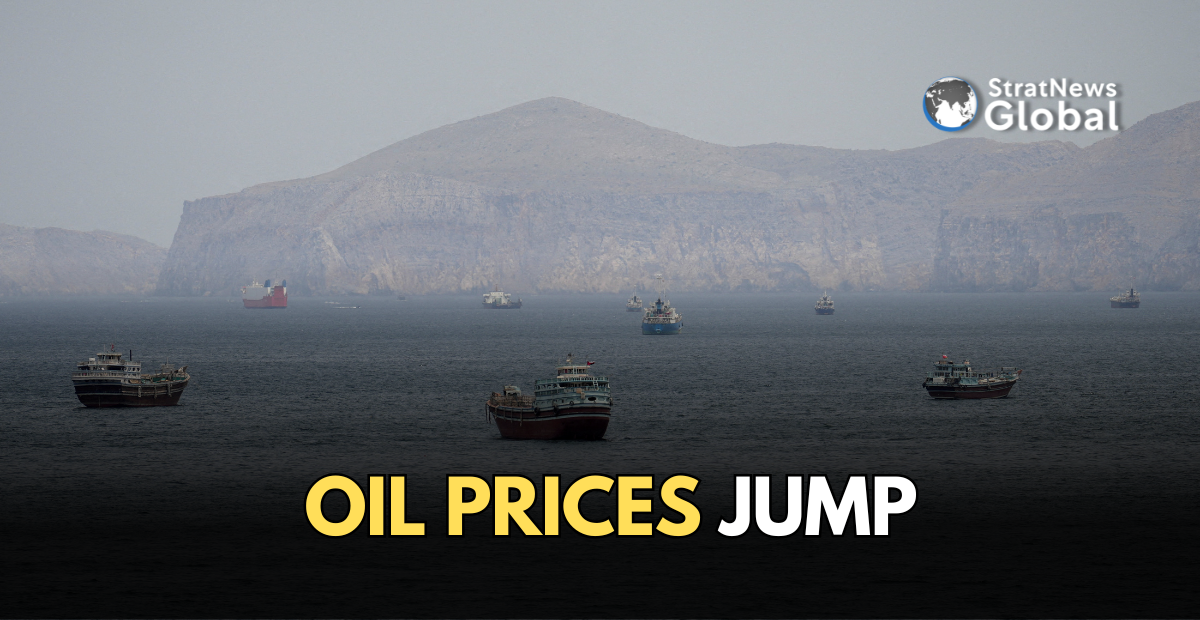
The latest flare-up, which lifted oil prices by more than 1% in early trade on Wednesday, comes more than three months after the initial U.S. and Israeli strikes on Iran, with the conflict mired in a stalemate under a shaky ceasefire and the Strait of Hormuz largely closed to maritime traffic.
Iran and the U.S. said last week that they had reached a tentative initial agreement to halt the war. But the two sides have yet to sign off on the deal.
Iranian media reported that Tehran has not communicated with Washington for several days, but U.S. President Donald Trump said negotiations have not stopped.
“The conversations between us have been going on continuously, including four days ago, three days ago, two days ago, one day ago, and today,” he said in a social media post.
Nuclear Program Discussions
Since mid-March, Trump has repeatedly said he is close to a deal that would end the fighting and allow negotiators to tackle thorny issues including the future of Iran’s nuclear program.
Trump has said stopping Iran from acquiring nuclear weapons is his top priority. Iran denies it is developing a nuclear bomb and says its atomic program is for peaceful purposes.
Tehran is seeking access to billions of dollars in oil revenues, waivers on crude exports, a lifting of a U.S. blockade on its ports and continued leverage over the strait, which handled a fifth of the world’s oil and liquefied natural gas traffic before the war.
Iranian media said the IRGC’s navy targeted a vessel it identified as “Panaya” with missiles in response to what it said was a U.S. attack on an Iranian tanker near Hormuz.
“Disrupting the security of the Strait of Hormuz will carry a heavy price for the U.S. military,” Iranian media cited the IRGC as saying.
U.S. Secretary of State Marco Rubio told lawmakers on Tuesday that the U.S. would agree to sanctions relief only if Iran agrees to give up its nuclear activity.
Rubio declared, “The war is over,” during a sharp exchange with Democratic Senator Cory Booker of New Jersey, who disagreed.
(with inputs from Reuters)