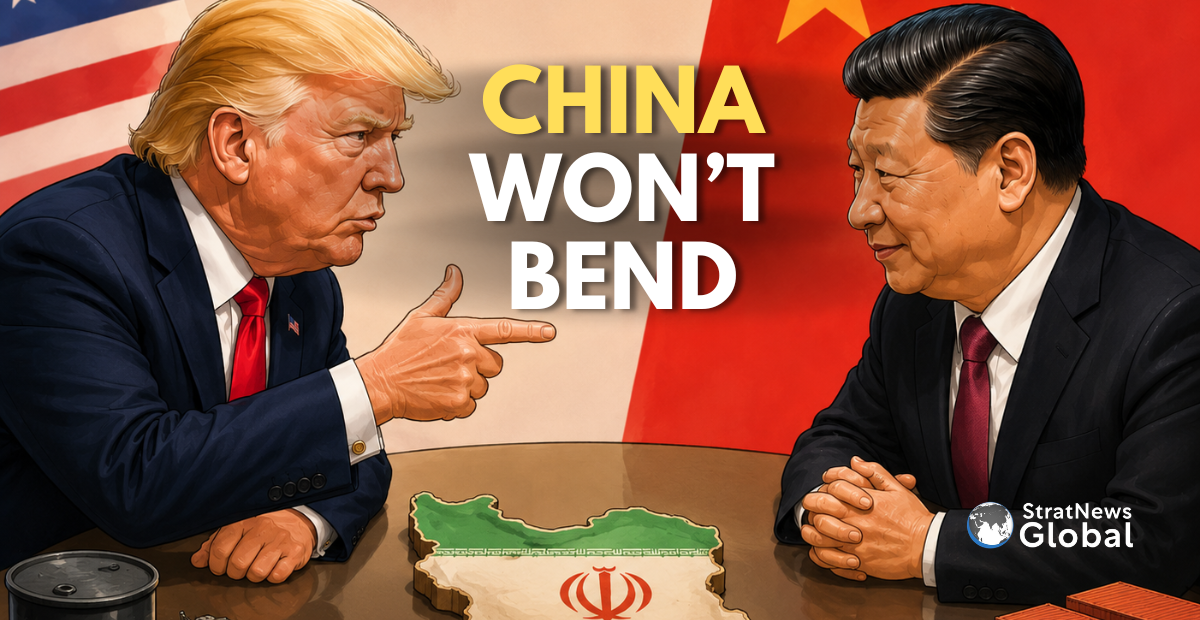
When U.S. President Donald Trump meets Chinese President Xi Jinping this week in Beijing, one of his key priorities will be seeking China’s assistance in ending the costly and increasingly unpopular conflict with Iran.
Analysts, however, believe Trump is unlikely to secure the level of support Washington wants from Beijing.
While Xi may encourage Tehran to return to negotiations, experts say China is unlikely to cut economic ties with Iran or halt supplies of dual-use goods that support the country’s military capabilities.
Iran Conflict Looms Over Trump-Xi Talks
The Trump administration sees China the largest buyer of Iranian oil — as one of the few countries capable of influencing Iran’s leadership to finalise a deal with Washington.
Two sources familiar with preparations for the summit said U.S. officials hope to persuade Beijing that ending the conflict is also in China’s interests.
But Beijing faces competing strategic calculations.
China wants stability in the Strait of Hormuz, through which roughly one-fifth of global oil supplies pass, including large volumes destined for China. Iran’s military actions in the region have disrupted shipping and added pressure to global energy markets.
At the same time, Iran remains one of China’s most important strategic partners in the Middle East and serves as a counterweight to U.S. influence in the region.
Analysts also note that the conflict has shifted American diplomatic and military attention away from the Indo-Pacific, something Beijing may view as strategically beneficial.
Xi Approaches Summit From Position Of Confidence
Henrietta Levin, a senior fellow at the Council for Strategic and International Relations in Washington, said Xi enters the summit with growing confidence following Trump’s retreat from last year’s tariff campaign and Washington’s deepening focus on Iran.
Trump’s approval ratings have suffered amid rising fuel prices and concerns over the economic fallout of the conflict.
Speaking to reporters on Tuesday, Trump insisted he did not need China’s help to pressure Tehran, citing the ongoing U.S. naval blockade.
“The Iranian regime knows their current reality is not sustainable, and President Trump holds all the cards as negotiators work to make a deal,” White House spokesperson Olivia Wales said.
China, however, criticised Washington’s approach.
Chinese embassy spokesperson Liu Pengyu said Beijing opposed what he described as “illicit unilateral sanctions” and stressed that China wanted to prevent further escalation.
“As to the Iran situation, the pressing priority now is to prevent by all means a relapse in fighting, rather than exploit the situation to throw mud at other countries,” Liu said.
Experts say the United States has limited tools to force China to take stronger action on Iran.
Washington has already imposed sanctions on some Chinese companies accused of helping Iran evade restrictions, though analysts say those measures have had limited impact.
Some experts argue the U.S. could increase pressure by targeting Chinese banks involved in facilitating Iranian oil trade.
However, officials appear reluctant to escalate further because of fears of economic retaliation from Beijing.
Edward Fishman, director of the Geoeconomics Center at the Council on Foreign Relations, warned that sanctions on even a small Chinese bank could trigger a broader economic confrontation between the two countries.
Such a move could reignite the trade tensions and tariff battles both sides paused last year.
Analysts also warn that Beijing could retaliate by restricting exports of rare earth minerals, which are critical for American technology and defence industries.
China dominates global rare earth refining and processing, giving it substantial leverage in any economic dispute with Washington.
Beijing Unlikely To Deeply Involve Itself
Former U.S. Deputy Secretary of State Kurt Campbell said China has likely learned from America’s experiences in the Middle East and will remain cautious about becoming too deeply involved in the Iran conflict.
“It will be difficult to get the Chinese deeply involved under any circumstances,” Campbell said.
“They will want to be careful because they can see political quicksand as well as the next guy.”
Despite Trump’s hopes for diplomatic support, analysts believe Beijing’s broader strategic priorities make any major shift in China’s Iran policy unlikely during this week’s summit.
(with inputs from Reuters)