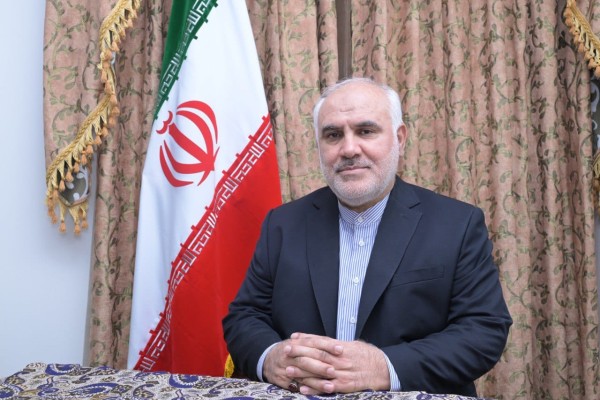
As tensions escalate across West Asia, Iran’s Ambassador to India Dr. Mohammad Fathali lays out Tehran’s uncompromising conditions to end the war and its sharp view of the United States and Israel. In this exclusive interview, he addresses concerns over Indian shipping in the Strait of Hormuz, dismisses short-term ceasefires, and underscores the need for “real guarantees” to prevent further conflict.
Crucially, he also positions India as a pivotal power in an emerging multipolar Asia, capable of easing tensions and shaping the region’s future.
Q. What would it take for Iran to stop the war?
Before the war started, we clearly said that we would never start a war. But if a war is imposed on us, its end will be in our hands. We still say that the war will end only if Iran’s conditions are completely accepted. First of all, stopping the war requires an end to the attacks by the US and Israel. It is natural that when attacks continue, the other side cannot be expected to stop responding on its own. At the same time, past experience shows that temporary ceasefires or agreements without real guarantees do not last. So any diplomatic solution must include real and reliable guarantees to prevent future conflicts. In short, our position is clear: a permanent stop to attacks, strong guarantees, and recognition of Iran’s legitimate rights can open the way to end this crisis.
Q. How many Indian tankers are stuck in the Strait of Hormuz? By when will they get clearance to sail and do they have to pay anything in Chinese currency?
At the moment, I do not have exact information about the number of Indian tankers. However, I can confirm that some of them have already passed safely by our coordination. We have officially announced that friendly countries, including India, are allowed to pass through the Strait of Hormuz. Our priority is to ensure the security of the Strait and safe passage for ships of friendly countries. The mechanism for transit will be announced by the government of Iran.
Q. The war is causing oil shortages and impacting the global economy. According to Iran, who is the biggest enemy – the US or Israel?
From our point of view, the main cause of the global energy problem is the US and the Israeli regime. By attacking our country, they have not only created instability in the region but also directly affected the energy market and global economy. We believe the US prioritises the interests of Israel over its own national interests. They are clearly our enemies because they killed our leader and innocent civilians, including 165 primary school students. They have attacked our civilian infrastructure, and their actions go beyond all human and international law principles. Naturally, we see them as our main enemies. We do not consider regional countries our enemies. Our neighbours, including members of the Persian Gulf Cooperation Council (PGCC), share a common history and geography with us. We have lived together for thousands of years, and our relations have been based on mutual respect and peaceful coexistence.
Q. What are your views on Pakistan’s offer to mediate a ceasefire?
At present, there are no negotiations underway. The experience of 47 years of hostility from the US, including the recent 12-day war, has shown us that the US cannot be trusted. They talk about dialogue while at the same time attacking our civilian people and infrastructure. We did not start this war, but we will decide when it ends.
Q. What is Iran’s view on global power shifts and India’s role?
The world is moving from a unipolar system to a multipolar one, and the centre of power is shifting toward Asia. India, as a rising power, can play an important role in this new order. In the current situation, India can act as an influential player in reducing misunderstandings and strengthening diplomatic efforts.
Q. What is your message to the people of India?
My message to the great people of India is the message of peace, friendship, and deep appreciation. In recent days, we have seen strong sympathy and support from the people of India toward Iran, with very moving examples of humanity that show the deep cultural ties between our nations. On behalf of the government and people of Iran, I sincerely thank the government and people of India, including all communities and regions—for their solidarity with us. We will never forget your kindness during these difficult days, because true friendships are tested in hard times. Iran and India have always been two strong pillars of stability and culture in Asia, and this people-to-people solidarity will support stronger relations and lasting peace in our region.