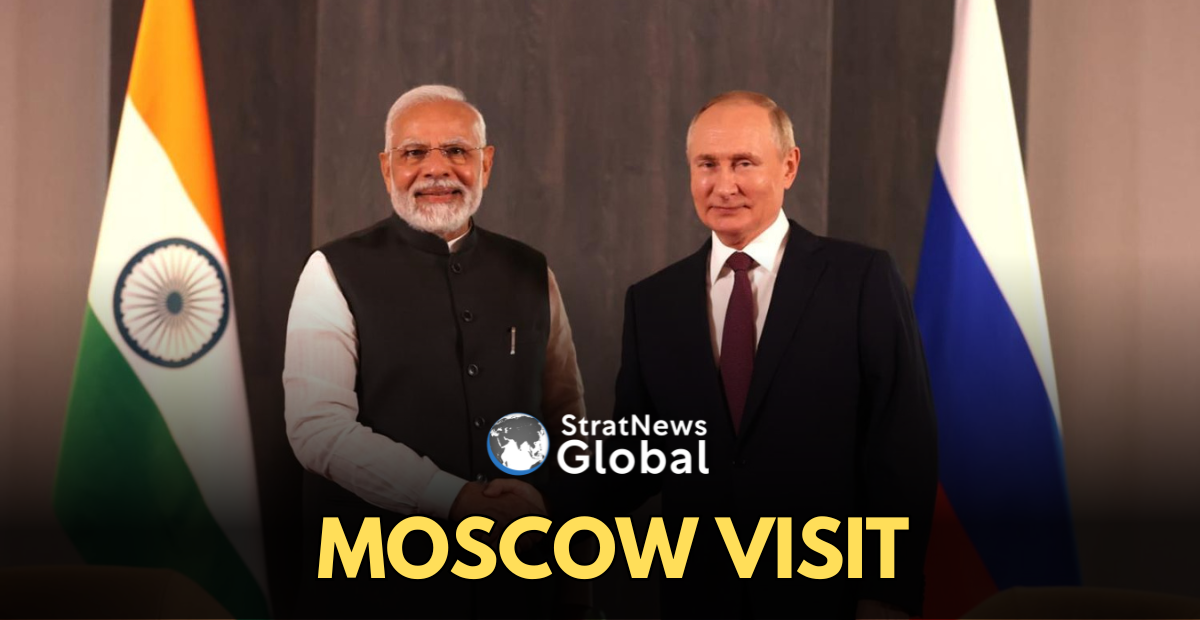
“We expect India’s PM Modi to visit Russia in 2026,” Russia’s Foreign Minister Sergey Lavrov confirmed at a conference, “India and Russia: Towards a New Bilateral Agenda”.
He spoke virtually at a time when India has increased its purchases of Russian oil, importing roughly 30 million barrels in March after supply disruptions linked to the ongoing war in West Asia.
The surge follows a temporary 30-day US waiver that allows India to continue buying Russian crude, which now constitutes about 20% of its total imports, despite earlier sanctions.
Russia is once again getting back to the top position among oil suppliers to India, with volumes rising to around 1.8 million barrels per day (BPD) and expected to touch 2 million to 2.2 million BPD in March. The turnaround comes as the war involving Iran has disrupted supplies from the Gulf, including through the Strait of Hormuz, forcing refiners to secure alternative sources.
The surge in energy trade comes alongside renewed diplomatic engagement between New Delhi and Moscow. On Monday, external affairs minister S. Jaishankar, in his virtual address at the conference, underlined the strength of bilateral ties.
“India and Russia share a Special and Privileged Strategic Partnership rooted in trust and mutual respect,” he said. “Over decades, our mutually beneficial cooperation has advanced regional and global peace, stability, and progress.”
“In today’s evolving geopolitical dynamics, our engagement continues to deepen, driven by frequent high-level exchanges,” he said, referring to President Vladimir Putin’s visit to India in December 2025, which “broke new ground covering diverse and novel areas,” including mobility of skilled professionals, maritime cooperation, fertilizers, and academic exchanges.
Highlighting economic priorities, Jaishankar said, “Both sides are committed to increasing the present annual trade from $68.7 billion to $100 billion by 2030 in a balanced and sustainable manner.” He emphasised the need to conclude the India–EAEU free trade agreement, address non-tariff barriers and regulatory impediments, and utilise India’s skilled workforce.
On energy cooperation, he added, “Russia is our foremost partner in civil nuclear energy and the Kudankulum Nuclear Project is a stellar example,” expressing confidence that Russia would remain a “trusted and reliable partner” as India expands its nuclear capacity.
Jaishankar also pointed to growing cooperation in global fora, stating, “The evolving multipolar order necessitates greater cooperation, including through BRICS, SCO, G20 and the UN,” and added that India looks forward to working closely with Russia to address shared challenges.