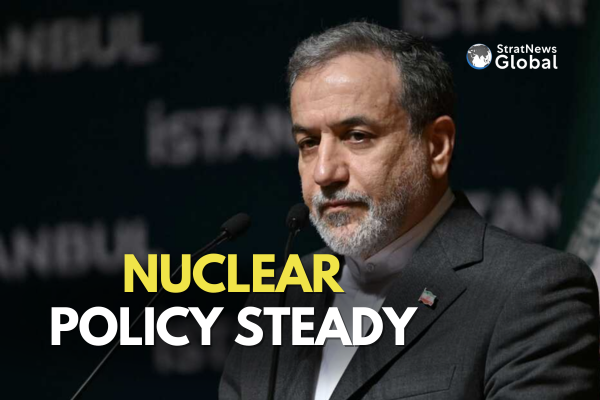
Iran’s stance against the development of nuclear weapons won’t significantly change, Foreign Minister Abbas Araqchi told Al Jazeera in remarks relayed by Iranian media on Wednesday, cautioning that the new supreme leader is yet to publicly express his view on the matter.
Former Supreme Leader Ayatollah Ali Khamenei, who was killed early in the U.S.-Israeli war against Iran, opposed the development of weapons of mass destruction in a fatwa, or
religious edict, issued in the early 2000s.
Leadership Transition Raises Questions
Western countries, including the U.S. and Israel, have for years accused Tehran of seeking nuclear weapons, while Iranian authorities have said their nuclear programme is solely for
civilian purposes.
Araqchi said fatwas depend on the Islamic jurist issuing them and added he was not yet in a position to judge the jurisprudential or political views of Mojtaba Khamenei, Iran’s
new supreme leader.
Growing Debate Inside Iran
But The Guardian reports that after the war, if Iran’s government survives, calls inside the country to obtain a nuclear weapon will inevitably grow.
Last week’s purported statement from the new supreme leader, Mojtaba Khamenei, made no reference to whether the fatwa banning the use of nuclear weapons set out by his late father remained in place. Protesters outside the foreign ministry in Tehran have demanded no return to talks with America.
The Guardian report said that those involved in the negotiations say misunderstandings about how Iran’s complex nuclear programme worked – including, for instance, the purpose and uranium needs of the Tehran Research Reactor (TRR), the scope of Iran’s planned future nuclear programme, and the offer for US firms to be involved in Iran’s economy – all contributed to the march to war.
The Iranians now say they believe the talks were always a subterfuge, designed to create space for the US to assemble its military armada. Trump Special Envoy Steve Witkoff, for his part, said the Iranians were being “deceptive”, “full of subterfuge” and “smelled fishy”.
Uncertain Path Ahead
One Gulf diplomat said: “Greater time and expertise would not have guaranteed an agreement, but it would have helped. What I will say is that in all the explanations of what went on, it is the Iranians that have normally been telling the truth.”
(with inputs from Reuters)