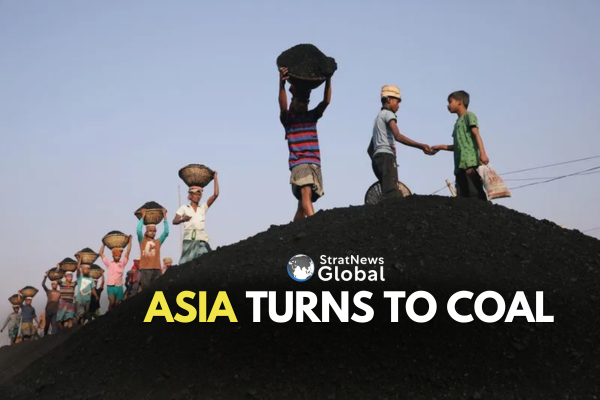
Asian utilities are increasing coal-fired power generation to cut costs and secure energy supplies as liquefied natural gas (LNG) shipments face disruptions linked to the Middle East conflict, industry officials said.
Spot LNG prices in Asia have surged to three-year highs, doubling in recent weeks as shipments through the Strait of Hormuz have slowed sharply and major exporter Qatar has halted supplies.
Countries Ramp Up Coal Use
Several Asian countries have already begun shifting their energy mix.
Bangladesh is increasing coal-based power generation and imports, while Pakistan is focusing on domestic energy sources to reduce reliance on volatile LNG supplies.
In Southeast Asia, the Philippines and Vietnam are boosting coal use, with Thailand also increasing output from its largest coal-fired power plant.
Meanwhile, South Korea plans to lift limits on coal generation, and Japan’s largest utility JERA has indicated it will maintain high coal utilisation rates.
LNG Demand Under Pressure
The surge in LNG prices is expected to weaken demand across Asia, particularly in price-sensitive markets.
Analysts say the disruption could significantly slow LNG demand growth in 2026, with forecasts already revised down sharply.
Higher costs are also placing pressure on developing economies, where passing on increased energy prices to consumers remains difficult.
Coal Gains Despite Climate Push
Although global efforts have focused on reducing coal use, the current crisis is highlighting its role as a fallback fuel during supply shocks.
Coal prices have risen this month, but remain relatively stable compared with the sharp increase in LNG costs.
Many Asian countries are relying on existing coal stockpiles and long-term supply contracts to manage the situation.
Renewables Argument Strengthens
The latest disruption is also reinforcing calls for greater investment in renewable energy.
Analysts say repeated shocks to fossil fuel supply chains highlight the risks of dependence on imported fuels, potentially accelerating the shift towards cleaner and more stable energy sources.
(with inputs from Reuters)