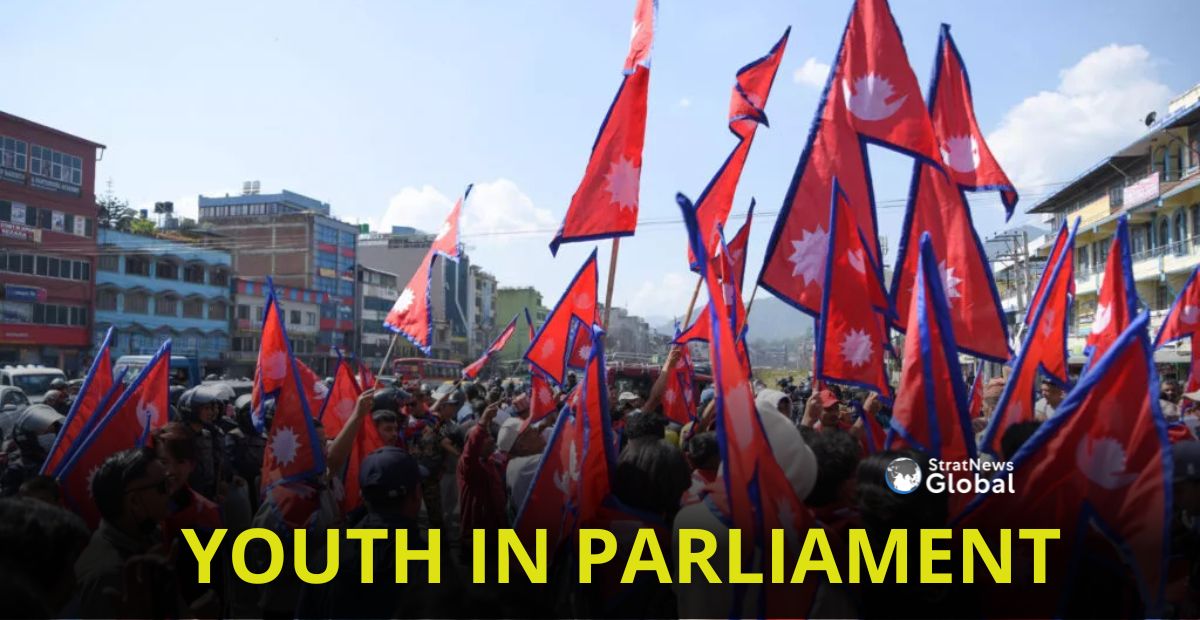
The recent elections in Nepal have started to reflect a generational shift, as more young leaders enter national politics and challenge the long-standing dominance of traditional parties.
The same old guard has long shaped Nepal’s political ecosystem, which many young people today feel does not respond to their concerns, which led to the Gen Z protest of September 2025 ultimately resulting in the change of regime.
As The Kathmandu Post reported, the numbers from the recent elections show a significant shift. Out of 165 constituencies, 61 elected candidates are under the age of 40, which is about 37 percent, and more young representatives could still enter parliament through the proportional representation system. Much of this change has been driven by the strong performance of Rastriya Swatantra Party, which fielded a large number of younger candidates and secured the biggest share of votes. Of the 61 young winners, 52 belong to the RSP.
Other parties also have a smaller number of younger lawmakers. The Nepali Congress has five representatives under 40, while the Communist Party of Nepal (Unified Marxist–Leninist) has two. The Rastriya Prajatantra Party has one young representative.
This marks a dramatic shift in Nepal’s political culture. Just four years ago, in 2022, only about 11 percent of parliamentarians were under 40. In contrast, young people make up a large share of the country’s population, around 42.5 percent, while the median age in Nepal is 26. The rise in younger lawmakers therefore helps narrow the gap between the country’s population and those representing them in parliament.
As noted in The Kathmandu Post, this emerging “youth-quake” in parliament could mark an important moment for Nepal’s democracy reflecting both public frustration with the old political order and hope for a more responsive political future.