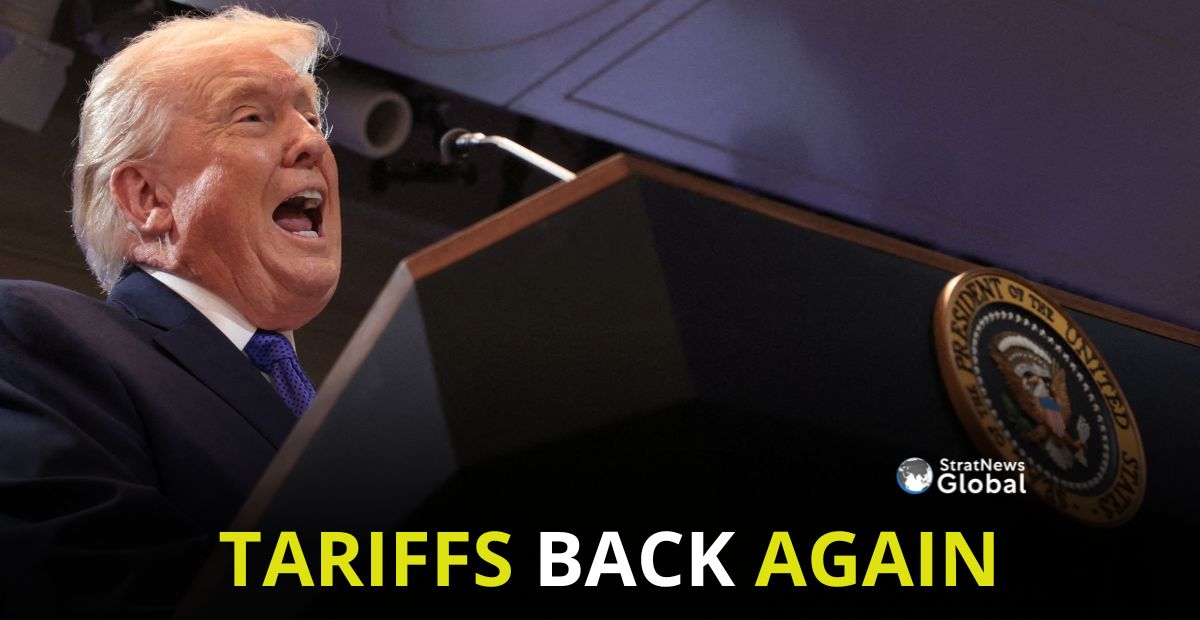
U.S. President Donald Trump acted quickly on Friday to reinstate trade measures after the Supreme Court struck down his earlier tariffs, announcing a temporary 10% global import duty for 150 days and directing fresh investigations under alternative legal provisions that could enable him to reimpose the tariffs.
Trump signed executive orders late on Friday to impose new tariffs starting on Tuesday under Section 122 of the Trade Act of 1974, partly replacing tariffs of 10% to 50% under the 1977 International Emergency Economic Powers Act that the top court declared illegal, and ending collection of the now-banned duties.
Exemptions and Revenue Outlook
The orders continued exemptions already in place for aerospace products; passenger cars and some light trucks; goods from Mexico and Canada that are compliant with the U.S.-Mexico-Canada trade agreement; pharmaceuticals and certain critical minerals and agricultural products.
Trump’s Treasury Secretary, Scott Bessent, said the new 10% duties and potentially enhanced tariffs under the Section 301 unfair practices statute and the Section 232 national security statute would result in virtually unchanged tariff revenue in 2026.
The never-used Section 122 authority allows the president to impose duties of up to 15% for up to 150 days on any and all countries to address “large and serious” balance of payments issues. It does not require investigations or impose other procedural limits. After 150 days, Congress would need to approve their extension.
Fresh Trade Investigations Underway
The 10% tariff order justified use of the Section 122 statute, noting that the U.S. had a “large and serious balance of payments deficit” and said the situation was getting worse.
While the administration will likely face legal challenges, the Section 122 tariffs would lapse before any final ruling could be made, said Josh Lipsky, international economics chair at the Atlantic Council, a think tank in Washington.
Trump said his administration also was initiating several new country-specific investigations under Section 301 of the Trade Act of 1974 “to protect our country from unfair trading practices of other countries and companies.”
The executive order directed the U.S. Trade Representative’s office to investigate “certain unreasonable and discriminatory acts, policies and practices that burden or restrict U.S. commerce,” but did not identify any specific targets.
USTR already has open probes on China and Brazil, and could take aim at other big trading partners including Vietnam and Canada.
Refunds To Be ‘Litigated’
The Supreme Court’s ruling puts about $175 billion in tariff revenue collected over the past year subject to potential refunds, according to estimates provided to Reuters by Penn-Wharton Budget Model economists.
Asked if he would refund the IEEPA duties, Trump said the matter would likely be litigated for two to five years, suggesting that a quick, automatic refund process was unlikely.
Speaking in Dallas, Bessent told business leaders that since the Supreme Court did not provide any instructions on refunds, those were “in dispute,” adding: “My sense is that could be dragged out for weeks, months, years.”
(With inputs from Reuters)