Bangladesh is set to head to the polls on Thursday, a pivotal event that promises to be unprecedented since the country’s independence. The outcome of this election is shrouded in uncertainty—whether it will herald a victory for the Bangladesh Nationalist Party (BNP) or mark a resurgence for the Jamaat-e-Islami remains to be seen. One thing is abundantly clear: Bangladesh has transformed significantly. The nation of today cannot be viewed through the lens of 1971. The youth of Bangladesh now hold a stake in the country’s future, and this reality cannot be overlooked.
Regardless of the election’s results, there is a palpable sense of unity among the people of Bangladesh. They acknowledge the historical injustices that sparked the Liberation War of 1971 while also firmly committing themselves to a future they aspire to shape through their own sacrifices and struggles. This determination is evident even in their willingness to support a political party like Jamaat-e-Islami.
Just a year ago, the Jamaat-e-Islami party operated out of a humble office tucked away in the bustling neighbourhood of Moghbazar in Dhaka. The yellow-colored building, with its ominous appearance, seemed like something out of a horror movie, characterized by tightly locked gates and damp, dimly lit rooms. However, the scene has dramatically changed. Today, the office vibrates with energy and purpose. The central building, once a place of confinement, now exudes a fresh coat of paint, airy rooms, and an atmosphere that welcomes collaboration. The staff, eager and attentive, readily engage with journalists who visit, breaking down barriers and inviting open discourse. This transformation encapsulates the changing face of Bangladesh, where the past meets a future full of potential.
The upcoming vote is poised to be fiercely contested, characterized by a struggle between two primary factions: one led by the Bangladesh Nationalist Party (BNP) and the other by Jamaat-e-Islami. Historically, the BNP has been one of the two dominant political parties in Bangladesh, serving as the primary opposition to the ruling Awami League. The party was last in power from 2001 to 2006, during which time it established a considerable network of grassroots activists and garnered significant public support across the nation.
However, the BNP’s reputation has taken a considerable hit over the past year. A growing number of citizens believe that its grassroots members are implicated in a variety of illicit activities, including extortion and other criminal enterprises, which has tarnished the party’s image. In Bangladesh they call this “Chandabaaji” – a term used indiscriminately earlier for Awami League workers who carried out large-scale extortion, so much so that it has now become an integral part of daily lives of a common Bangladeshi.
BNP’s image has also taken a considerable hit with incidents of rampant infighting within the party, which is trying hard to gain voters’ confidence. The party has recently taken major disciplinary actions, expelling numerous members for activities deemed contrary to party policies and ideology. Most expulsions are cited as being due to “anti-party activities” or violating “organizational discipline”.
However, the return of BNP’s celebrated scion Tarique Rahman, changed the game for BNP. From the urban elite of Dhaka to a labourer in Chittagong Port – all now believe that Rahman should be their Prime Minister. Rahman’s father, former President of Bangladesh Ziaur Rahman is now being hailed as the “real hero” of the 1971 war of independence and not Sheikh Mujibur Rahman who was being called the “Father of the Nation”.
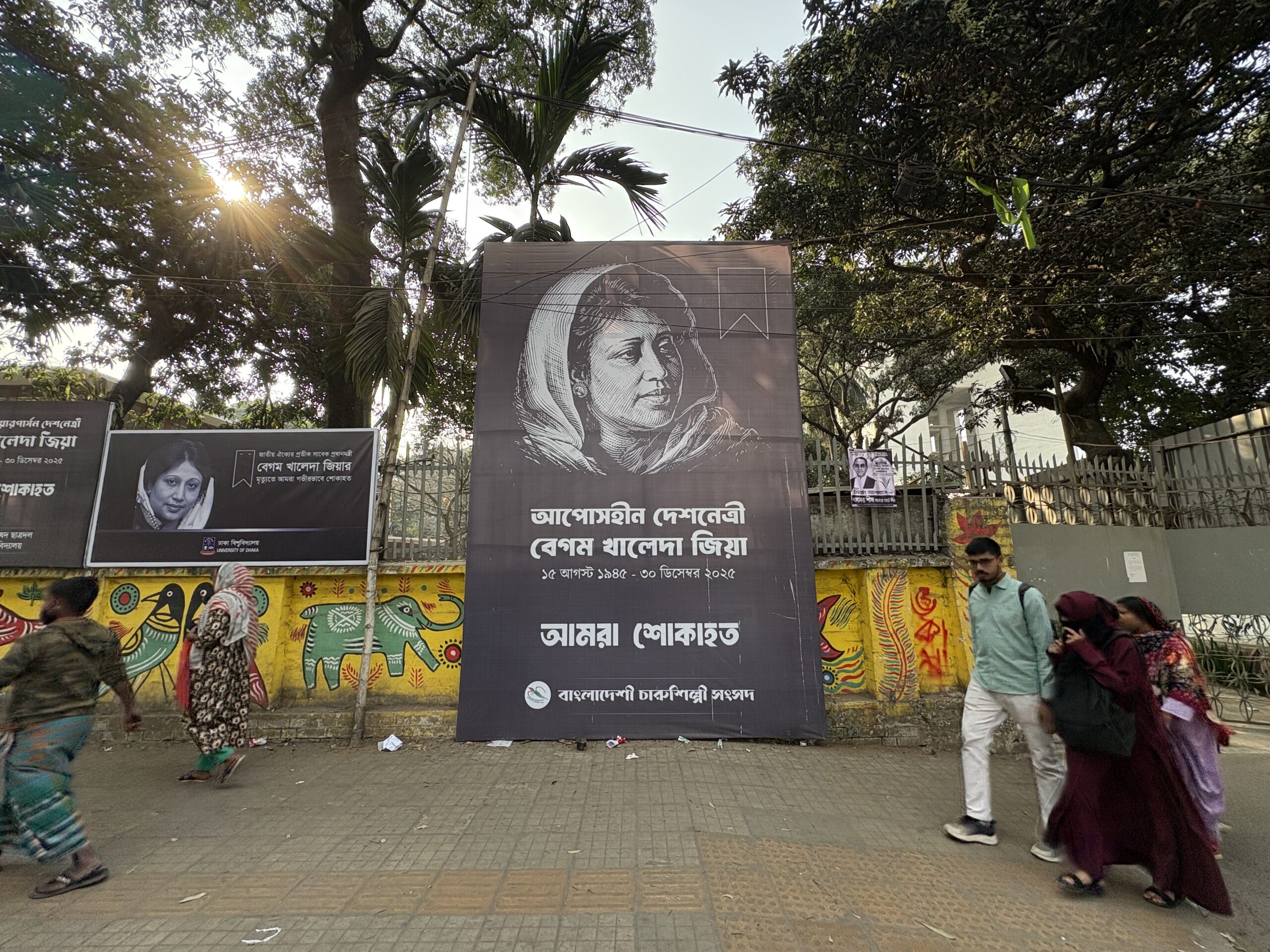
Rahman is also the son of former and first woman Prime Minister of Bangladesh Khaleda Zia. Coming back from a 17-year-long exile from the United Kingdom to a resounding welcome back home, Rahman was able to quickly enter the common psyche of Bangladeshis with just four words: “I have a plan.”
Absence Of Awami League Party But Voters Remain
This is the first election that is happening after the violent ouster of Awami League government and its leader Sheikh Hasina in August 2024, who was then their sitting Prime Minister. Since then the country was being run by a caretaker government under the leadership of Nobel Laureate Prof. Muhammad Yunus.
In the absence of Awami League, which has been barred from taking part in the elections, the expectation is that their voter base will either not come for voting or they will vote for Jamaat-e-Islami.
“I will vote Jamaat-e-Islami. I used to vote for Awami League. In the 2024 elections also I voted for Awami. But today, despite all my reservations, I will vote for Jamaat because BNP has gone for witch-hunting against Awami League supporters, which Jamaat has never done. Rather they (Jamaat) has worked very hard at the grassroots level,” Yaar Hossain, a cab owner in Moghbazar, Dhaka told StratNews Global.
The larger sentiment in Bangladesh today is that “BNP and Awami League are all but the same” and therefore it is probably high time that the country now gives a “chance” or an “opportunity” to Jamaat-e-Islami, which has entered into an unconventional alliance with the National Citizen Party led by student activist-turned-politician Nahid Islam, who was instrumental in mobilising the students during the July 2024 uprising that led to Hasina’s ouster and eventual escape to India.
The resurrection of sorts by the religious right Jamaat has come as a shock to many. The party was once shunned by Bangladeshis for its support to Pakistan during the 1971 Liberation War and undergone multiple bans even as many of its senior leaders have been executed for committing war crimes.
“Nearly half (48%) of former Awami League voters now favour the BNP, while more than one-third (37.4%) of first-time voters since 2008 favour Jamaat … Among this cohort of first-time voters, both the BNP and Jamaat are viewed favourably, with Jamaat having higher favourability than the BNP by roughly ten percentage points,” Fahim Mashroor, a Dhaka-based civil society activist, told StratNews Global.
Resurgence of Jamaat In Bangladesh’s Politics
The party was established in 1979, emerging as the successor to the East Pakistan branch of Jamaat-e-Islami Pakistan and was founded by the influential Islamic thinker Abul A’la Maududi. At its core, the party’s constitution advocates for the implementation of Sharia law, reflecting its foundational principles. However, in recent years, the leadership has taken a more moderate stance in public discourse, aiming to broaden its appeal and attract a more diverse voter base amid a shifting political landscape.
Historically, the party is shrouded in controversy, particularly due to its staunch opposition to Bangladesh’s struggle for independence in 1971. This turbulent past has left a lasting mark on its reputation, as several of its prominent leaders were convicted of war crimes by the International Crimes Tribunal, which was set up in 2008 to address atrocities committed during the Liberation War.
In an effort to rejuvenate its image and connect with a wider demographic, the party has embarked on a strategic rebranding initiative. This includes outreach efforts to religious minorities, such as Hindus, and a pronounced emphasis on economic reform. A key part of their agenda is an ambitious goal to quadruple the country’s GDP by the year 2040, demonstrating their intent to position themselves as progressive and economically focused in the eyes of the electorate.
“Jamaat-e-Islami has been working silently for the people of Bangladesh for years. Since 2024 we have stood beside people … We may have been banned many times but we never stopped working for the people of this country in whichever region they were in. People have noticed that. They can see who worked, who remained abroad and who ran away,” Ahsanul Mahboob Zubair, Assistant Secretary General and Chief of Central Publicity and Media Department, told StratNews Global.
The Jamaat-e-Islami’s resonance with the young generation of Bangladesh will soon become a case-study of sorts. With their structured,
Jamaat has also been immensely successful in reaching out to the Hindu minority in the erstwhile strongholds of Awami League with a professional approach mixed with empathy.
“Jamaat has a clean image, let us not forget that. Even when they were in alliance with the BNP, Jamaat ministers were never involved in any kind of scam or scandal. They have never attacked minorities, rather they have stood beside them,” said Tanvir Kibria, a student activist at Dhaka University, who works at an upmarket café during the daytime as his part-time job.
According to Kibria, Jamaat has given a “new thinking” to the country’s young generation who want to “come out of the one-sided thought process” of the 1971 Liberation War period.
“While 1971 Liberation War will always remain as an integral part of our existence, today’s new generation in Bangladesh cannot identify with it. They refuse to see Bangladesh through that lens and want to carve out their own identity. This is going to a new, a very different Bangladesh, which India and the world at large have to understand,” said M. Humayun Kabir, veteran diplomat who fought in the 1971-liberation war.