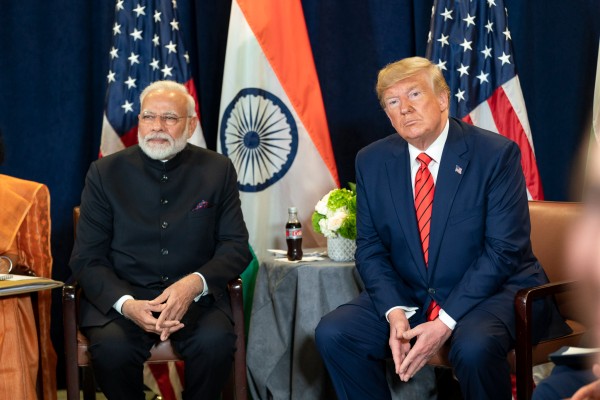
India and the United States are set to sign the first formal tranche of a long-awaited bilateral trade agreement by mid-March. On Thursday, Commerce Minister Piyush Goyal said a joint statement outlining the broad contours of the agreement would be finalised within the next four to five days. The legal agreement enabling reciprocal tariff reductions is expected to follow weeks later.
According to officials familiar with the negotiations, the U.S. will implement its tariff reduction through an executive order issued after the joint statement is signed. India, however, can only lower its tariffs on American imports once the agreement is converted into a legally binding framework, in line with its World Trade Organisation commitments.
Officials explained that this difference accounts for the staggered implementation timeline. While U.S. tariff cuts may take effect soon after the joint statement, India’s reductions will only follow the signing of the final pact.
Agriculture, Dairy Off Table
Sources have stressed that India’s core agricultural interests have not been compromised. Price-sensitive sectors such as dairy, fisheries, food grains, fruits and millets will remain protected, with no opening of domestic markets to American exports.
Union Agriculture Minister Shivraj Singh Chouhan said that “No external market is being opened for our major agricultural products. The interests of farmers, small and large have been fully safeguarded.”
The government has consistently resisted U.S. demands for access to India’s dairy and agriculture markets, citing the livelihoods of millions of subsistence farmers and marginalised communities. Officials say these red lines were maintained throughout negotiations.
$500 Bn Trade Target
Under the proposed framework, India is expected to purchase goods worth approximately $500 billion from the U.S. over the next five years, primarily in energy, technology, aviation and data-centre infrastructure.
Goyal said India’s rapidly expanding economy would require substantial imports of aircraft, engines, digital infrastructure equipment and clean energy products. Current and upcoming aircraft orders alone are estimated to exceed $100 billion, largely from U.S. manufacturers.
Commerce Secretary Rajesh Agrawal noted that India’s total global imports of these critical items already exceed $300 billion annually and are projected to cross $2 trillion over the next five years.
Strategic Context
The trade breakthrough comes amid broader strategic engagement between the two countries. India is in talks with the U.S.-led discussions on forming a multilateral bloc for critical minerals aimed at securing supply chains and reducing dependence on China.
External Affairs Minister S. Jaishankar, who is attending the talks in Washington, highlighted India’s efforts to build resilience through initiatives such as the National Critical Minerals Mission and rare earth supply corridors.
The talks follow Washington’s recent announcement of Project Vault, a large-scale plan to stockpile rare earth elements and stabilise global supply amid tightening Chinese export controls.
Officials describe the current agreement as a foundation rather than a conclusion. Trade deals signed in recent years with partners such as the UK, EU, Oman and New Zealand were cited as examples where India expanded access without compromising core domestic interests.