Last week’s U.S. military raid that captured Venezuelan President Nicolas Maduro aimed not only to topple his regime but also to send a pointed warning to Beijing: stay out of the Americas. For two decades, China has steadily expanded its footprint in Latin America, pursuing trade, infrastructure, and strategic partnerships close to the United States’ own sphere of influence.
Washington’s Message: “We Don’t Want You There”
China’s growing involvement in the region—from satellite tracking stations in Argentina to major port investments in Peru and financial lifelines to Venezuela—has long irritated Washington. Several Trump administration officials told Reuters that the recent operation was partly designed to curb Beijing’s ambitions and end its access to cheap Venezuelan oil.
Former U.S. President Donald Trump made the message explicit, saying he had told both China and Russia, “We get along with you very well, we like you very much, we don’t want you there, you’re not gonna be there.” He added that China could instead buy oil directly from the United States.
A Blow to Beijing’s Influence
The pre-dawn January 3 operation in Caracas, in which U.S. forces captured Maduro and his wife, marked a major setback for China’s prestige and influence in the Western Hemisphere. The air defences disabled by U.S. commandos had been supplied by China and Russia. Trump later said oil previously bound for Chinese ports would now be redirected to the U.S.
Analysts believe the event revealed the limits of China’s influence in the region. Craig Singleton of the Foundation for Defense of Democracies said the raid “exposed the gulf between China’s great-power rhetoric and its real reach.” He noted that while Beijing can object diplomatically, it cannot protect its assets once Washington decides to act.
The Chinese embassy in Washington rejected the accusation of interference, calling the U.S. actions “unilateral, illegal, and bullying.” Embassy spokesperson Liu Pengyu said China would continue maintaining “friendly exchanges and cooperation” with Latin American partners regardless of U.S. pressure.
Contradictions in Trump’s China Policy
Despite his assertive tone, Trump’s broader China policy has remained inconsistent mixing trade negotiations with military posturing. However, the Venezuela operation appeared to tilt U.S. strategy toward a more hawkish stance.
In a symbolic setback for Beijing, Maduro’s final public appearance before his capture was a meeting with China’s special envoy for Latin America, Qiu Xiaoqi. The event, staged just hours before the U.S. raid, suggested that Beijing was completely blindsided.
For years, China had poured money into Venezuela’s oil sector, providing crucial economic support after Western sanctions tightened in 2017. It also supplied military hardware, including radar systems designed to detect advanced U.S. aircraft—equipment that failed to prevent the raid.
Michael Sobolik of the Hudson Institute said nations relying on Chinese defence systems “are now questioning how safe they actually are from the United States.” He added that Beijing’s diplomatic assurances to partners like Iran and Venezuela had proved meaningless in the face of U.S. military power.
China Faces Pressure Across the Americas
Beijing’s setbacks in Venezuela could have wider consequences. U.S. officials believe China operates intelligence facilities in Cuba, a claim Beijing denies, though it has pledged deeper intelligence cooperation with Havana. Washington has also pressed regional governments to limit Chinese involvement in strategic areas such as the Panama Canal.
A State Department official said the U.S. remains “concerned about Chinese influence near the canal” but welcomed Panama’s recent decision to exit China’s Belt and Road Initiative and review Chinese-linked port contracts.
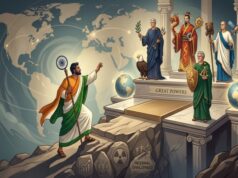
Despite these blows, analysts warn that any prolonged U.S. involvement in Venezuela could eventually create openings for Beijing to reassert its presence. Daniel Russel of the Asia Society said Trump’s approach risks reinforcing China’s “spheres-of-influence logic” by implying that the Western Hemisphere belongs exclusively to Washington. “Beijing wants the U.S. to accept Asia as its sphere,” he noted, “and hopes America gets bogged down in Venezuela.”
with inputs from Reuters