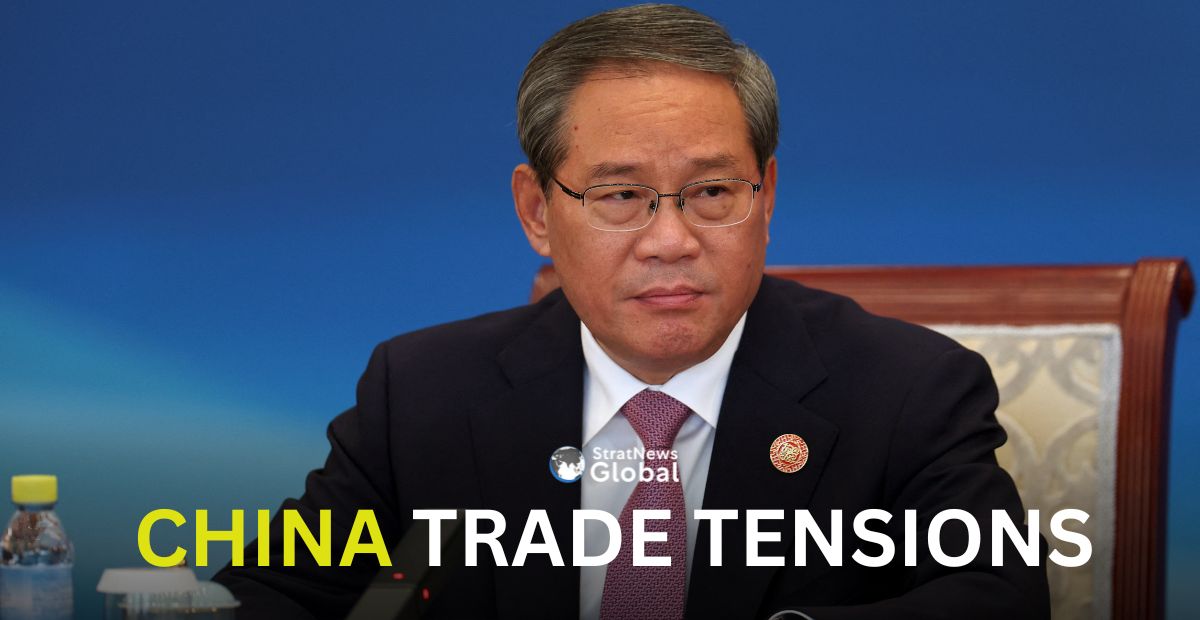
China’s Premier Li Qiang on Tuesday urged trading partners to reject protectionism, after the country posted a record $1 trillion trade surplus. Beijing now faces growing tensions with partners beyond the U.S., pressing it to reform its $19 trillion economy and curb reliance on exports.
China’s second-ranking official pressed the heads of the IMF, World Bank, World Trade Organization and others to strengthen global governance in response to the growing number of economies imposing levies on imported goods, China included.
“Since the beginning of the year, the threat of tariffs has loomed over the global economy, with various trade restrictions proliferating and severely impacting global economic activity,” Li told the “1+10 Dialogue” in Beijing, which also includes officials from the OECD and International Labour Organization.
Fighting Tariffs With Tariffs
Analysts largely agree that China’s massive trade surplus and its unwillingness to shift away from an export-driven economy are directly fuelling the increased use of tariffs globally.
However, they see little incentive for Beijing to change course, despite growing international pressure.
French President Emmanuel Macron said on Sunday that he had threatened Beijing with tariffs during his state visit last week, which coincided with the European Commission unveiling plans to boost Europe’s resilience to threats such as rare earth shortages and dumped imports.
Economists argue that while U.S. President Donald Trump’s decision to hike tariffs on Chinese goods was hugely disruptive for global trade, Beijing’s reluctance to reform leaves the West with few alternatives.
Pressure on China
China insists it is committed to reducing reliance on a credit-driven manufacturing sector, with top leaders on Monday pledging more measures to stimulate domestic demand.
But analysts say signals from important meetings of the ruling Communist Party indicate policymakers are reluctant to let go of their ‘all about production’ economic playbook.
“So far there are no real signs that I can see that Trump’s go-it-alone tariffs have tamed China’s export juggernaut,” Brad Setser, a former U.S. trade official now with the Council on Foreign Relations wrote on X following the trade data release.
China has recorded a monthly trade surplus exceeding $100 billion six times since Trump returned to the White House, compared with just once in 2024.
(With inputs from Reuters)