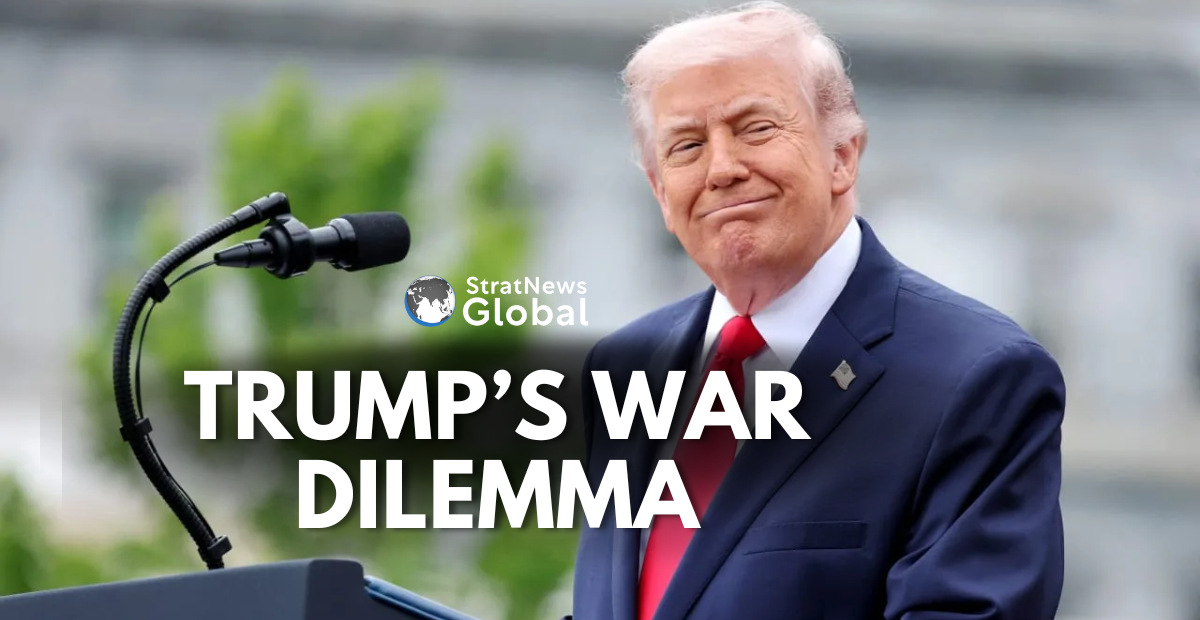
The United States is assessing how Iran might respond if Donald Trump were to declare a unilateral victory in the ongoing war, according to multiple officials familiar with the matter.
The analysis, being conducted by U.S. intelligence agencies, is part of a broader effort to evaluate potential outcomes if Washington moves to scale back its military engagement after two months of conflict that has killed thousands.
Political Pressure Builds
The war is increasingly seen as a political liability for the White House, with advisers warning it could hurt Republicans in upcoming midterm elections.
Opinion polls reflect widespread public dissatisfaction. A recent Reuters/Ipsos survey found only a quarter of Americans believe the campaign has made the country safer, while just 26% said it has been worth the cost.
Officials say the administration is weighing whether a quick de-escalation could ease domestic pressure, even as it risks strategic consequences abroad.
Risks of a ‘Victory Exit’
Intelligence assessments suggest that if the U.S. declares victory and withdraws forces, Iran could interpret the move as a strategic win, potentially emboldening it to rebuild its nuclear and missile programmes.
Maintaining a heavy military presence while declaring victory could instead be seen by Tehran as a negotiating tactic, though not necessarily one that would end the conflict.
Diplomatic Efforts Stall
Despite a ceasefire declared weeks ago, diplomacy has struggled to gain traction. Efforts to reopen the strategically vital Strait of Hormuz which handles roughly a fifth of global oil trade have so far failed.
Iran’s disruption of shipping has driven up global energy prices, adding economic pressure both internationally and within the United States.
Military Options Still Open
While diplomatic pathways remain uncertain, military options are still formally on the table, including renewed airstrikes.
However, more ambitious actions such as a ground invasion now appear less likely, according to officials.
At the same time, Iran has reportedly used the ceasefire period to recover military assets damaged during earlier strikes, potentially raising the cost of any renewed conflict.
Balancing Politics and Strategy
White House officials describe the domestic pressure to bring the war to a close as “enormous”.
A scaled-back U.S. presence combined with a mutual easing of blockades could eventually lower energy prices, but both sides remain far from reaching such an agreement.
For now, Washington faces a difficult balance managing political realities at home while avoiding strategic setbacks abroad.
(with inputs from Reuters)