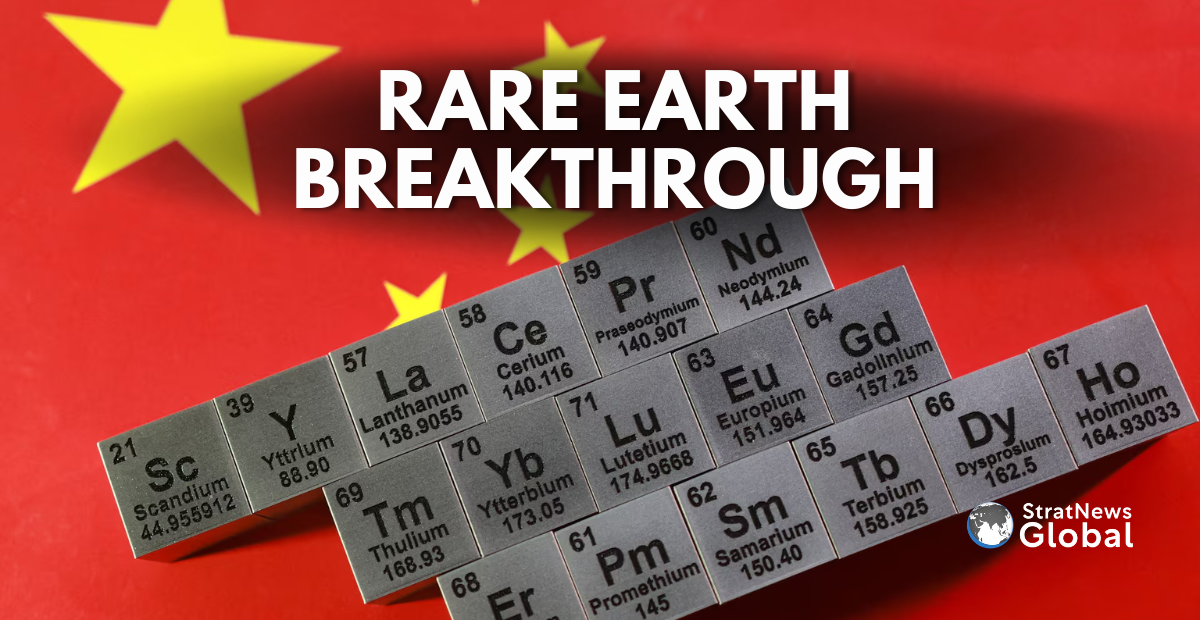
China has agreed to address American concerns over shortages of critical rare earth minerals caused by Beijing’s export controls, according to a White House factsheet released after last week’s summit between President Donald Trump and Chinese leader Xi Jinping.
The move signals a possible easing in one of the most sensitive economic disputes between Washington and Beijing.
Rare Earth Controls Remain A Major Issue
China imposed tighter export controls on several rare earth materials in April 2025 as retaliation against Trump’s “Liberation Day” tariffs.
Although both countries reached an agreement last October aimed at allowing shipments to flow more freely, exports of several specialty rare earths have remained heavily restricted.
The White House said China would now work to address supply chain shortages involving minerals including yttrium, scandium, neodymium and indium.
These materials are critical for industries such as defence, aerospace, semiconductors and advanced electronics.
Processing Technology Also Under Discussion
According to the White House, Beijing also agreed to discuss US concerns over restrictions on rare earth processing equipment and related technology exports.
China currently refines more than 90% of the world’s rare earth supply and has built decades of dominance in the sector.
Its processing expertise and technologies are closely guarded and remain difficult for foreign companies to access.
Beijing Silent On Rare Earth Details
While the White House highlighted the issue as a major summit outcome, China’s Ministry of Commerce did not mention rare earths in its own official summary released on Saturday.
The omission suggests both sides may still differ on how much progress has actually been made.
Rare earth supply chains have become increasingly important in the wider US-China strategic rivalry, especially as competition intensifies over artificial intelligence, military technology and semiconductor production.
(with inputs from Reuters)