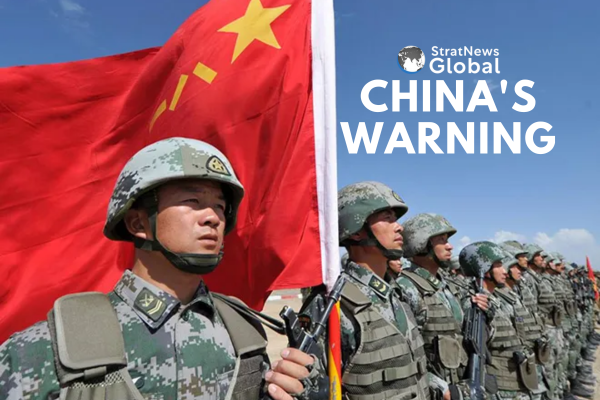
China’s People’s Liberation Army is working on an operational posture that resembles India’s Cold Start doctrine, says Suyash Desai, Taiwan-based Indian scholar specialising on the Chinese military.
In a research paper for the Washington DC-based CSIS (Center For Strategic and International Studies), Desai argues that the new posture signals a strategic pivot: the capability to launch a major offensive within hours of a political order, with the express goal of seizing battlefield initiative before any outside actor can meaningfully respond.
Desai’s research reveals that this sudden-strike mindset is not new, rather it is “deeply rooted in PLA doctrinal writings”. Foundational texts such as Science of Military Strategy insist on the ability to “hear the order and immediately mobilize.”
The 2020 edition of the same text sharpens the threshold further, identifying a narrow 24–48 hour “golden window” in which warzone commanders must assemble forces, move them into position and seize operational momentum.
And in one of the PLA’s most revealing handbooks, Informatized Army Operations, strategists warn that victory may rest on “firing the first shot within minutes.”
The intellectual push is reinforced by political instruction from China’s top leadership. Desai traces a decade-long drumbeat of urgency from Beijing: leaders have repeatedly instructed the PLA to “start fast, end fast.”
No less than Xi Jinping in April 2023, urged naval officers to deploy at speeds that give “no opportunity for adversaries to mobilize.”
“Always be ready for war,” he has underscored, “Be ready to fight and win wars … focus minds and energy on preparing for war and maintaining a high state of alert.” His 2018 directive “troops must keep training and be ready to fight at any moment” paired with a warning against “sleeping on one’s sword,” has, Desai shows, penetrated down to battalion and company commanders.
China has also quietly rebuilt the mobilisation machinery with new National Defense Mobilization Offices now handling administrative burdens nationwide, even in remote frontier regions. An upgraded C4ISR (Command, Control, Communications, Computers, Intelligence, Surveillance, and Reconnaissance) system integrating satellite, drone, signals, and civilian data allows commanders to make decisions in minutes rather than hours.
The proof, Suyash stresses, is in the field. Since 2022, the PLA has staged lightning-fast drills around Taiwan, Joint Sword 2023, Joint Sword 2024A/B, and Strait Thunder 2025 executed with virtually no warning. Air, naval, missile and paramilitary forces have shifted from standby to full blockade rehearsal in a matter of hours. These are not theatrics; they are stress tests for the sudden-strike model Desai uncovered.
Yet the most dramatic evolution is unfolding far from Taiwan in the Himalayas. Desai shows that the Western Theater Command, particularly Tibet and Xinjiang, has become Beijing’s new laboratory for speed.
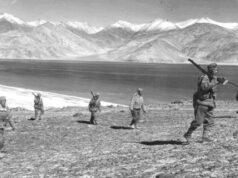
After the 2020 Galwan clash, the PLA began forward-basing brigades, conducting overnight troop movements and staging no-notice high-altitude drills. In 2021, China’s Tibet Military District (TMD), a major PLA formation guarding the Himalayan frontier shifted ten brigades and hundreds of armoured vehicles across the plateau under the cover of darkness. Through 2023 and 2024, Xinjiang units and the 76th Group Army were repeatedly tested for sub-24-hour deployment.
By 2025, these exercises continued even after disengagement with India, clear evidence, Desai argues, that rapid mobilisation has become institutionalised rather than crisis-driven. China is crafting a military designed to deliver shock within 24–48 hours, fundamentally redrawing the deterrence map of the Indo-Pacific.
A Cold Start-style PLA does not guarantee Beijing victory but it greatly increases the chances that China can achieve early battlefield gains or seize limited objectives before the region can react. In Desai’s assessment, this is one of the most consequential and least understood military shifts of the decade.
Read Suyash’s Full Research here

Research Associate at StratNewsGlobal, A keen observer of #China and Foreign Affairs. Writer, Weibo Trends, Analyst.
Twitter: @resham_sng