North Korea and Russia are unlikely to open their planned cross-border road bridge anytime soon, despite an earlier target of mid-June, as satellite images indicate that key infrastructure on the Russian side remains incomplete, according to U.S.-based think tank 38 North.
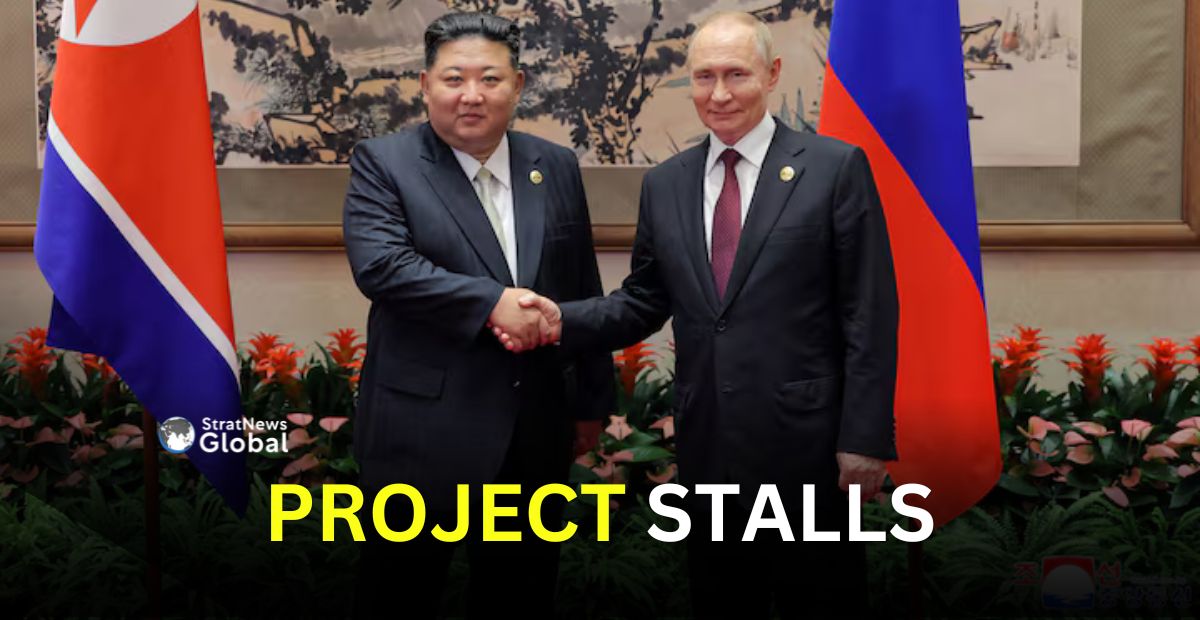
The 850-metre (2,789-foot) bridge, which will link North Korea to Russia’s highway network, was agreed upon during Russian President Vladimir Putin’s visit to Pyongyang in June 2024. It will mark the first road connection between the two countries. In April, the Russian embassy in Pyongyang had announced that the bridge was expected to open on June 19.
Analysts have said the bridge could eventually increase logistics activity by more than 40% and help North Korea reduce its heavy reliance on China by deepening economic ties with Russia.
Satellite Images Show Russian Side Incomplete
38 North, citing satellite imagery, said on Tuesday that the bridge over the Tumen River appears complete and North Korean border facilities are largely finished, but much more work is needed on the Russian side before the crossing can become operational.
The North Korean side has a large warehouse, parking lot, paved access roads and what appears to be a completed frontier post, while Russia’s probable customs complex is far less advanced and is likely to be at least three times larger, the think tank said.
Russia’s transport ministry declined to comment. The North Korean embassy in Moscow did not immediately respond to a request for comment.
Growing Russia–North Korea Ties
The project has been a symbol of deepening ties between Moscow and Pyongyang. The two countries have drawn closer in recent years thanks to military exchanges surrounding Russia’s war in Ukraine that have in turn attracted scrutiny from the United States and South Korea.
Doo Jin-ho, head of the Eurasia Center at the Korea Research Institute for National Strategy in Seoul, said the bridge had originally been expected to open by the end of the year, and the accelerated June target appeared to have been more of a political “gift”.
Russia and North Korea held a ceremony in April to mark the linking of the bridge. Russia’s transport ministry has said the crossing would be able to handle up to 300 vehicles and 2,850 people a day.
Doo said the delay was unlikely to cause immediate economic damage, but raised questions about policy coordination between Moscow and Pyongyang.
“The issue is more about trust and symbolism than economic impact.”
(With inputs from Reuters)