Nearly three months pregnant, Kennisha only needed a place to sit. The request, she said, cost her a job and has now become part of a broader legal debate over how far US employers must go to support pregnant workers.
Complaint Highlights Workplace Accommodation Dispute
Kennisha, an assistant manager at a Sonic fast food outlet near Dayton, Ohio, said she asked to occasionally sit on the only chair available to staff to ease nausea during early pregnancy. According to a complaint filed this week with the Equal Employment Opportunity Commission (EEOC) under the Pregnant Workers Fairness Act (PWFA), management refused her request around Thanksgiving.
The chair was already used by other workers during smoke breaks, the complaint said. Kennisha later quit and found work elsewhere with only a few months left in her pregnancy. She asked to be identified by her first name due to fears of retaliation.
Sonic’s parent company, Inspire Brands, declined to comment.
Rules Under Review at Federal Agency
The PWFA passed in 2022, requires employers to provide reasonable accommodations for pregnant staff unless doing so causes significant difficulty or expense. Those protections may soon narrow.
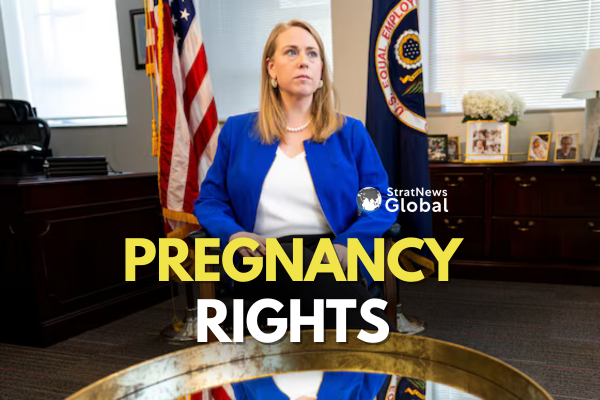
Republican EEOC chair Andrea Lucas has argued the rules were written too broadly. Since becoming chair in November, she has begun reshaping the agency to reflect what she has described as a conservative view of civil rights enforcement.
Lucas previously criticised the inclusion of conditions linked to the female reproductive system, a phrase legal experts say could include abortion and fertility treatments. While those issues are likely targets, lawyers say it remains unclear whether pregnancy accommodations will also face limits.
Lucas said in a statement that protecting pregnant women remains a priority and that the agency has increased pregnancy related lawsuits since January 2025.
Concerns Among Advocates and Lawyers
About 2,700 pregnancy related complaints were filed with the EEOC in the 2024 fiscal year. Advocates fear narrower rules could leave workers without remedies.
Inimai Chettiar, president of legal group A Better Balance, which represents Kennisha, said there were concerns that pregnancy cases could receive less attention as the agency shifts focus toward claims favoured by conservatives, including discrimination against white men.
Other Cases Add Pressure
Similar fears surround the case of Willamina Barclay, a former Amazon warehouse worker in Rochester, New York. After doctors classified her pregnancy as high risk following a miscarriage, she requested lower stress duties. Barclay said supervisors denied her request.
In June, she experienced severe abdominal pain while lifting heavy items and was taken to hospital. Amazon later dismissed her for breaching unpaid leave rules.
Amazon said it aims to provide a supportive workplace and investigates concerns raised by employees.
Democratic EEOC commissioner Kalpana Kotagal warned that weakening the law could harm women and families. She said existing protections had reduced miscarriage rates by nearly 10 percent.
Barclay, now unemployed with a newborn, said delays in resolving her case have left her struggling. Bills and family responsibilities, she said, do not pause when a worker loses a job.
with inputs from Reuters