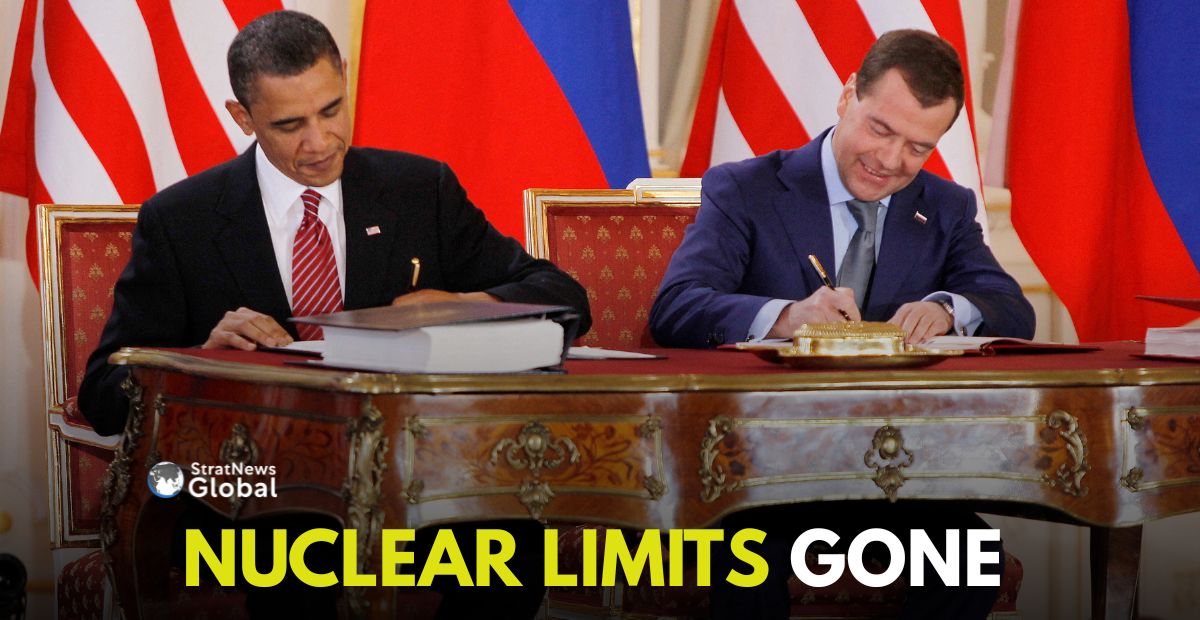
The expiration of the New START treaty on February 5 marks what many fear is the beginning of a far more uncertain nuclear era. Signed in 2010 by U.S. President Barack Obama and Russian President Dmitry Medvedev during a brief “reset” in relations, the agreement capped deployed strategic warheads at 1,550 on each side and limited missiles, bombers and launchers.
Its collapse now removes the last binding restraint on the world’s two largest nuclear arsenals.
UN Warns of a Dangerous Turning Point
United Nations Secretary-General Antonio Guterres on Wednesday called the expiration of the New START Treaty a grave moment for international peace and security and urged Russia and the United States to negotiate a new nuclear arms control framework without delay.
He said the dissolution of decades of achievement in arms control “could not come at a worse time – the risk of a nuclear weapon being used is the highest in decades.”
At the same time, Guterres said there was now an opportunity “to reset and create an arms control regime fit for a rapidly evolving context” and welcomed the appreciation by the leaders of both Russia and the United States of the need to prevent a return to a world of unchecked nuclear proliferation.
Moscow Signals Openness — With a Warning
Russia said on Wednesday it was open to security talks but would resolutely counter any new threats, as the expiry of its last arms control treaty with the U.S. marked the end of over half a century of limits on both sides’ strategic nuclear weapons.
In the absence of a treaty framework that provides stability and predictability, analysts say each side will find it harder to read the other’s intentions. That could lead to a spiral in which each feels the need to keep on adding weapons, based on worst-case assumptions about what the other is planning.
While criticising the U.S. stance, the Russian statement struck a balance between assertiveness and restraint.
It said that neither side was now bound by the treaty’s limits but Moscow intended to act “responsibly and prudently”, based on a thorough analysis of U.S. military policy and the overall strategic environment.
Trump says he wants a new, better treaty but experts say this would be a long, hard process. A successor treaty would probably need to address other classes of nuclear weapons, including short- and intermediate-range, as well as “exotic” new systems that Russia has developed since New START was agreed, such as the Burevestnik cruise missile and Poseidon torpedo.
The implications of treaty expiration extend beyond Washington and Moscow. Analysts warn that China’s rapid nuclear expansion could further fuel competitive build-ups.
(With inputs from Reuters)