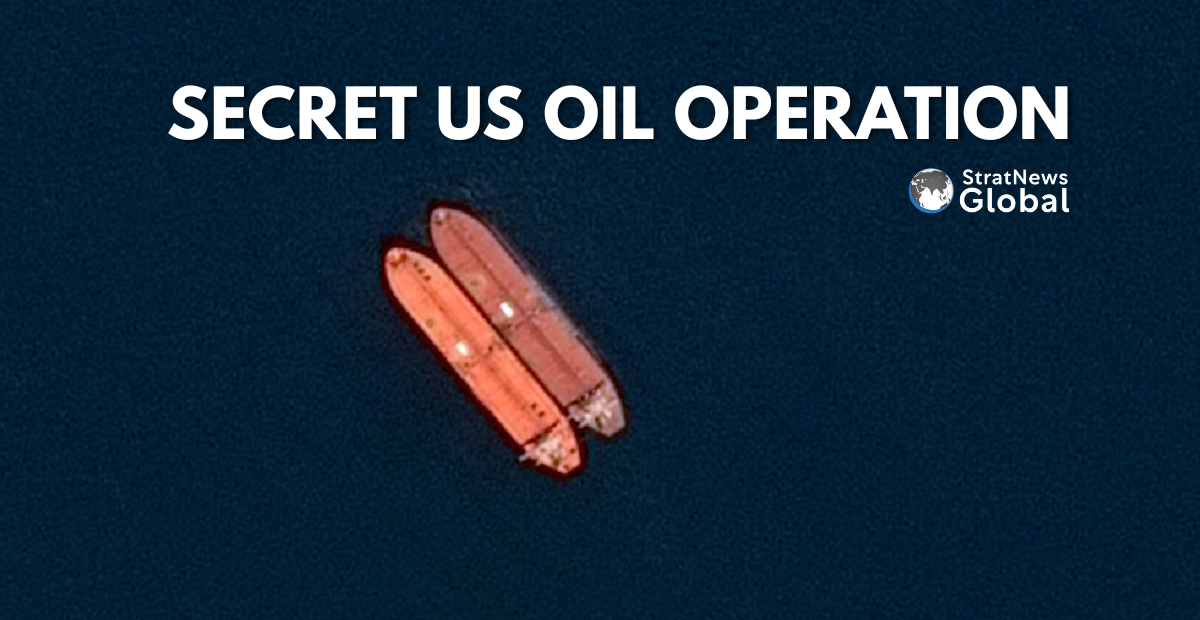
The United States military has overseen a secretive ship-to-ship oil transfer operation near the Strait of Hormuz aimed at keeping Gulf energy exports moving despite severe disruptions caused by regional conflict and Iranian restrictions. The operation, which began in early May, uses offshore transfer points near Fujairah in the United Arab Emirates and Sohar in Oman, according to shipping data, satellite imagery and sources familiar with the arrangements.
Reuters identified at least 92 vessels involved in the operation. Satellite imagery from 11 June showed 17 pairs of ships simultaneously conducting transfers at the two sites, highlighting the scale of the network.
Drones, helicopters and military monitoring
The operation reportedly relies on extensive US military oversight, including aerial surveillance, drone boats and helicopters. Sources familiar with the mission said an Apache helicopter shot down by Iran on 9 June had been involved in the broader operation, although Reuters could not independently verify its exact role.
According to several sources, participating tankers are assigned designated transit windows and monitored throughout their journey. Rather than directly escorting vessels, the US military is said to provide surveillance, compliance screening and operational oversight.
How the transfer system works
Under the arrangement, smaller tankers carrying crude oil travel towards the Strait of Hormuz before rendezvousing with larger Very Large Crude Carriers (VLCCs) waiting outside the most sensitive areas.
Ships reportedly sail with transponders switched off and lights dimmed. Once they reach designated transfer zones, the oil is pumped into the larger tankers, a process that can take between 24 and 40 hours. The smaller vessels then return through the strait while the VLCCs continue towards international markets.
The method resembles techniques long used by Iran to conceal oil exports and circumvent sanctions, although the US-backed system operates on a much larger scale.
A response to the Hormuz disruption
The operation emerged after Iran effectively closed the Strait of Hormuz in response to the US-Israeli conflict, severely disrupting one of the world’s most important energy corridors. Roughly one-fifth of global oil consumption normally passes through the strait.
Reuters estimates that around 90 million barrels of crude oil and petroleum products may have moved through the offshore transfer network since early May. While substantial, that volume remains far below the approximately 20 million barrels that flowed through Hormuz daily before the conflict.
Gulf producers and international shippers involved
Shipping records reviewed by Reuters suggest significant participation from Gulf energy producers. The UAE’s state-owned oil company ADNOC and Kuwait Oil Tanker Company were identified by sources as among the most active participants.
International tanker operators have also played a major role. One example cited by Reuters involved the transfer of approximately 2.3 million barrels of Kuwaiti crude off the coast of Sohar on 6 June, with the cargo later heading towards China.
Risks remain despite workaround
Despite helping sustain exports, industry experts warn that the operation remains risky. Ships travelling without active transponders and often at night increase the risk of collisions and navigation incidents.
Security analysts also caution that vessels remain vulnerable to potential Iranian drone, missile or gunboat attacks. While the transfer network provides a temporary solution to an extraordinary disruption, experts say it is unlikely to offer a long-term alternative to normal navigation through the Strait of Hormuz.
As regional tensions continue and details of a proposed US-Iran framework agreement remain unclear, the future of the operation and of Gulf oil flows more broadly remains uncertain.
(with inputs from Reuters)