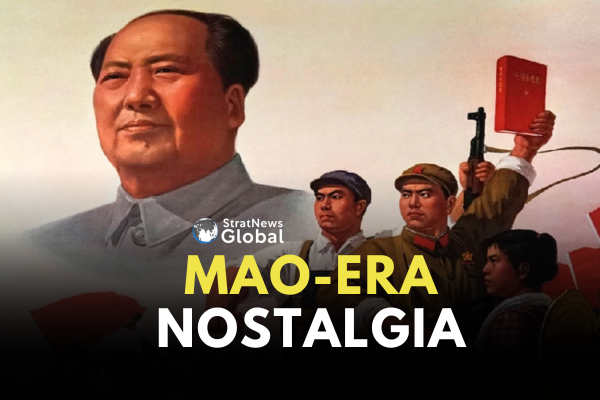
A sudden wave of Cultural Revolution nostalgia swept across China’s internet last week and just as quickly, it was scrubbed from view. The Cultural Revolution (1966–1976) was a decade-long political movement launched by Mao Zedong to reinforce Communist ideology and eliminate “bourgeois” elements. It caused widespread chaos, persecution, and cultural destruction across China.
A movie review video by a well-known influencer about the 2017 Chinese film Youth (Fanghua), set during the later years of the Cultural Revolution, went viral on Bilibili, one of China’s most popular video platforms, especially among younger audiences. The review drew more than 35 million views before vanishing without explanation.
Mao-Era Slogans Flood Video Comments
During the video’s surge in popularity, thousands of viewers flooded the comment stream with slogans such as “Long live the people” and “Carry on to the end.” On Bilibili, comments appear directly over the video in real time, and the volume and tone of the messages signaled that the discussion had moved far beyond cinema.
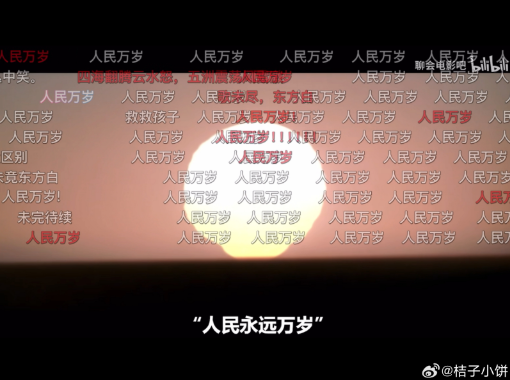
The phrase “Long live the people” originates from the Mao era and was widely used during the Cultural Revolution to praise ordinary citizens as the true foundation of national power. Though it largely disappeared after the period ended, the slogan has re-emerged in recent years, particularly in 2025, as young Chinese quietly use it to express frustration over unemployment, inequality, and declining opportunity often without directly criticizing the government.
Swift Removal and Public Reaction
After the review crossed 35 million views on Friday, December 5, the videos were abruptly removed and related discussion threads on major Chinese platforms were wiped.
Red Song Network, a well-known Mao-era nostalgia website, posted on Weibo that the review did not go viral because users admired the film, but because it reflected real anxieties young people face today, including limited mobility and widening unfairness.
Former Xinhua journalist Wang Hai wrote that viewers were “not watching the movie, but using the past to talk about the present,” suggesting that history had become a surrogate language for grievances that cannot be voiced openly.
A Glimpse Quickly Erased
Once the content triggered mass engagement, deletion was swift. References to the Cultural Revolution remain among the most politically sensitive topics in China, and the revival of old slogans especially those tied to anti-elitist sentiment prompted platforms to move quickly. What began as a film review became a brief, public glimpse into the pressures facing China’s younger generation, before disappearing from view.

Research Associate at StratNewsGlobal, A keen observer of #China and Foreign Affairs. Writer, Weibo Trends, Analyst.
Twitter: @resham_sng